
You know that pantry battle: odd packaging, fragile pieces, and too many shapes crammed into too little shelf space. This makes storing dry noodles more annoying than most staples and wastes time when you need dinner fast.
Here’s a simple, U.S.-kitchen friendly “pasta zone” system that reduces clutter, prevents broken noodles, and helps you grab the right shape for the right meal in seconds.
Instead of sorting by brand, you’ll store by how you use each shape — long noodles, short spirals, sheets, and tiny soup shapes — so weeknight cooking is quicker and less wasteful.
Expect practical steps: tall canisters for long strands, stackable bins for short pieces, shallow flats for sheets, and small jars for tiny soup shapes. You’ll also keep cook-time notes visible so decanting never costs your al dente finish.
Why pasta shapes make pantry organization harder than it needs to be
Different noodle shapes and odd package sizes turn a pantry into a puzzle. Boxes come tall, short, or in flimsy bags, and those mismatched profiles leave dead space and unstable stacks.
Packaging mismatch creates three common pain points:
- Half-open boxes tipping over and spilling crumbs.
- Tiny noodles hiding behind larger containers so you forget what you own.
- Duplicates bought because you can’t see what’s already on the shelf.
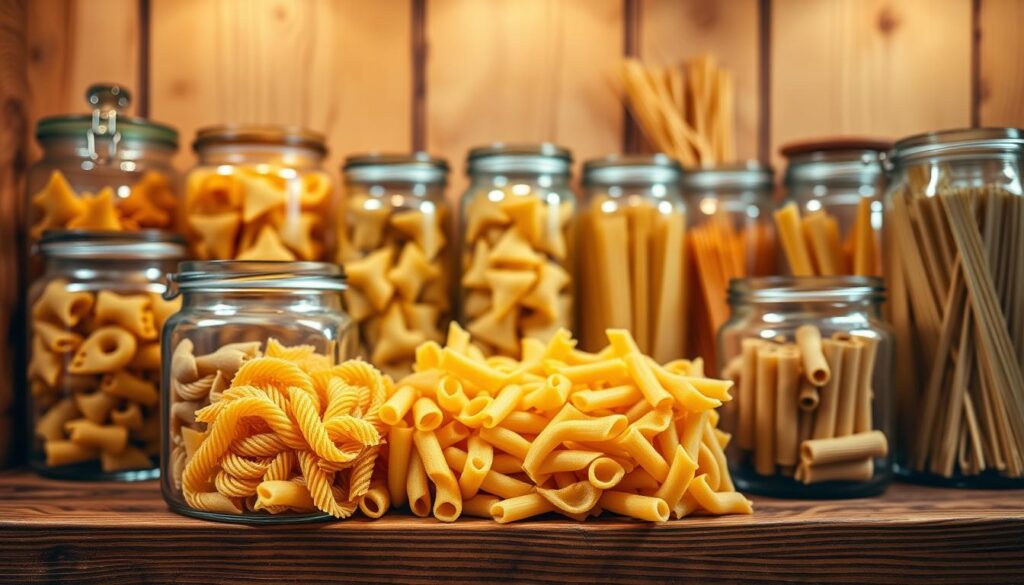
Thickness and fragility matter. Delicate angel-hair-style strands break easily when crammed next to rigid tubes. Thicker, ridged pieces hold heavy sauces better, while long, smooth strands suit light olive oil or herb dressings.
Store by how you cook to avoid the wrong shape at dinner. Keep salad-friendly and soup-ready shapes at the front so quick meals grab-and-go. The rule you’ll use: category first (long, short, soup, stuffed, sheets), then shape, and only the brand if that really matters to you.
Set up your pasta zone for quick meals and less clutter
A dedicated shelf makes it easy to spot what you have and what you need. Start by choosing one shelf or a vertical pantry section as your single “pasta home,” so boxes and bags stop migrating into random gaps.
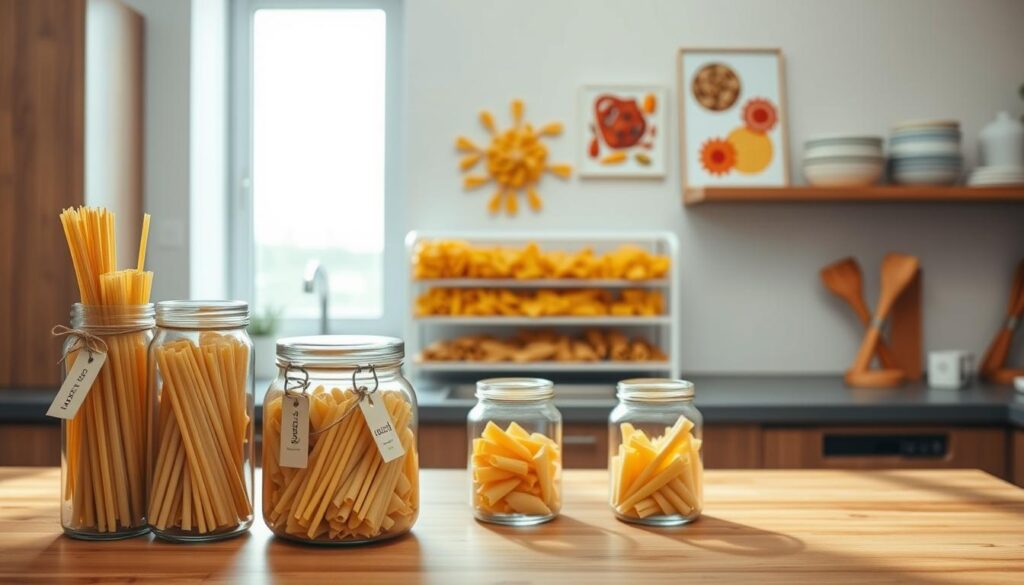
Define the zone to match how you cook: pick space for one long-noodle canister, two short-shape bins, and a row of small jars for soup shapes. That layout keeps the most-used items front and center for quick weeknight dishes.
Keep unopened extras in a backstock bin or on a higher shelf. This prevents duplicate buys and makes your everyday containers visible. Use a simple restock routine: shop from backstock first, refill front containers second, then add low items to your grocery list.
- Place the zone near sauces, olive oil, and canned tomatoes so you build meals faster.
- Follow a “one-touch rule”: if you must move five things to reach this shelf, move the zone now.
- Label front containers so anyone in your household can grab the right item for a quick dish.
These small changes save time and reduce waste. They also make it easier to cook familiar comfort food and explore new flavors from around the world without pantry chaos.
Organizing pasta types by category instead of by brand
A quick category system gets every box and bag into the right spot in under ten minutes. Use cooking function—how you use a shape—rather than the maker’s logo. That stops duplicates and keeps small items visible.
- Long — spaghetti, linguine, fettuccine for oil- or light-cream meals.
- Short — penne, rotini, shells for chunky sauces and bakes.
- Stuffed — ravioli and tortellini (keep freezer-ready items together).
- Sheets — lasagna and flat noodles stored flat to avoid breaking.
- Dumpling — gnocchi gets its own bin; it stores and cooks differently.
- Soup/Pastina — tiny shapes deserve high visibility so they don’t vanish.
Label rule: put the category first (“Long,” “Short,” “Soup/Pastina,” “Stuffed,” “Sheets”), then the specific pasta shape name and size. This way anyone can grab the right item in a second.
Choose containers that eliminate wasted space
Choosing containers that match the shape of what you store removes dead space and makes cooking faster. The right profiles stop awkward gaps and crushed boxes, so you see stock at a glance and avoid duplicate buys.
Tall canisters for long noodles
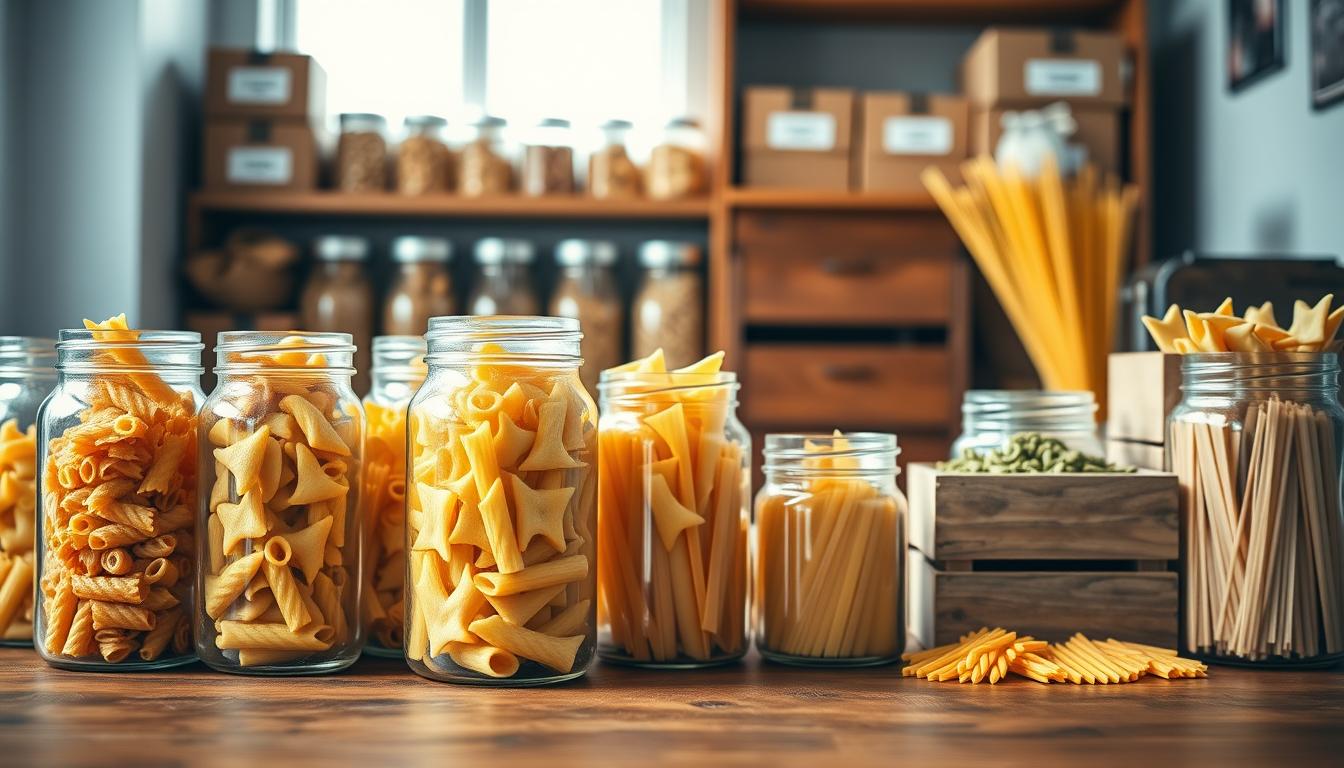
Buy tall, airtight canisters sized to fit standard 16 oz spaghetti and any taller premium boxes you buy. Pick clear options so you instantly spot when you’re low.
Stackable, square bins for short shapes
Square, stackable containers reclaim shelf area better than round jars. Use them for penne, rigatoni, and rotini to make tight rows and stable stacks.
Shallow flats for sheets
Store lasagna and other sheets flat so they don’t snap. Shallow, wide containers keep layers level and ready for baked dishes.
Small airtight jars for tiny pastina
Keep orzo, ancini de pepe, and other pastina in clear, small jars. They stop tiny shapes from hiding and make portioning for soups quick and clean.
- Measure before you buy: choose a canister height that fits your tallest package.
- Visibility rule: clear containers cut overbuying because you can see inventory instantly.
- Workflow tip: keep a small funnel or measuring cup in the pasta zone for fast, tidy decanting.
Long noodles storage that actually works for spaghetti alternatives
A simple height-and-handle plan keeps long strands intact and ready to cook.
Dedicate one tall canister per long-noodle weight class. That prevents heavy boxes or jars from crushing delicate angel hair and lets you stack sturdier spaghetti and linguine behind them.
Capellini (angel hair)
Keep angel hair in its own container and avoid overfilling. Place it higher or toward the front so you handle this thin strand gently. Note on the label: “light sauces/pesto/seafood.”
Bucatini
Store bucatini like spaghetti but add a practical label cue: “hollow center — great with cream or Amatriciana”. That name reminder helps you pick a matching sauce fast.
Spaghetti, linguine, fettuccine, pappardelle nests
Measure the actual boxes and nests you buy and plan canister height accordingly. Smooth long noodles do best with lighter coatings, while wider ribbons like fettuccine or pappardelle stand up to a meat sauce or hearty Bolognese.
- Label each canister with shape and suggested sauce (example: “linguine — olive oil/cream”).
- Avoid overpacking delicate hair; leave buffer space for handling.
- Keep heavier long noodles lower or behind delicate jars to reduce breakage.
Short pasta storage for everyday pasta dishes and weeknight sauces
Short shapes are your weeknight MVPs—compact, forgiving, and ready for quick sauces. Keep them visible and grouped by function so you grab the best shape for the meal without hunting.
Tubes and ridges that love sauce
Ridged tubes like penne, rigatoni, ziti, and ditalini cling to sauce and hold up in bakes. Use one stackable, square bin for these workhorses so they sit like files and you reclaim shelf space.
Twists and spirals for pesto and pasta salad
Twists such as rotini, fusilli, and cavatappi trap oil-based dressings and herbs. Store them together so you can pull a single bin for quick pesto or a chilled pasta salad.
Shapes that scoop ingredients
“Scoopers” — orecchiette, shells, farfalle, and radiatore — catch meat, veggies, and cheese in every bite. Give them a dedicated bin and label it with the family name plus 2–4 common shapes you own.
- Bin-splitting method: one for ridged tubes, one for spirals, one for scoopers.
- Label tip: write the family name and example shapes so brand swaps don’t confuse you.
- Storage tip: square, stackable containers eliminate wasted gaps and speed cooking prep.
Small pasta and soup noodles that disappear in the pantry
Small noodles are the pantry ninjas — they slip behind jars and hide in gaps. Pastina covers the tiniest shapes, like orzo and ancini de pepe, and often comes in small boxes that slide out of sight.
Where to keep them for quick soup add‑ins
Give pastina a single, visible home: a “Soup + Pastina” spot at eye level or the front of a lower shelf. That placement makes these quick soup add-ins easy to grab when you build a bowl.
Portion control and cook-time tips
Measure tiny pasta into a cup before cooking, or cook it separately and add to bowls so it doesn’t soak up your broth. Track cook times on the jar—stelline and similar shapes can go from al dente to mush in 3–4 minutes.
- Priority item: keep ancini de pepe front and center for Italian wedding soup.
- Soup kit: store bouillon, canned tomatoes, and beans nearby so small pasta turns into a fast recipe.
- Visibility rule: clear jars or labeled bins stop tiny orzo from vanishing behind larger boxes.
Stuffed pasta storage without freezer chaos
Keep filled varieties separate so flavors and textures stay true when you cook.
Treat stuffed pasta as a freezer-first category. Even shelf-stable boxes deserve a designated space so they don’t get mixed into dry noodle bins and crushed.
Ravioli labels that save dinner
For ravioli, add a quick sauce note on the package like “butter/sage” or “light tomato sauce.”
Also note the filling: cheese, meat, or veggie. That prevents surprises and helps you pair a simple sauce without overwhelming the center.
Tortellini reminders for flexible meals
Label tortellini with a short cue: “soups + pasta salads + sauces.”
This reminds you it’s sturdy enough for broths, toss-in salads, or a cream sauce for weeknights.
- Clear freezer bins: mark one “Stuffed Pasta” so bags and boxes stay visible and don’t slide into messy stacks.
- Track fillings: write cheese, meat, or veggie on the label for fast pairing.
- Use-first corner: keep open bags in a front corner so older ravioli get cooked before they freeze-burn.
Sheet pasta and baked dish staples: store to prevent snapping
Sheets and baking-ready tubes deserve a storage plan that keeps them whole and ready for the oven. Wide sheets crack when pressure bends corners. Standard bins squeeze edges and cause breaks.
Keep lasagna sheets flat in a shallow, wide container. A single flat bin prevents stacking stress and keeps sheets level for layered dishes.
Lasagna sheets: flat storage and baked grouping
Group all lasagna and other sheet items in one spot labeled “baked dish – sheets”. That grouping speeds dinner prep and keeps your lasagna recipe supplies together.
Manicotti and cannelloni-style tubes: protect for stuffing
Store ridged tubes like manicotti in a rigid container so they don’t crack before you fill them. Label the box “tubes” and add a quick note: tomato + cheese for classic pairings.
- Why sheets snap: wide, brittle edges bend under weight.
- Best container: shallow, flat bin for level storage.
- Quick cue: label with “baked dish” to speed recipe-building.
Pantry labels that help you match pasta shape to sauce fast
Labeling your pantry with sauce cues turns guessing into a one-second decision. A short, consistent label links a pasta shape to the right sauce and cook time. That keeps dinner simple when you’re tired.
Write three things on each tag: the shape family, the best sauce type, and a typical cook time. Use the same format for every jar so anyone can grab the right item quickly.
Light sauces for smooth long noodles
Long, smooth noodles pair best with olive oil, herbs, pesto, or light cream. Label example:
- Long — Spaghetti | Light sauces (oil/herbs/pesto) | 9–11 min
Hearty sauces for ridged or thicker shapes
Ridged and thick shapes hold chunky tomato sauce and meat sauce better. Try this label:
- Ridged tubes — Penne | Hearty tomato/meat sauce | 11–13 min
Baked-dish cue words to spot oven-ready items
Add quick cue words for lasagna, manicotti, and ravioli. Use tubes, stuffed pasta, or sheets so baked dishes jump out at a glance.
Why sauce-forward labels work: they tie storage to real cooking choices. When you read the label, you pick a matching sauce and avoid pairing a delicate noodle with a chunky topping.
Make pasta salads easier by storing “salad-friendly” shapes together
Make summer meals simpler by keeping salad-ready noodles grouped where you can grab them fast. A small mini-zone inside your short-shape area turns a last-minute side into a single reach.
Go-to shapes to cluster: farfalle, rotini, shells, campanelle. These hold dressing and grab mix-ins, so they stay sturdy when chilled.
Mix-in bin idea
Keep one handled bin stocked with shelf-stable salad add-ins: olives, jarred peppers, tuna, chickpeas, and dressings. Pull the bin and the pasta container for fast assembly.
- Mini-zone tip: place the salad area near canned goods and condiments so ingredients live together.
- Timing label: add cook-time reminders to containers so shapes don’t overcook and become soft.
- Decision fatigue: grouping salad-friendly items helps you use what you have instead of buying new food.
How to prevent half-open boxes and mystery noodles
Half-open boxes and mystery noodles slow dinner and make restocking a guess. The root cause is simple: opened packages lose labels, similar shapes blur together, and differing cook times change the result.
Decant-and-date routine
Decant opened goods immediately. Pour contents into a clear container, write the date opened, and tuck the original cook panel into a small envelope kept in the zone.
Use painter’s tape or dissolvable labels so you can update the date and name without sticky residue.
Finish First bin and a simple visual rule
Create one “Finish First” bin for partial boxes, near‑expiry items, or anything you opened. Pull from that bin before new stock so nothing gets forgotten.
- If a jar or bag has no name and cook times attached, it stays out of the main shelf.
- Keep a clipped cook-time panel or a photo page in the pasta zone for quick reference.
Space-saving placement rules for a typical U.S. kitchen pantry
Where you put containers often matters more than which containers you buy. A thoughtful shelf plan speeds cooking and protects fragile goods.
Eye-level shelf for the shapes you cook most
Keep daily drivers at eye level. Place the shapes you reach for every week where you can see them. This reduces decision time and stops you from buying duplicates.
Label the front of each container with the shape and a quick cook-time note so family members grab the right size.
Vertical storage for long noodles
Store long noodles like spaghetti vertically so they stay straight. Use a narrow slot beside cereal boxes, tuck them behind tall canisters, or add a slim side bin.
Vertical placement prevents bending and keeps long strands ready to use.
Heavy bins low, delicate noodles high
Put heavy short-pasta bins on lower shelves. This avoids shelf sag and saves you from lifting bulk from above shoulder height.
Keep delicate, thin noodles higher or in protected canisters so heavier items don’t crush them.
- Practical layout: eye-level for daily items, low for bulk, high for delicate.
- Vertical option: narrow slots or tall side bins for long spaghetti and similar noodles.
- Size logic: place your largest containers on the deepest shelves to reduce wasted space.
Follow these simple placement rules and you’ll find a way to keep your pantry organized in a small, useful world of containers and ingredients.
Keep cook times and “al dente” notes where you’ll see them
A quick, readable timing cue on each container saves your meal from overcooking. Because shapes and thickness vary, checking the original directions helps you hit al dente every time.
Why this matters: once you decant dry goods, the printed cook times go with the box. That can lead to mushy or underdone results—especially with pastina, nests, and thicker tubes where seconds change the outcome.
Save box directions or add a quick note
Two simple methods work well:
- Tape a clipped cook panel to the back of the container so the original timing stays with the jar.
- Write a short label—“cook-time range + drain timing” (example: 8–10 min | drain 1 min early)—on the front for quick reading.
One extra note improves results: add a tip like “reserve pasta water” or “stir often first 2 minutes.” These small cues help you follow a recipe tweak or avoid clumping without re-reading instructions.
Keep a small, pantry-safe notepad or label-maker station in your pasta zone so updating cook times takes seconds, not a re-organization day.
Special cases: gnocchi and fresh pasta storage basics
Because gnocchi often contains potato and egg, it behaves unlike standard dry noodles in both storage and cooking. Treat it like a dumpling you plan around, not a box to tuck in the back of the pantry.
Gnocchi: not just another noodle
Gnocchi is dumpling-style pasta made from potato with flour and egg. That gives it a softer texture and a shorter cook window than dry shapes.
Store gnocchi in its own bin—pantry for shelf-stable packs, or freezer/refrigerator for fresh or frozen packages. Keeping it separate stops it from getting lost among dry goods.
Fresh vs. dry: separate zones so you remember refrigeration
Make a clear rule: dry items live in the pantry zone; fresh items live near the fridge or freezer inventory list. Add a fridge-front reminder so fresh pasta and gnocchi get used quickly.
- Label tip: mark gnocchi with pairing cues like “light sauces / browned butter / light cream” so you avoid overpowering it.
- Ingredients note: write key ingredients (egg, potato) on the label so anyone handling it knows storage limits.
- Use-soon plan: keep fresh items front-and-center in the fridge/freezer so they are used before older packages.
These small steps protect texture, flavor, and food safety while making dinner choices easier when you reach for gnocchi or fresh noodles.
Conclusion
When you store by function, every shape has a clear place and dinner choices get easier.
Keep one pasta home, group by category, pick space‑efficient containers, and label each jar so the label ties the pasta shape to the right sauce and cook time.
The payoff is practical: less wasted shelf space, fewer broken noodles, fewer duplicate buys, and faster weeknight pasta dishes that hit the right texture every time.
Keep a simple rhythm — restock from backstock, move opened boxes into a “finish first” bin, and update cook‑time labels when you decant. That small routine saves time and spoilage.
Spend 20 minutes this week consolidating dry goods into one zone and choosing containers for long, short, sheets, stuffed, and soup shapes. You’ll notice better meals—from soups and salads to baked pasta dishes—right away.