
Your kitchen can stay tidy and your favorite flavors can last longer. Pantry and cabinet organization improves access and lowers spoilage when you keep specialty ingredients in cool, dark, sealed spots. You’ll avoid sticky rings, messy shelves, and flavor loss with a simple system.
The best approach protects quality from light, heat, and oxygen while also containing drips so cleaning takes seconds, not scrubbing. I’ll show two practical setups you can use right away: a small countertop station for daily use and a pantry or cabinet plan for backups and specialty bottles.
These tips focus on freshness and mess prevention, keeping the bottles you use most accessible, extras stored in better conditions, and a simple order you can keep at home. Read on for easy, do-it-now steps that fit any American kitchen.
Choose the right environment for oils and vinegars to stay fresh and mess-free
Keep your bottles in one consistent place so flavor lasts and cleanup stays simple. Pick a cabinet or pantry away from windows and heat sources. A steady spot beats short-term convenience when you want real freshness.
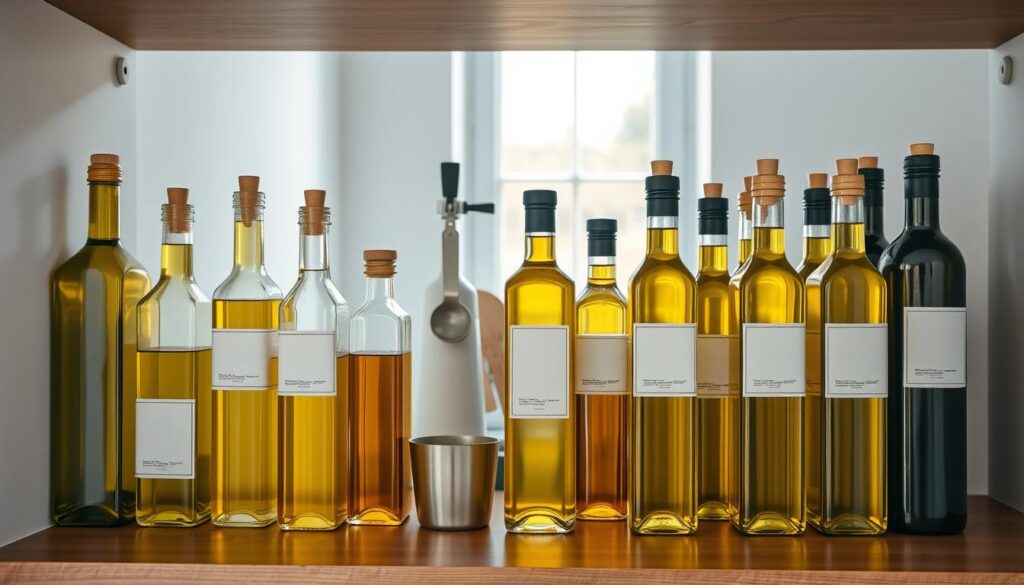
Limit light and heat
Store olive oil where light and heat are minimal. Direct sunlight cuts antioxidants, and warmth speeds rancidity. Target a temperature range near 57°F–70°F and avoid the stovetop, which sees spikes and daily swings.
Control oxygen exposure
Always replace the top after use. Choose snug caps or sealed, self-closing pour spouts to slow oxidation. Less air contact keeps acidity low and preserves bright olive flavors for the intended time.
Choose the right bottle
- Use dark glass or glass bottles when possible to block UV and avoid plastic absorption.
- Store everyday bottle(s) where you reach them, but keep backups in a cooler cabinet.
- Small habits—move bottles off the counter, cap them, and pick a stable place—yield better taste and less waste.
Storing oils and vinegars without drips, rings, or sticky shelves
A quarter-sheet pan transforms a cluttered counter into a tidy flavor hub that wipes clean in seconds. Use one shallow pan as your daily station so the bottles you reach for sit together and spills stay contained.
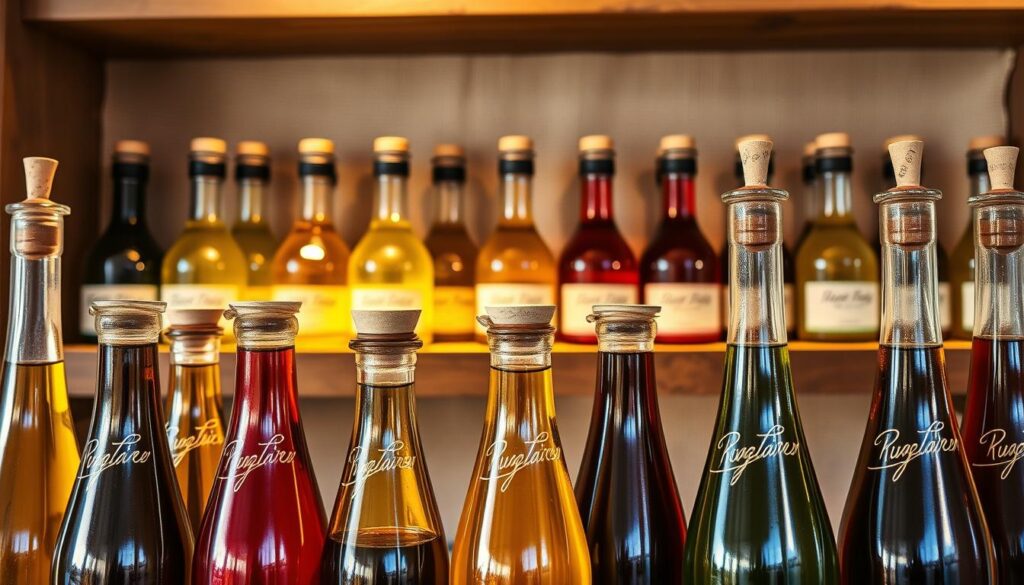
Set up a simple countertop station
Pick a quarter-sheet pan as the base; it’s stable, cheap, and easy to wash. Add one high-heat cooking oil, one finishing oil like Brightland, plus a go-to vinegar such as white wine or sherry.
Stock and maintain the station
Keep a short list: salt (Maldon), pepper, a wild card like honey or Fly By Jing, and the three bottles above. Wipe necks weekly; clean pour spouts after heavy use. This quick routine takes under a minute.
Protect pantry and cabinet shelves
Use trays or liners on every shelf to stop rings. Space bottles so they won’t tip; small risers help with grip. A decorative tray is fine if it still contains drips and makes cleaning fast.
Bottom line: keep frequently used things within reach to cut frantic rummaging, fewer spills, and faster cooking.
Organize your pantry and cabinet setup by product type and how fast you use it
A simple zone plan makes it easy to grab the right bottle or jar during a recipe without a search.
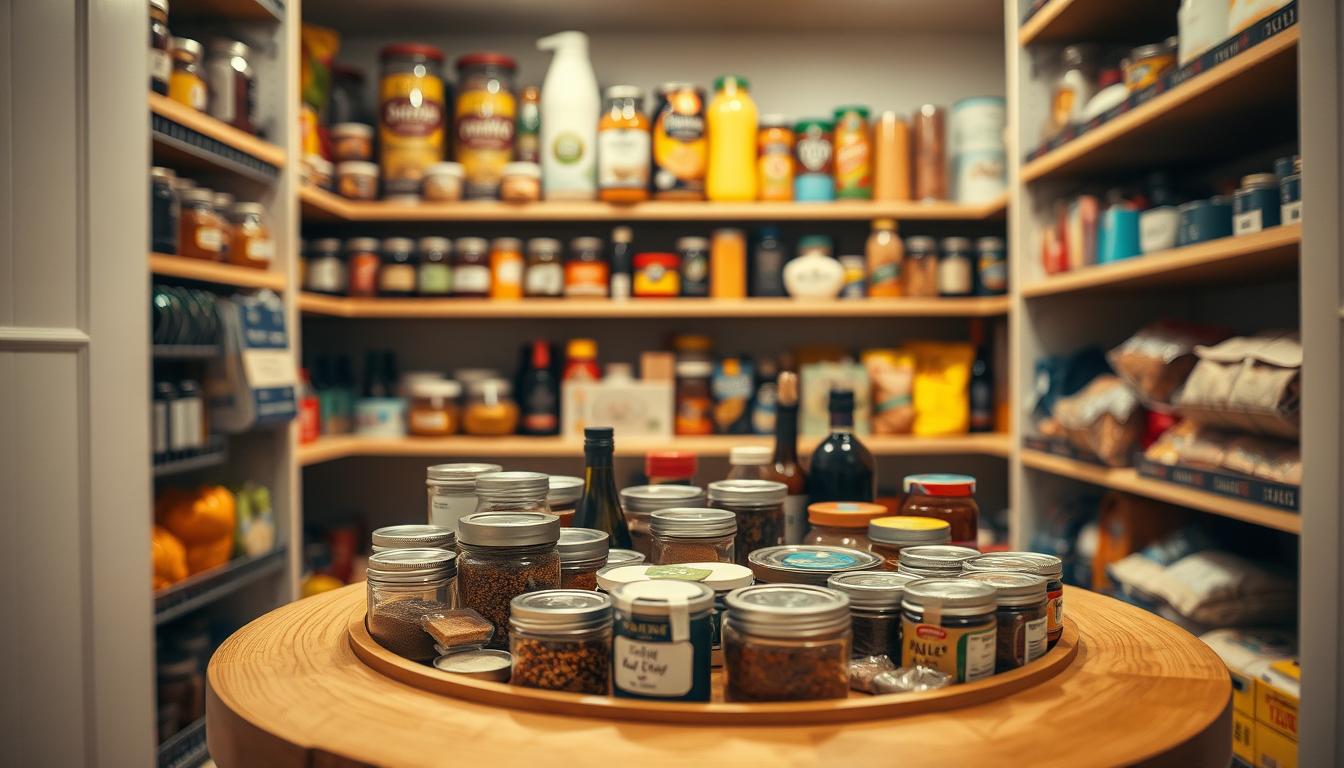
Zone concept: place backups on the top shelf, daily-use bottles on the middle shelf, and a contained tray or bin on the bottom for anything that might drip.
Extra virgin olive life and freshness
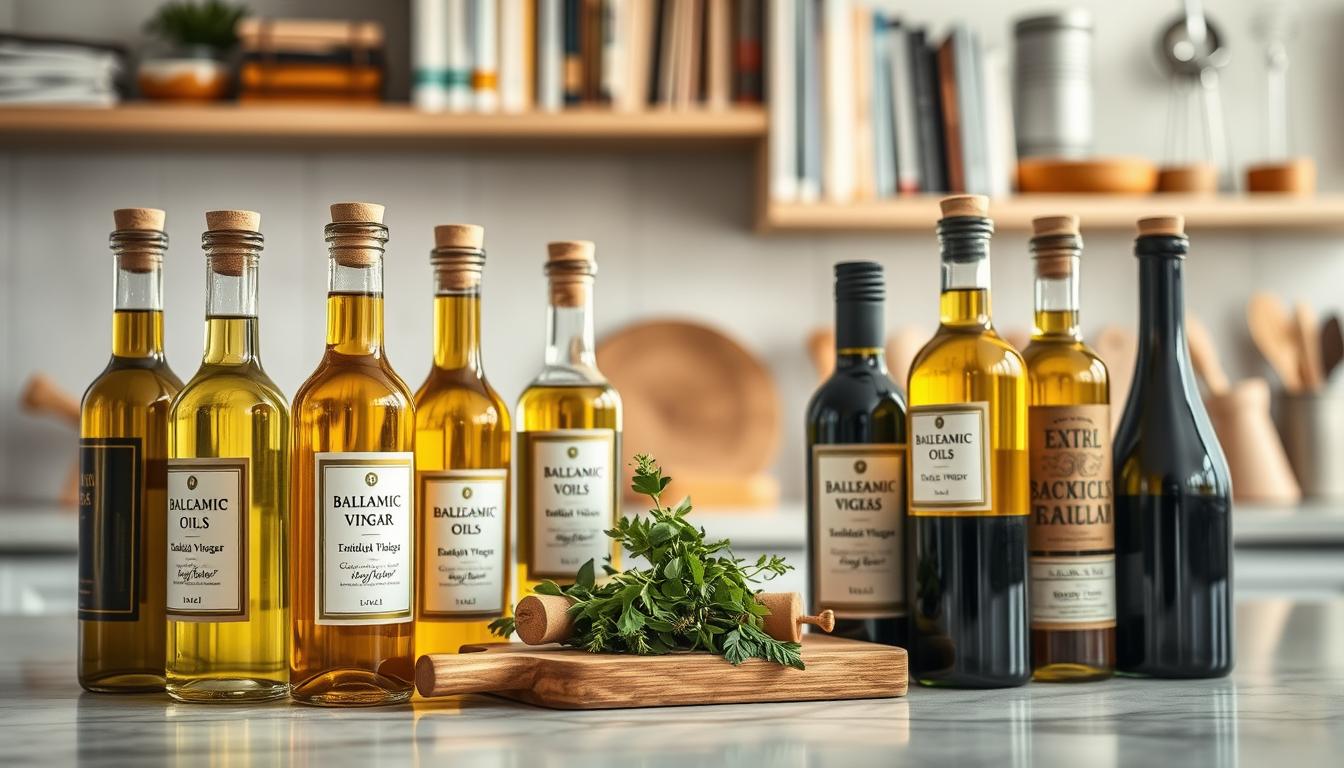
Keep extra virgin olive oil in a cool, dark pantry or cabinet and note when you opened each bottle. Peak flavor drops after about 12 months, so plan to use bottles within that life window.
Balsamic care and normal signs
Balsamic prefers the same cool, dark place and a tight top. Fruit-based balsamics may show harmless sediment, and lighter varieties can darken with time without losing flavor.
Where spices, blends, salts, and sticky add-ons belong
Store spices and seasonings in airtight jars away from sunlight and heat so you can reach them fast. Honey keeps well at room temperature; wipe the lid and use a small saucer under the bottle to catch any sticky drips.
- Middle shelf: daily olive and balsamic near your prep zone.
- Top shelf: backup bottles and glass storage.
- Tray/bin: drippy or frequently used products for easy cleaning.
Conclusion
A tiny routine targeting light, heat, and air makes a big difference for shelf life and cleanup.
Follow three simple guards: block light, avoid heat, limit air exposure. That protects oil quality while cutting mess.
Keep daily bottles on a tray or quarter-sheet pan for quick use. Store backups in a cool, dark spot in your kitchen.
Quick list to screenshot: cap the top tightly; wipe necks after use; use liners or trays; do not keep bottles by the stove.
Choose dark glass bottles when possible to preserve flavor. Buy amounts you will use, rotate older forward, and use your best oil while it tastes fresh. Your counters stay cleaner, shelves less sticky, and meal prep gets faster.