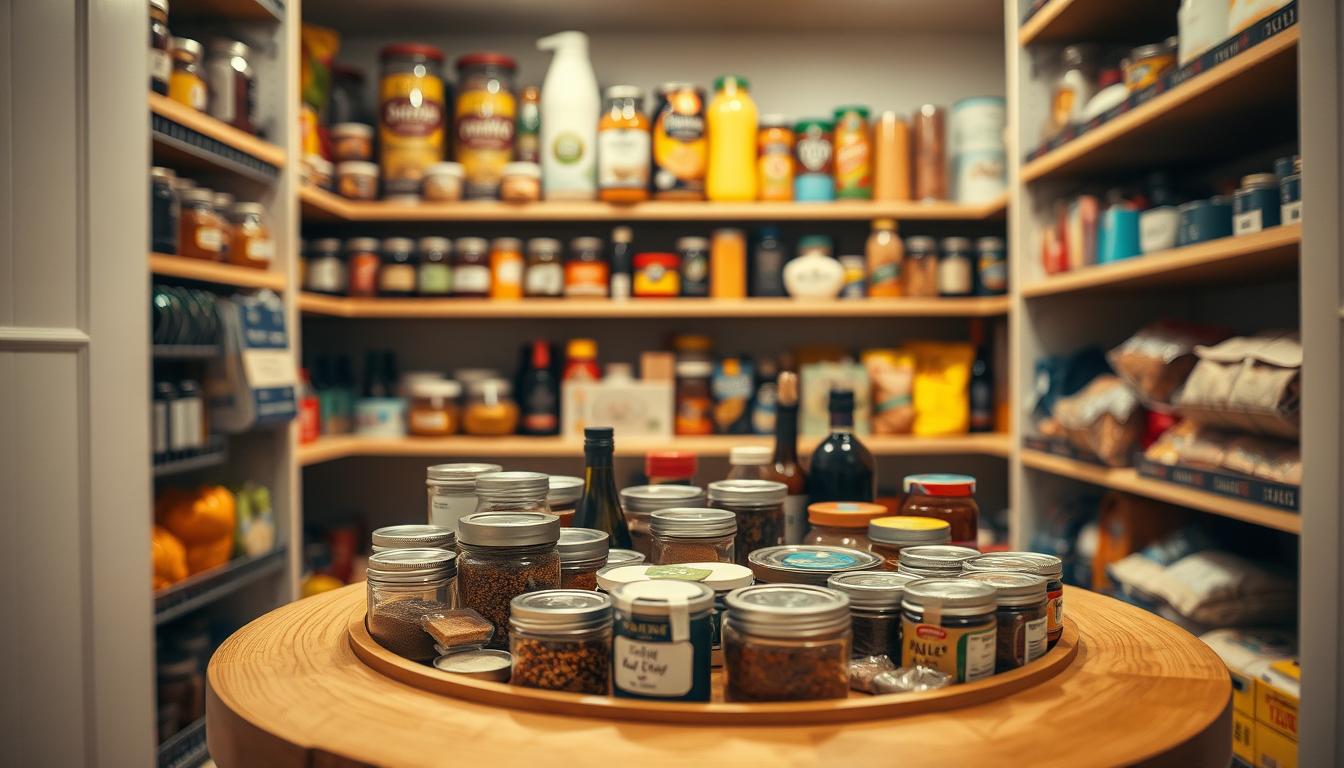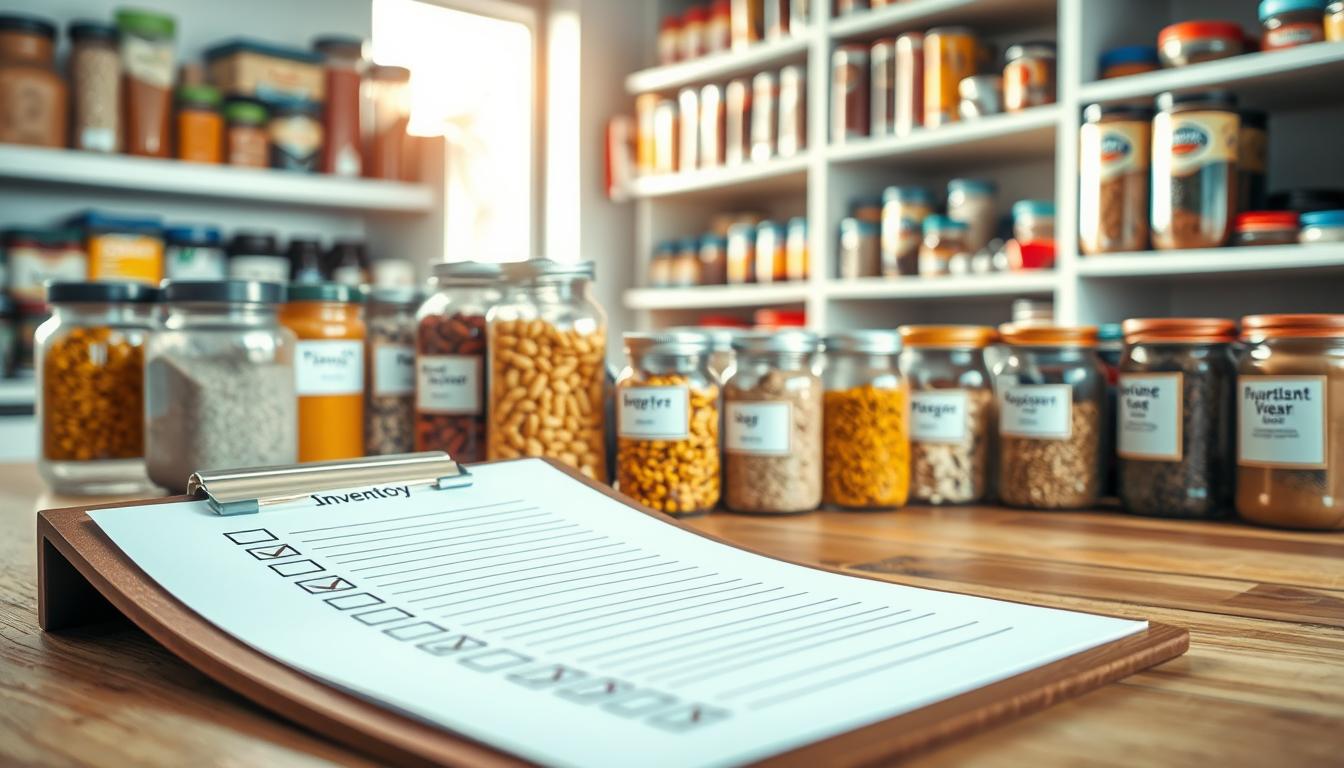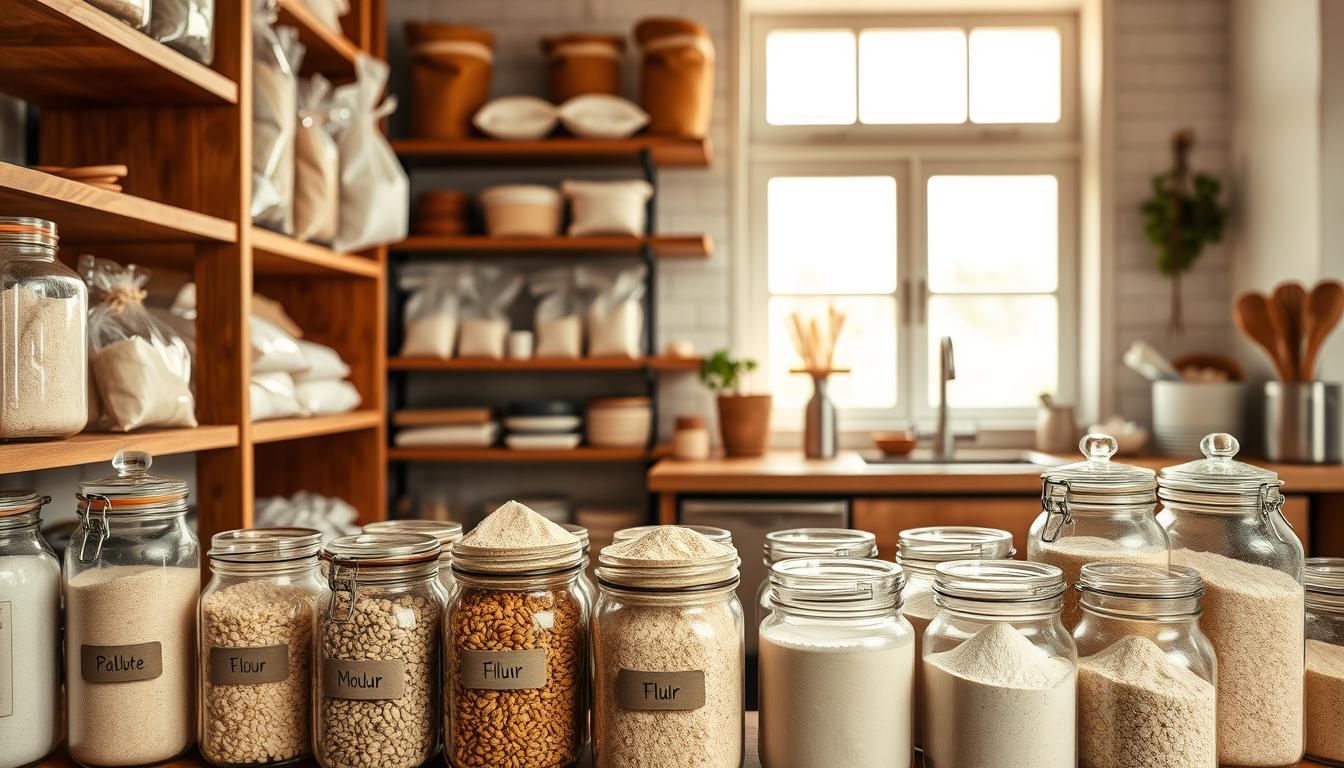

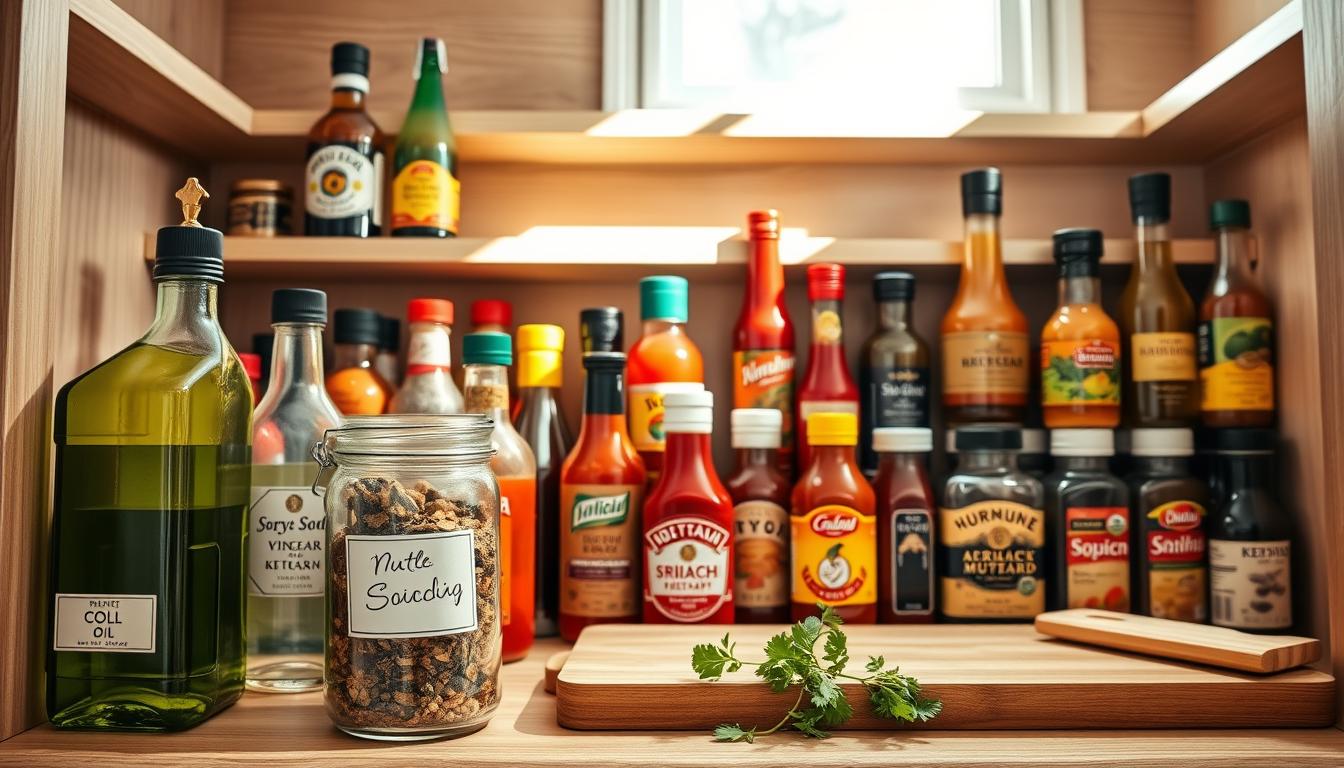
Define backstock: Backstock condiments are the extra bottles, jars, and packets you keep out of daily reach. These are the items you want handy but not cluttering your countertops or refrigerator.
You’ll learn how moving extras to a pantry or cabinet creates more space and cuts visual noise. The result is faster meal prep and fewer duplicate buys.
Front-and-center items stay within grab range for daily use. Backstock lives on a shelf or in a bin near your cooking zone so you stop overloading cold storage like the refrigerator.
The method includes a simple 15-minute reset you can use to reclaim a door, shelf, or drawer without turning it into an all-day task. It’s practical and realistic for busy life, even when takeout packets arrive.
End result: a tidy pantry system that keeps sauces contained, easy to see, and simple to restock. This works whether you use a pantry, cabinet, or a dedicated storage spot by the stove.
Why your fridge door and back fridge become a condiment clutter zone
Small items move from hand to door without much thought. One takeout packet lands on the fridge door. Then you add another packet, a jar, and a backup bottle. Before long the back shelf and bottom shelves fill with duplicates and hidden jars that block access to the food you use daily.
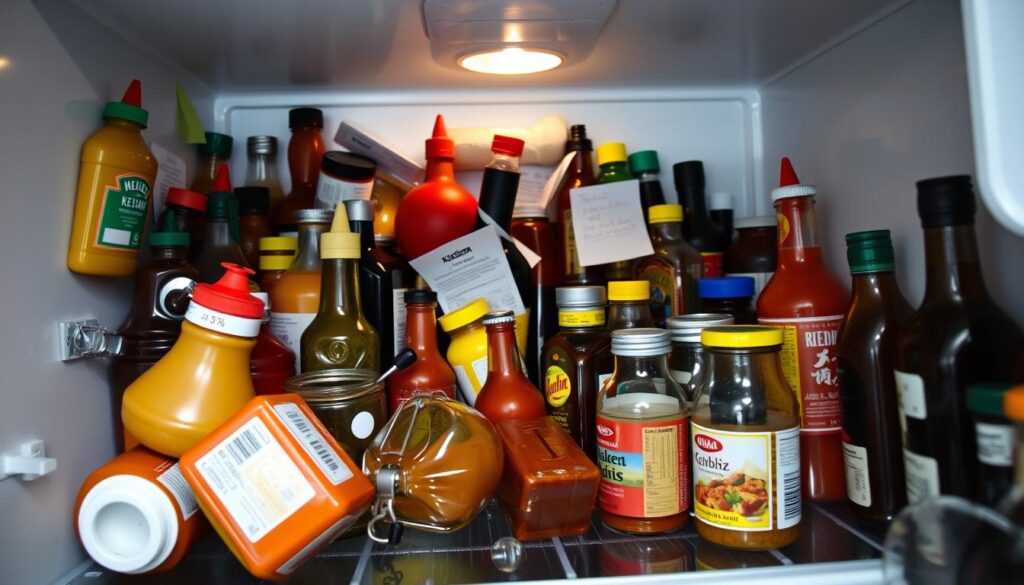
How packets, bottles, and jars multiply
The back of the refrigerator is out of sight, so you stop checking what you already own. That out-of-sight habit leads to more packets and bottles piling up in the back fridge and on the shelf.
Why takeout packets cause bigger problems now
Takeout packets can leak or dry out, creating sticky messes that attract pests. You also end up with expired or unrecognizable mystery sauces. This visual clutter makes the whole fridge look chaotic and steals usable fridge space.
When to move items to pantry storage
- Move out: unopened backup bottles and shelf-stable packets that you rarely use.
- Keep cold: mayo-based dressings and items that require refrigeration after opening.
- Tip: separate backstock so doors and shelves stay functional and you can find mustard, soy sauce, or dressings fast.
You don’t need a full overhaul. A quick, targeted routine can clear one clutter zone at a time and reclaim lost fridge space.
Organizing condiments with a fast sort-and-reset routine
Start small: pick one messy shelf or drawer and give it a focused 15-minute sweep. This short burst of effort keeps the task doable and fits into a busy day.
Set the clock: choose one hotspot—one drawer, one shelf, or one fridge door—and set a 15-minute timer. Work quickly so you finish a full reset instead of spreading the mess.
- Toss checklist: anything sticky, torn, crusty, expired, smells off, or unused for months goes straight to the trash.
- Keep checklist: sealed, clean, and recognizable items that you actually reach for earn a spot back on the shelf or in the fridge.
- Recognizable rule: if you can’t ID a sauce at a glance, don’t keep it—mystery bottles create a sauce graveyard.
Handle duplicates by deciding how many you realistically use (for example, one open bottle plus one backup) and move extras to a dedicated pantry area. Add a quick date note or front-row placement as a visible “use first” cue.
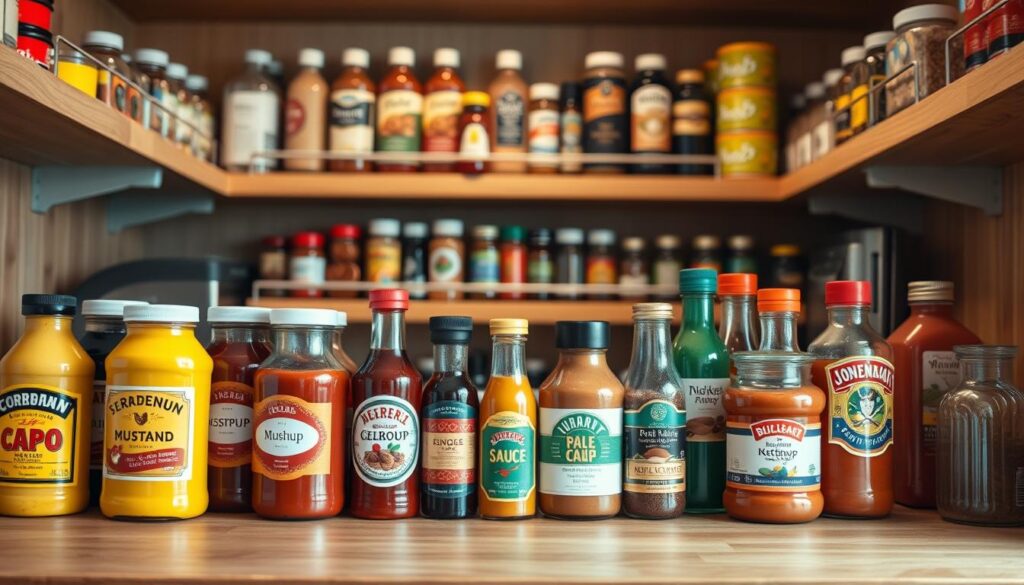
With this routine, you reclaim space, cut down on duplicates, and use your time wisely so the clutter doesn’t come back.
Pantry systems for backstock condiments that save space and time
A simple pantry plan turns extra bottles and packets into a tidy system you can actually use. Use a few reliable tools and a clear routine to keep things quick and visible.
Choose the right tools
Pick a clear bin for quick visibility, an organizer for small items, and containers sized to your shelves so nothing topples. Upright containment keeps bottles from leaking and reduces sticky messes.
Build zones by group like items
Group sauces, dressings, and jams together. Keep ketchup and mayo in one spot and soy sauce with other Asian staples. When each group has a home, you find what you need fast.
Label and streamline extras
- Label a dedicated “Extras / Takeout Packets” bin so packets stay contained and easy to grab.
- Reserve one backstock area for unopened bottles and backups, not scattered across shelves.
- Refill mini squeeze bottles from full-size sauce containers for lunches to cut packet buildup.
Restock rule: when you open a backstock bottle, add it to your grocery list immediately. That small step prevents duplicate buys and keeps your pantry functional over the months.
Conclusion
Wrap up with one small, practical habit: keep excess jars and packets out of the fridge so daily items stay visible and usable.
When you understand why the fridge fills up, a quick sort and a steady pantry home for extras make a big difference. The goal is fewer condiments in the wrong spots and fewer forgotten backups.
Consistency delivers the biggest wins. Do a short check now and then to stop buildup and keep each condiment where it belongs.
Practical payoff: more usable fridge room, less waste, and an easier kitchen life. Choose one hotspot today, set a 15-minute timer, and start the reset so the system sticks.