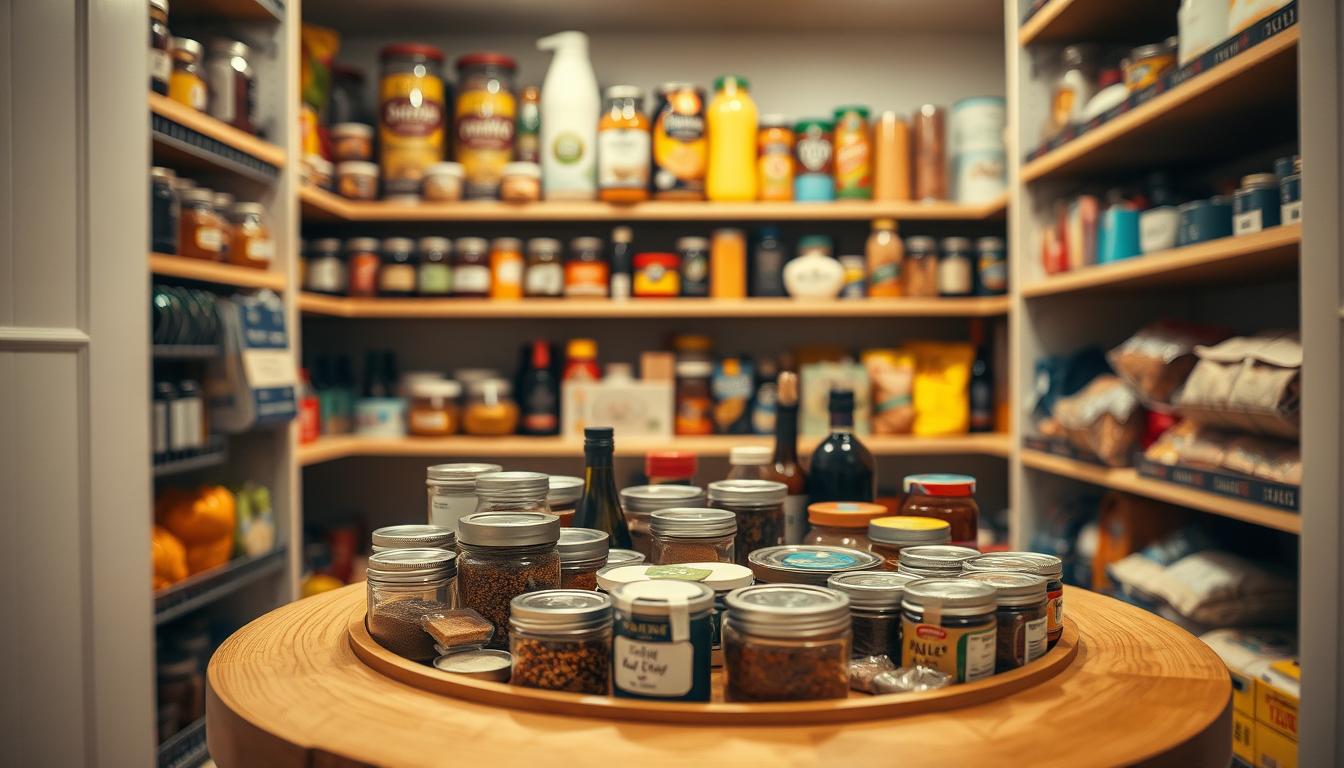

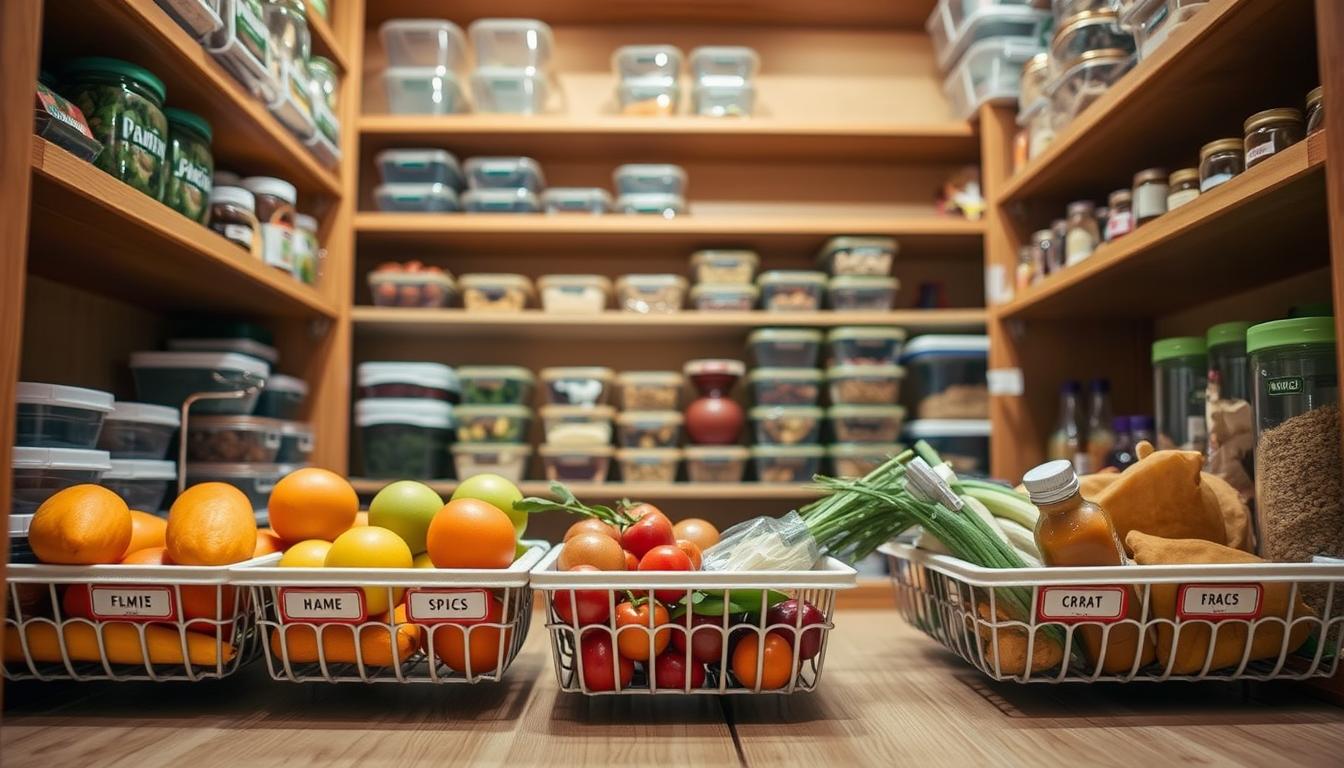
You can reclaim the “dead zone” beneath a shelf without changing your kitchen pantry layout. These simple add-ons slide on to an existing shelf and create a second layer for small jars, snacks, or lunch supplies.
Expect to gain up to 20% more storage space by adding that extra layer instead of buying new cabinets. This works best when your pantry feels full but you still have usable vertical space above items.
Later, you’ll see a practical buyer’s checklist and a product roundup. You’ll also get real-life use ideas for kitchens and beyond. I’ll compare wire and mesh designs so you can match the right option to the right shelf and category.
By the end, your goal is clearer zones, faster access, and fewer piles on shelves. Simple swaps can make your kitchen pantry feel larger and more functional right away.
Why Under-Shelf Storage Works for Kitchen Pantry and Cabinet Organization</h2>
Transform wasted vertical air into usable shelf storage with a quick hanging solution. It keeps your current shelf height while adding a below-shelf pocket that sits at eye level. That means more usable storage space without remodeling or new cabinets.
Key advantage: you add storage without changing shelves or buying tools. Installation is fast and reversible.
Compare hanging solutions to a drawer, sliding rack, or pull-out system and you’ll see the difference: a hanging basket costs less, installs in minutes, and needs no hardware. Drawers and racks take more time, money, and cabinet modification.
- When hanging wins: lightweight, often-used items that create clutter.
- Best-fit items include dish towels, placemats, utensils, and cookbooks.
- They free the top shelf surface for larger containers and improve quick scanning of your kitchen storage.
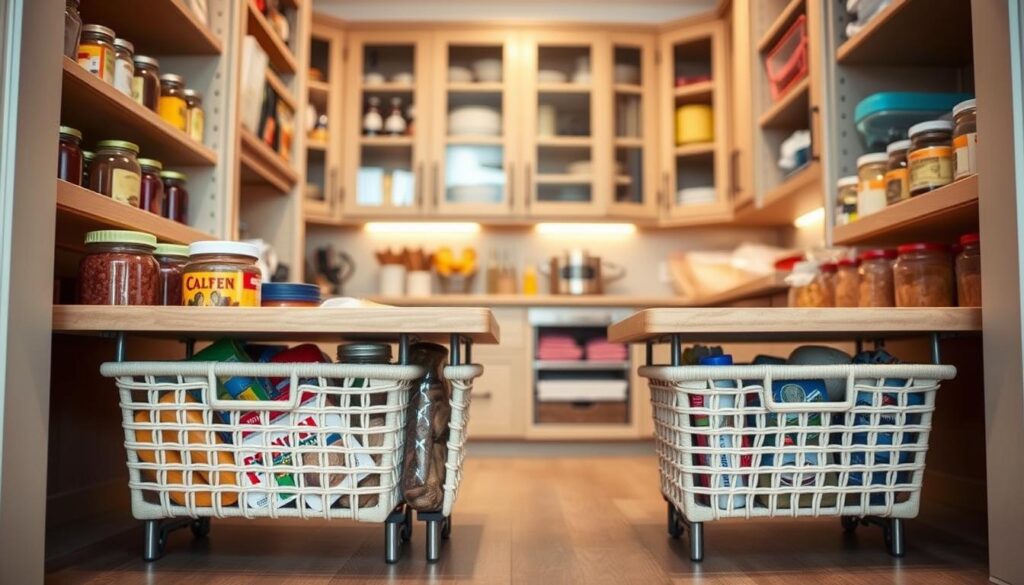
Under-shelf baskets: What to Look for Before You Buy</h2>
Before you buy, check fit, finish, and clearance so the new shelf layer works with your cabinets. Measure shelf thickness, cabinet depth, and how far the shelf basket will hang down. That prevents blocking items beneath and avoids returns.
Fit and clearance: make sure the arms sit flat. If the rear needs extra clearance the holder can tilt when loaded. Measure depth from the front edge to the cabinet back and the drop height to confirm the size fits your shelves.
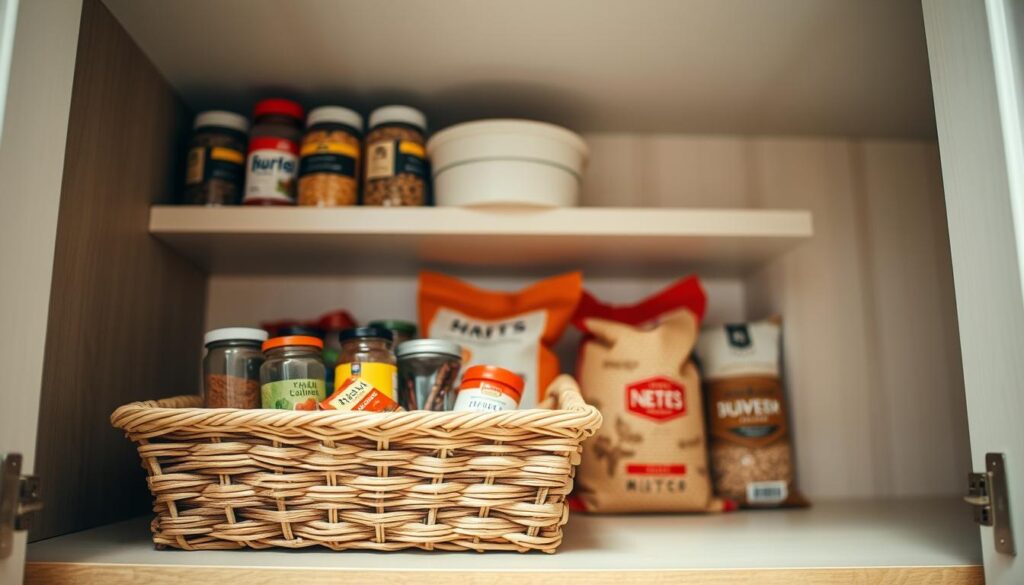
Wire vs. mesh and materials: choose wire if you want quick visibility and airflow. Pick mesh when small packets or lids might fall through a wide grid. Look for steel frames and durable metal coatings to avoid rust and wear.
- Ventilation: open grids help pantry staples breathe.
- Value: buy one to test placement or get a matching set to scale a tiered system.
- Tier approach: add a second or third layer only after checking clearance so the cabinet stays usable.
Best Overall Under-Shelf Basket for Pantry Shelves</h2>
If you want a reliable, no-fuss solution that fits most pantry shelves, this Organized Living option checks every practical box. It slips over your shelf arms and creates a second layer for everyday items without tools.
Organized Living Kitchen Under-Shelf Basket (Large): key specs and use cases
The large model stores utensils, place mats, dish towels, or cookbooks. You can also use it in an office or hobby room for supplies.
Size check: 20″ wide x 10-1/4″ deep x 5-1/2″ high
Confirm a 20″ width fits your shelf span and that the 10-1/4″ depth won’t hit the cabinet frame or door. Measure front-to-back and the drop height before you buy.
Why tight mesh grid matters for storage baskets in cabinets
Tight mesh stops thin items like lids, packets, or cloths from slipping through. That small-grid design adds security for light, loose goods.
Ventilated design and durable finish
Ventilation helps airflow so your kitchen pantry items don’t feel closed in. The epoxy-coated, highly durable steel stands up to frequent sliding and keeps the metal from rusting.
- Durability: long-term organizer performance for busy kitchens.
- Safety: low-emitting coatings near food items.
- Availability: ships within the contiguous United States for quick delivery.
Best Wire Basket Options for Kitchen Cabinet and Pantry Shelf Storage</h2>
Open-wire organizers let you scan pantry stock at a glance so you spend less time hunting for snacks. They keep sight lines clear and speed up routine tasks in your kitchen.
Open-wire shelf basket pros: visibility and quick access
Visibility is the top benefit: you see packets and cans without moving other items. That reduces lost goods and wasted time.
Quick access supports grab-and-go mornings and busy meal prep.
Ideal categories: snacks, foil wraps, and grab-and-go packets
Sort by type using a single storage basket for each category. Snacks, wraps, and single-serve packets stay reachable and you spot low inventory fast.
Using a wire shelf basket as a lightweight cabinet organizer
Slide-on wire units need no drilling and work well in a kitchen cabinet or pantry. They free the main shelf surface while creating an extra layer for frequent items.
- Watch wire spacing: thin items can tip through; move to a tight-grid storage basket if needed.
- Assign one organizer per category and repeat that pattern across shelves for a consistent system.
- Pick a model with strong arms and secure fit to protect shelf-mounted storage.
Best Mesh and Small-Item Hanging Baskets for Tight Spaces</h2>
Mesh-style organizers keep small items contained so your shelves look tidy and work harder. Choose them when lids, spice packets, or small tools slip through wider grids. A tight mesh gives you secure, visible storage without adding bulky units.
When you need a tighter grid for lids, spice packets, and tools
Pick mesh over open wire when thin items fall through or snag. The fine grid holds lids and packets in place and stops small tools from shifting. That reduces spills and saves time during meal prep.
Great spots beyond the pantry: bathroom, laundry room, and office shelves
Use a hanging mesh unit on a bathroom shelf for daily essentials. In the laundry room, keep stain pens and small cleaners handy. On office shelves or your desk, store clips, chargers, and writing tools for fast access.
How to prevent snagging and keep baskets sliding smoothly
Check welds for rough edges and avoid overstuffing. Slide the hanging piece straight so the rails move without binding. These small steps keep the mesh organizer sliding and your storage neat.
- Fewer loose items on shelves
- Faster cleanups and resets
- A cleaner look in any room
Where to Use Under-Shelf Baskets Around Your Home</h2>
A quick add-on can turn unused shelf depth into neat, reachable storage across rooms in your home.
Kitchen pantry:
Make double-decker zones for high-frequency items
Create a top layer for daily staples and a lower shelf for backup packets or refills. This builds a quick grab zone and speeds restocking in your kitchen pantry.
Cabinet organizer wins for mugs, wraps, and cloths
Use a slide-in organizer to keep mugs stable and wraps tidy. A cabinet organizer prevents toppled stacks and clears counter space.
Closet and bedroom closet:
Closet shelf storage for accessories
Designate one unit per category: belts, small bags, or folded scarves. That stops items from mixing and makes shelves easier to scan.
Desk and office:
Store paper goods and supplies under your workspace
Free your desktop by moving notebooks, chargers, and envelopes below a shelf. You keep essentials handy and create more usable space for work.
- Place units where they add storage space without crowding surfaces.
- Use consistent categories across shelves for tidy organization.
- Test one spot first, then scale across the home.
How to Install an Under-Shelf Basket (No Tools Needed)
A simple slip-on holder transforms the lower face of a shelf into a tidy, reachable storage layer. The install is fast and tool-free, so you can test placement before you commit to more units.
Slip-on arms: how most shelf baskets slide below wood shelves
Most models use two hooked arms that slide over the shelf lip. Slide the arms fully onto the shelf until the unit sits square and the rails align with the shelf edge.
Check that the holder doesn’t tilt. If it wobbles, pull it off and re-seat the arms farther back on the shelf.
Placement tips to avoid cabinet-door interference
Before loading, close the cabinet door to test hinge swing. Leave a small gap so doors close cleanly and the sliding action isn’t blocked.
Place the unit where door hardware and frame won’t catch the rack while opening or closing.
Load balancing: keep heavier items closer to shelf supports
Keep heavier items near the shelf supports and lighter items toward the front to protect the shelf edge.
- Test-slide the basket empty, then add weight slowly.
- Unlike a drawer or fixed rack, correct placement is your main install step.
- If sliding feels stiff, re-seat the arms and check for overloading.
How to Organize a Pantry With Shelf Baskets for 20% More Storage Space</h2>
Start by mapping common tasks in your pantry so each shelf and hanging unit has a clear job. This makes it easier to add shelf storage where it helps most.
Create “zones” by category:
Breakfast, baking, snacks, and backstock
Assign one shelf or hanging basket to each category. Keep daily items at eye level and backstock higher or deeper so you use the closest space first.
One basket per task
Use a single basket for towels, one for placemats, and one for prep tools. That stops items from drifting and speeds up cooking and cleanups.
Labeling and visibility for wire storage
Place front-facing labels and keep like items at the same depth for easy scanning. Wire storage lets you see contents, so group similar packages together.
Stacking: mix shelves, a rack, and bins
Combine a tiered shelf with one hanging unit and a small bin for overflow. Add one more basket or tier later instead of redoing the whole layout.
- Measure and map before you buy.
- Start with one zone and scale to gain 20% more usable storage.
- Adopt a weekly maintenance routine to keep the system working.
Care, Safety, and Durability for Metal and Steel Storage Baskets</h2>
Routine care keeps metal organizers working longer. Wipe coated steel with a damp cloth and mild soap, then dry the surface completely. This preserves the finish and helps the unit slide smoothly in your cabinet.
Cleaning and rust prevention
For wire racks, dry after cleaning to stop rust. Avoid long exposure to moisture under sinks or near dishwashers. If small rust spots appear, sand lightly and touch up with a food-safe metal paint.
Mesh vs. wire: cleaning tips
Mesh traps crumbs more than open wire. Use a soft brush or compressed air to remove debris from tight grids. For wire, a quick wipe and dry usually do the job.
Ventilation and safe coatings
Ventilated designs promote airflow inside cabinets, reducing musty odors and moisture buildup. Choose units with low-emitting, epoxy or powder coatings when storing pantry goods to limit off-gassing near food.
- Match durability to use: pay more for thicker steel and better coating if you load heavy items often.
- For light use, a lower price metal option can be fine if you maintain it regularly.
Conclusion</h2>
Add a low-cost slide-on organizer and turn one crowded shelf into two tidy layers in minutes. This simple basket kitchen trick reclaims usable space and makes pantry and cabinet items easier to find.
Choose by fit, grid, ventilation, and durable materials so the unit matches your shelf depth and holds what you store without rust or sagging. A tight grid helps small items; open wire adds visibility.
Use these units for grab-and-go snacks, wraps, towels, and lightweight tools in the kitchen. The same multipurpose idea works in closets, offices, and craft areas to free shelf room fast.
Next step: measure one shelf, buy one basket to test, and expand your organizer setup after you confirm what improves access most.