
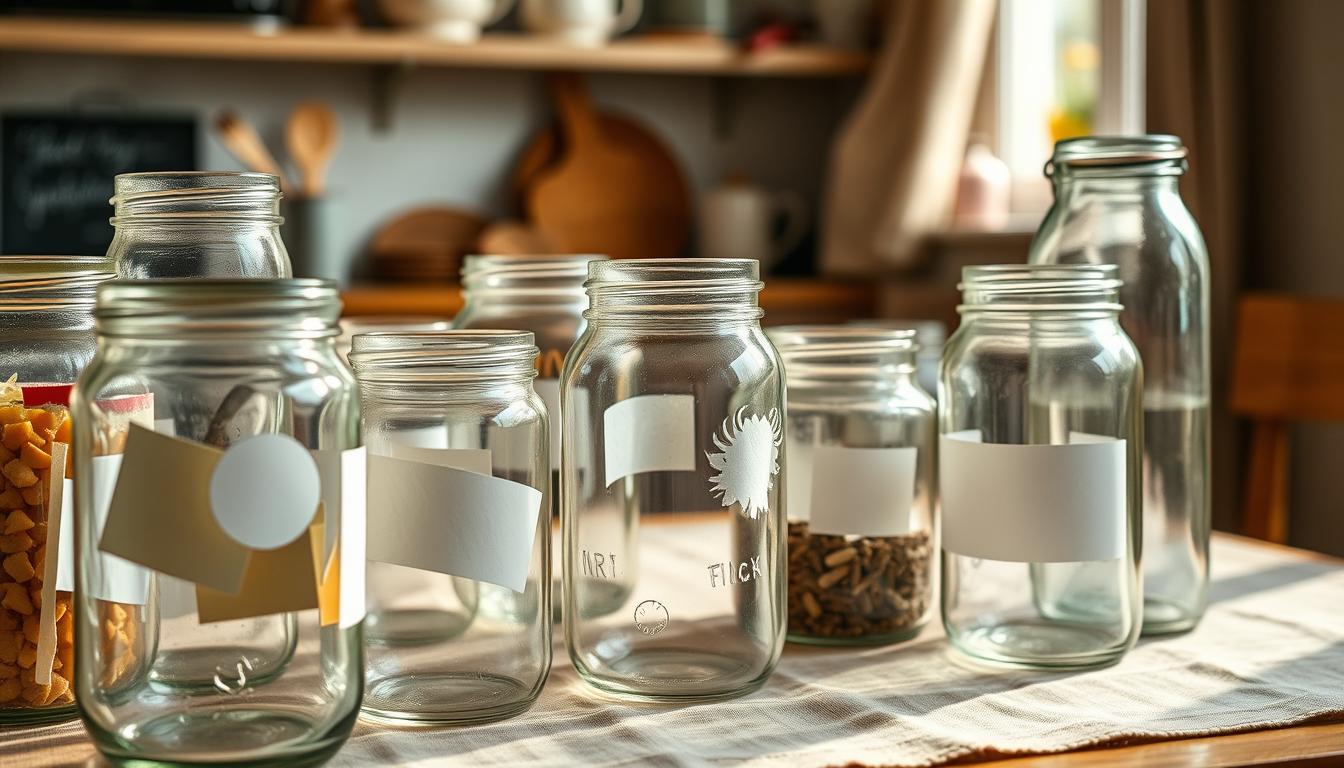
Removing old label residue means dealing with the gummy film and stray paper bits that cling to glass after you peel a sticker. You want clear, scratch-free jars ready for pantry use, crafts, or drinks.
Sticker residue varies by label type and adhesive strength. Paper labels often lift with moisture and a bit of rubbing alcohol, while plastic stickers may need heat or oil to soften the glue.
For glass jars, you can safely use gentle solvents, warm water, or a hair dryer plus non-scratching tools. The most efficient approach blends a softening step with a plastic scraper to lift adhesive without harsh abrasion.
Below, you’ll find simple-to-strong methods—soapy water, hand sanitizer or rubbing alcohol, heat, vinegar, oil-based pastes, and last-resort removers. Always finish with a rinse and a proper wash to leave a streak-free, clean surface.
What you need to remove sticker residue from glass jars
Gather the right kit before you start. A few household staples handle most sticky situations quickly and safely.
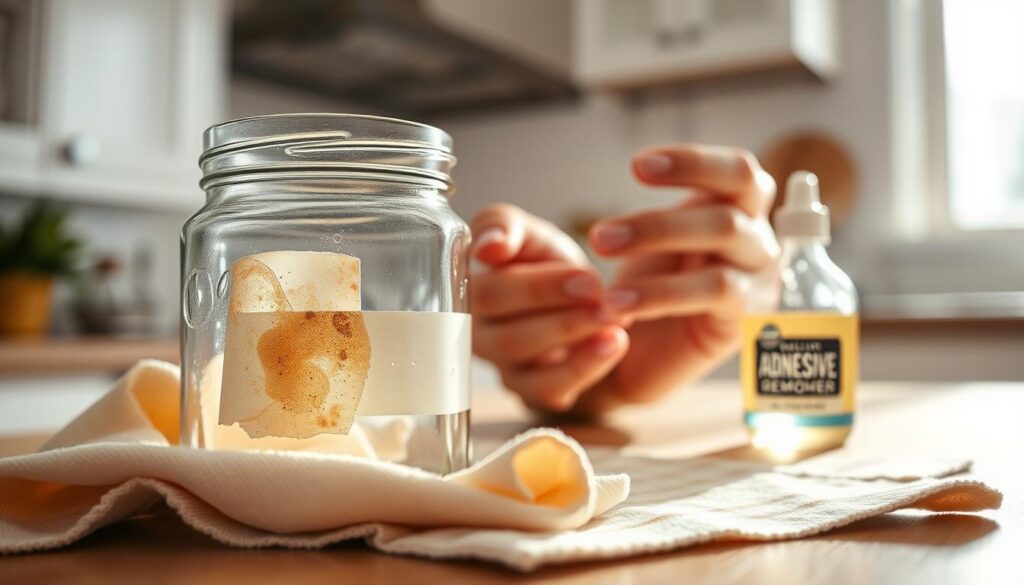
Basic supplies you likely already have
Start with dish detergent, warm water, a paper towel, and a clean cloth. Warm soapy water loosens light adhesive and lifts small bits without strong chemicals.
Add a plastic scraper or an old gift card to pry away softened sticker pieces. Plastic tools protect glass more than metal and cut down on scratching.
Helpful add-ons for stubborn sticker glue
- Rubbing alcohol or hand sanitizer — good for dissolving tough sticker glue when soap and water stall.
- White vinegar — warm a towel soaked in vinegar and press it to the area to loosen gummy film.
- Hair dryer — heat softens adhesive so you can peel larger sections instead of shredding them.
- Cooking oil or coconut oil — they lift gummy patches, but need a follow-up wash to remove the oily film.
For escalation, keep WD-40 or a commercial remover on hand. Use those sparingly and always wash with soap and water afterward.
Tip: Reserve one rag or paper towel for solvents so you don’t spread adhesive to other kitchen linens.
Before you start: protect your glass surface and test products
A quick spot-test and the right tools keep your glass looking new while you work. Always check any cleaner on an inconspicuous area first to avoid unwanted changes to surfaces or paint that may sit on the jar.
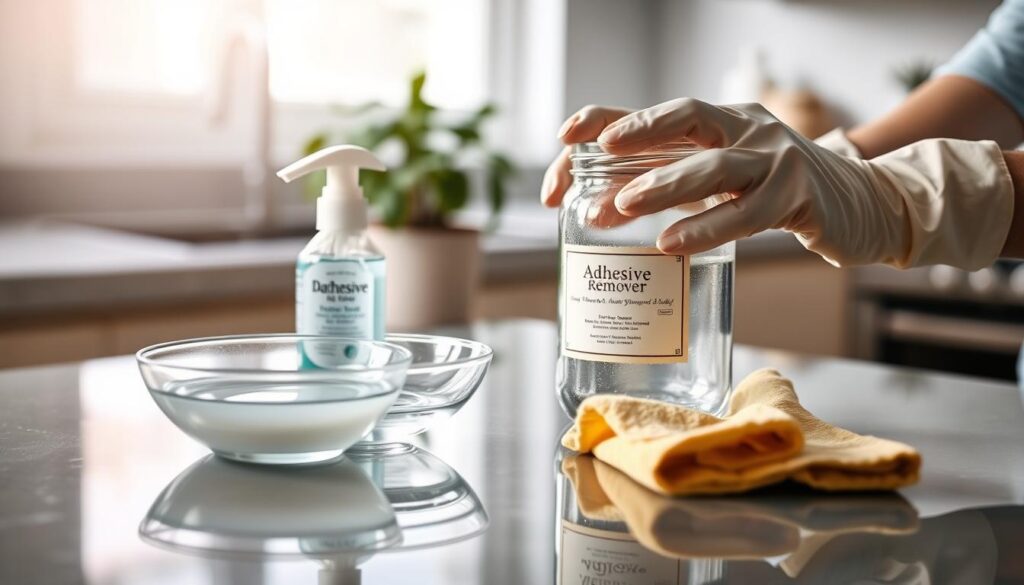
Spot-test solvents on an inconspicuous area
Test on a small area—near the bottom edge or a face that normally faces the cabinet. Apply alcohol, WD-40, or a commercial product, wait 5–10 minutes, then wipe to confirm no hazing or loss of paint or print.
Avoid scratches by choosing the right plastic scraper
- Use a plastic scraper or an old gift card; plastic tools protect glass better than metal blades.
- Keep the scraper low and flat, push with light pressure, and re-soften sticky residue instead of forcing it dry.
- Work on a stable towel so the jar won’t slide and you don’t grind marks into the surface.
Start gentle and only escalate if needed. If the jar has printing, decorative coatings, or a special finish, stop and re-test before continuing.
Quick prep that makes removing sticker residue easier
A short warm-up step softens glue and makes peeling much easier. Good prep saves time because the more sticker you lift in one piece, the less sticky cleanup you face.
Peel off what you can without tearing the paper
Lift a corner slowly and pull back at a low angle. If the paper starts to shred, pause and warm the area again so you avoid tiny paper bits.
Hot-water paper towel softening for a few minutes
Soak a paper towel in hot water and press it onto the sticker residue. Let it sit for three to five minutes; the adhesive will soften and the paper fibers loosen.
- Re-wet the towel if it cools quickly, especially in a chilly kitchen.
- After three to five minutes, try peeling or gently scraping; you should need less solvent.
- If the sticker is plastic, this compress helps with residue but may not penetrate the sticker itself—switch to heat or alcohol if needed.
Use this simple method first to reduce the need for stronger products and to make it easier to remove sticky patches later.
Removing old label residue with soap, water, and gentle scraping
Begin by softening the adhesive with warm water and dish soap so scraping is safer. This is the gentlest method for glass jars and often avoids harsher solvents.
Warm soapy water soak for jars you can submerge
Fill a sink or bowl with hot-to-warm water and add a few drops of dish soap. Submerge the jar and wait a few minutes until the gummy film turns tacky-soft.
After about three to five minutes, use a soft cloth to wipe the loosened sticky residue away.
Dish soap wipe-down for jars you can’t soak
Keep a hot, soapy cloth pressed to the area and re-wet often. Rub gently in circles to lift adhesive without spreading it across the surface.
Use a plastic scraper or old gift card to lift sticky residue
Work with short, flat strokes and wipe away loosened bits frequently. Reapply warm water so you don’t drag grit and scratch the glass.
Dry and inspect the area before moving to stronger methods
Rinse, dry, and check the jar under good light. If spots smear but won’t come clean after several passes, switch to an alcohol-based method next.
Alcohol-based methods that dissolve adhesive fast
Rubbing alcohol and gel sanitizers work differently, but both attack adhesive directly. Alcohol dissolves sticker glue rather than only softening it, so these options often feel much faster than soap alone.
Rubbing alcohol on a cloth or paper towel
Wet a cloth or a paper towel with rubbing alcohol and press it to the sticky area. Let sit minutes so the solvent breaks the glue.
After it soaks, rub in firm circles until the sticker residue rolls up. Repeat once if thick adhesive stays behind.
Hand sanitizer hack for paper labels and leftover residue
For vertical jars or paper labels, squirt hand sanitizer onto the paper and spread so it stays wet. The gel clings and saturates the fibers better than plain alcohol.
Use your hand or a paper towel to rub the label away, then let sit a few minutes and work the last bits free.
Finish and safety notes
Rinse well and wash with dish soap so the jar feels clean and grease-free. Be cautious: alcohol can affect printed or painted markings—spot-test if needed.
Heat and vinegar options for stubborn labels and stickers
When soap and alcohol stall, gentle heat or a warm white vinegar compress often frees sticky patches without harsh chemicals.
Hair dryer heat to loosen adhesive
Use heat as a low-mess method when you want to avoid stronger solvents. Hold a hair dryer a few inches from the sticker and use medium heat for several seconds to a minute for thicker spots.
Lift an edge while the area is warm and peel slowly. If the sticker tears, warm it again and use a plastic scraper to lift softened adhesive instead of forcing dry spots.
Warm white vinegar compress for three to five minutes
Soak a paper towel in warm white vinegar and press it onto the area for three to five minutes. The vinegar works to break down adhesive so you can rub the remaining film away.
After the minutes pass, rub with a cloth, rinse with water, and repeat the compress once if tacky spots remain. This method fits well for stickers that resist soap but don’t need commercial removers.
Note: Test first on surfaces like painted or printed finishes to avoid damage.
Oil, WD-40, and paste methods for extra-sticky residue
When gentle cleaners fail, kitchen oils and targeted sprays step in to tackle very sticky patches. These are escalation options for extra-sticky spots that survive soap, alcohol, vinegar, and heat.
Cooking oil or coconut oil to lift gummy adhesive
Apply a small amount of cooking oil or coconut oil to the tacky area. Let sit for a few minutes so the glue softens.
Wipe and use a plastic scraper to lift the softened sticky residue. Work in short passes and wash with dish soap when finished.
Baking soda and coconut oil paste for tacky spots
Mix two parts coconut oil to one part baking soda into a paste. Spread on tacky spots and let sit a few minutes.
Rub gently, then wipe away. This mild abrasive helps remove remaining sticky patches without harsh chemicals.
WD-40 for super sticky adhesive
Spray WD-40 directly onto the stubborn adhesive and let sit several minutes. Wipe clean and then wash thoroughly with soap to remove any oily film.
Use WD-40 on non-porous surfaces like glass; avoid porous surfaces that can stain.
When a commercial product like Goo Gone makes sense
Choose a commercial remover when you have many jars, thick goo, or need a fast, predictable result. Apply the product, let sit about three minutes, then scrape or wipe.
Always wash and rinse thoroughly afterward so jars are safe for food use. Be patient—sticky patches often lift in layers, so repeat the let sit step rather than forcing the surface.
Conclusion
Finish strong by following a simple step-up plan that saves time and protects glass.
Start gentle: use warm soapy water and light scraping, then move to dissolving options if needed. This progression of methods helps you avoid damage to the surface and keeps tools effective.
For fast wins, press a hot paper towel for a few minutes, scrape, or apply rubbing alcohol or hand sanitizer, let it sit, then rub with your hand and rinse. Heat works best for intact stickers, while alcohol targets sticky film and stubborn residue.
Always finish with a thorough wash (dish soap + warm water). If a spot lingers, reapply the same method and extend contact time rather than forcing the area with metal or high pressure. With the right steps, most stickers and labels lift cleanly and your jars are ready to reuse.