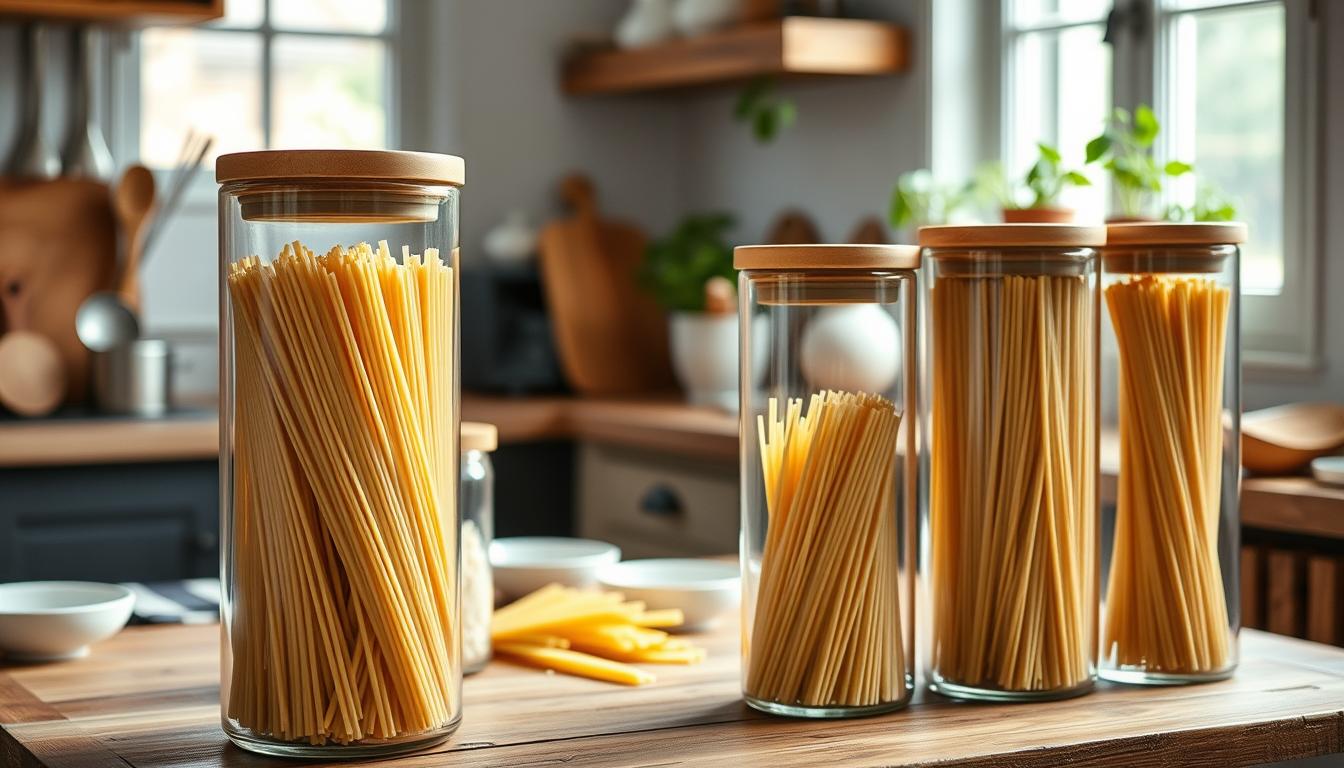

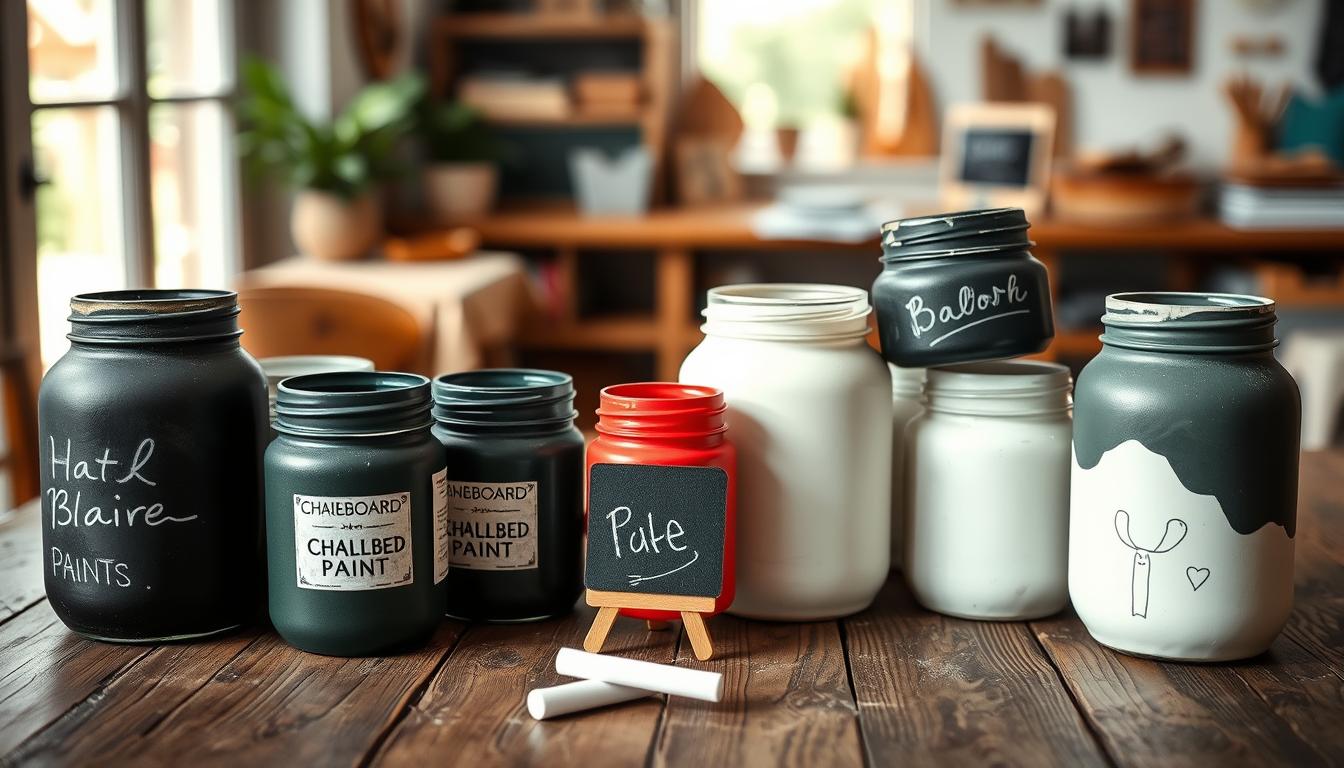
You’ll learn a simple DIY project that turns everyday glass into useful, updateable labels for pantry, craft, or bath storage. This tutorial shows how chalkboard paint jars work and why the method is handy when your contents change often.
Chalk-based coatings cling to glass and give a smooth, matte color that needs minimal prep. Use mason jars or a single mason jar from thrift finds after checking they aren’t collectible.
Expect to apply at least two coats for opaque coverage. Decide up front if you want a true erasable surface for writing with chalk or a decorative finish for looks.
By the end, you’ll have reusable, cohesive label zones that refresh in minutes and keep shelves tidy. You’ll also keep the coating on the outside only so the jar still works for flowers or food storage.
Gather Supplies and Prep Your Jars for a Smooth, Matte Finish
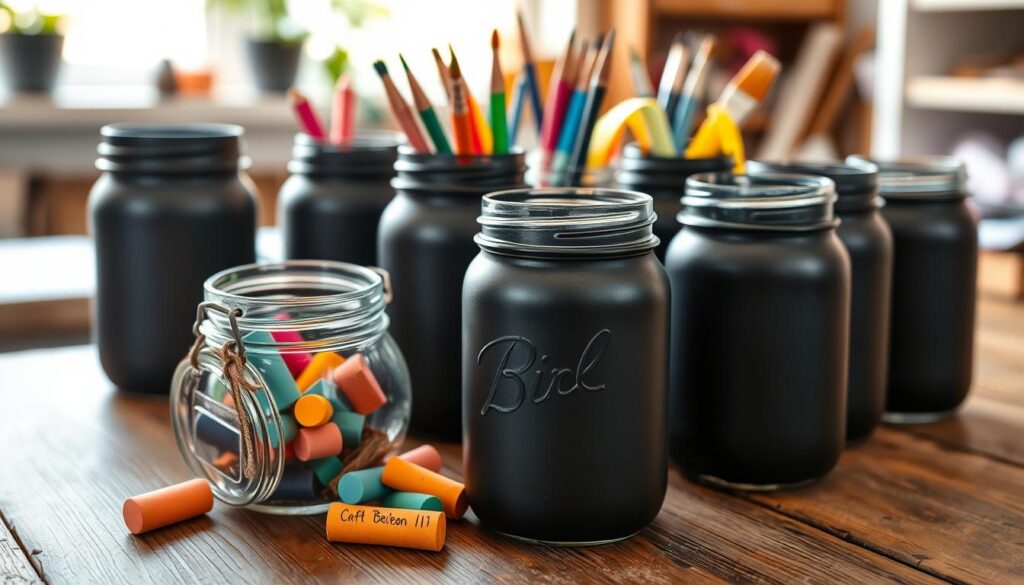
Before you touch a brush, collect the right tools and pick suitable glass so your finish lasts. Choosing between new mason jars and thrifted options depends on budget and condition. Thrifted mason jars can be about fifty cents each, but avoid hand-blown or unusually tinted pieces that may be collectible.
Choose the right jar
Check numbers on the base and compare online if you suspect a collectible. For reliable results, use plain, thick-walled mason or store-bought glass when you want durability for high-touch areas.
Materials checklist
- Essentials: chalkboard option for writable labels or chalk paint for a soft matte look, a good brush or foam sponge, and a drop cloth (plastic or cloth).
- Optional: matte sealer like clear acrylic spray or matte polyurethane and sandpaper for light distressing.
- Tip: keep paper towels handy to remove residue from labels before washing.
Clean and dry properly
Run your pieces through the dishwasher when possible and dry them fully. Remove sticker glue with warm soapy water or a gentle adhesive remover.
For a streak-free first coat, slightly dampen the brush (not dripping) to thin the application. Protect surfaces with cloth or plastic—newspaper can transfer and ruin the finish.
How to Paint Chalkboard paint jars Step-by-Step
Start steady: place your hand inside the mason jar for a firm grip, then paint the rim first to get a clean edge. Turn the piece upside down and work the outside in smooth strokes so coverage stays even.
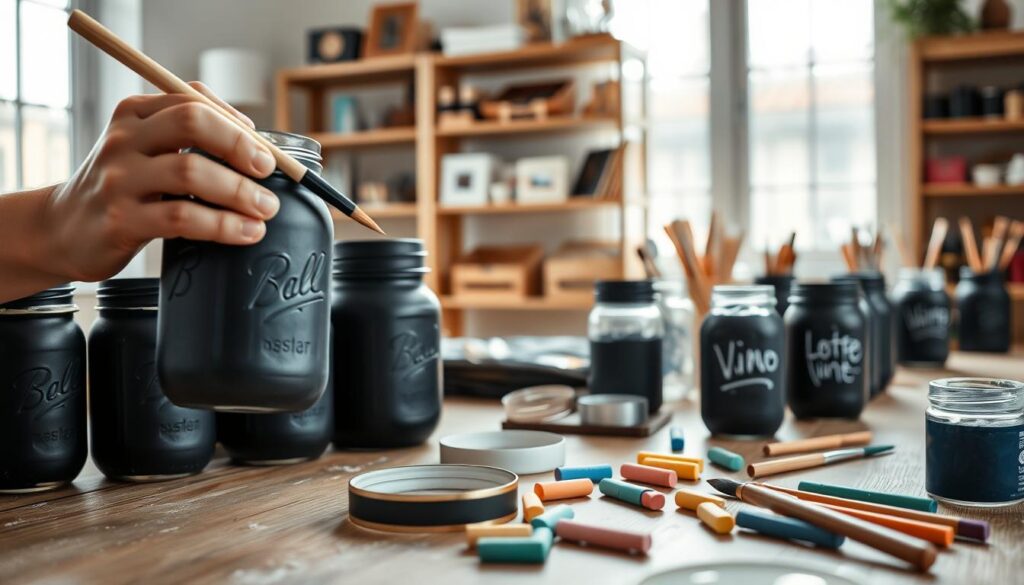
Wait about 30 minutes between coats. One coat often looks thin on glass. A second coat is the sweet spot for most projects. Add a third coat for an opaque, boutique finish.
- Tools: a brush gives control but may show strokes; a foam sponge gives textured coverage; a makeup wedge is a good hybrid.
- Reduce marks: don’t overload the brush and try a slightly damp brush for smoother results.
- Distress: sand rims, letters, and edges with 150-grit (or 220+ for light wear), then wipe dust away.
Keep a neat label zone by painting a rectangle or band and leaving the inside clear if you plan to use the jar for flowers or storage. Fix stray spots with rubbing alcohol on a Q-tip and retouch thin areas before the final coat.
Finish, Seal, and Make Labels That Update in Minutes
The right topcoat can protect your work or change how easily you can update labels. Decide based on use: pantry jars that see moisture benefit from a durable seal, while a writable surface for quick swaps should stay unsealed.
Topcoat choices and what they do
Clear acrylic sealer gives fast protection and dries in minutes. Matte spray polyurethane adds a tough, matte finish for high-touch pieces. Mod Podge (matte) is a brush-on option when you want control over edges and texture.
How to prevent chips and peeling
- Apply thin, even coats and allow the full cure time between layers; dry-to-touch is not the same as cured.
- Use a light second coat only where needed—rims and high-contact zones get extra attention.
- Skip newspaper under drying pieces; use a clean drop cloth or cloth paper to avoid transfer and stuck fibers.
For quick label changes, keep a consistent writable zone, choose chalk or chalk markers depending on your seal, and wipe with a damp cloth to avoid ghosting. This approach keeps color choices cohesive across your house and makes spring refreshes or other projects simple to update.
Conclusion
Finish your project with a quick review of steps that keep each piece consistent and ready to use.
Start by confirming you chose the right mason and prepped the glass correctly. Build even coverage with thin layers, letting each dry before adding another coat.
Tool choice changes texture: a brush gives control, a sponge softens the finish. Light sanding adds a distressed, farmhouse look without overworking the surface.
Avoid painting collectible mason pieces and never dry fresh pieces on newspaper. Use a clean drop cloth and check markings first to protect value.
Final checklist: clean, two thin coats, touch up edges, seal if needed, and label for easy swaps. Use finished mason jars as functional decor and repeat the method in matching colors for a cohesive set.