
You want a countertop solution that keeps your loaves fresher for longer and fits your kitchen style. This practical guide helps with your bread box selection so you can weigh wood and metal options.
We’ll look at real-world factors: freshness performance, cleanup, durability, space, and style. Expect to learn what makes bread go stale versus moldy, why airflow and vents matter, and how different materials behave in everyday kitchens.
Key takeaway: no container stops time, but the right model slows drying and helps manage humidity compared with leaving loaves exposed. You’ll finish with a short checklist and top picks by lifestyle so you can make a confident choice among available boxes.
You will learn about moisture control, airflow, material pros and cons, and an actionable shortlist to match your counter and habits.
Why a bread box matters for keeping bread fresh on your kitchen counter
A dedicated counter container makes a noticeable difference in how long your loaf stays soft and usable. On the kitchen surface, air and heat swings speed staling and encourage mold. A proper bread box creates a calm micro-environment that slows both drying and moisture spikes.
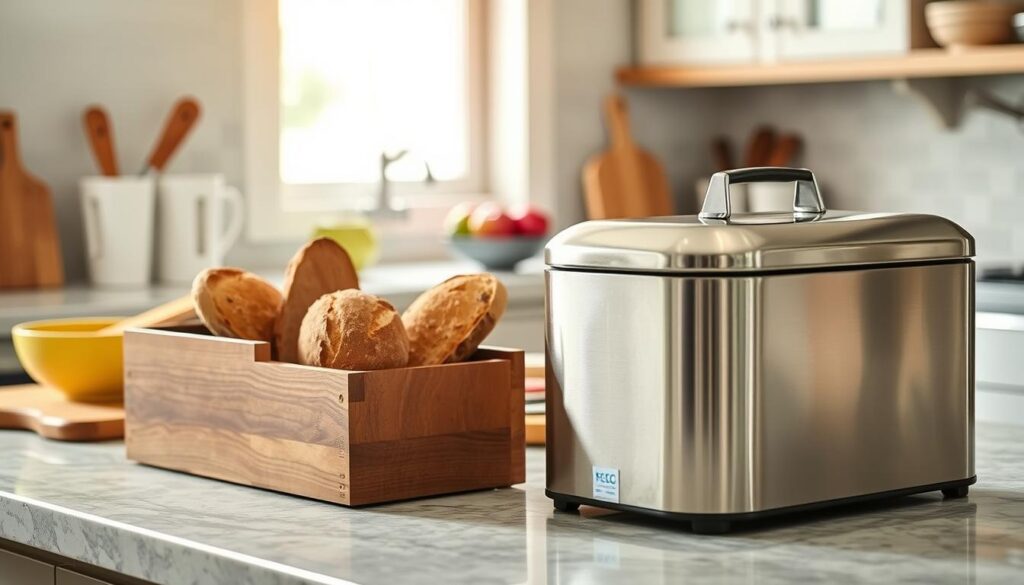
How a dedicated container supports an organized countertop space
Consistent placement means you stop leaving bags open or stacking heavy items that crush slices. That daily habit keeps your counter tidy and reduces waste.
What “fresh longer” means for different loaves
Practical freshness varies: for sandwich loaves you want soft, even slices; for loaf bread you want fewer stale crumbs; for crusty loaves bread you want a balanced crust that stays crisp without turning gummy.
- Countertop storage stabilizes temperature and humidity for short-term food storage (days).
- A clean interior and placement away from ovens improve outcomes.
- The best choice depends on how you buy, bake, and eat in your kitchen space.
What actually makes bread go stale or grow mold over time
Two common outcomes come from the same source: changes in moisture and airflow inside a closed container. One problem is staling — texture loss and drying. The other is mold — microbial growth when humidity stays high. You need different fixes for each.
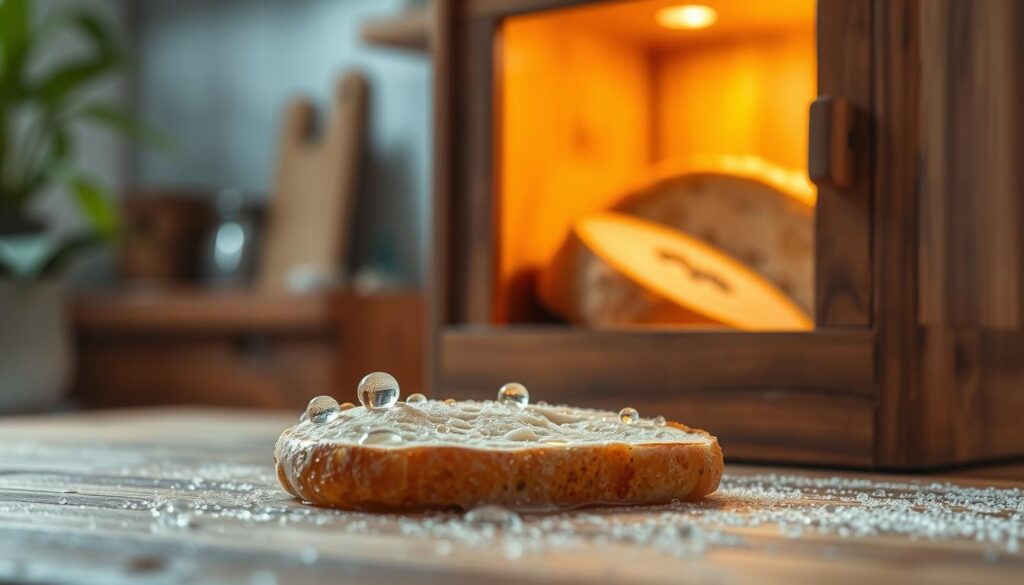
Moisture, air, and temperature inside a closed container
Your loaf releases moisture after baking. In a well-ventilated case that vapor can escape and reduce condensation. With poor ventilation that water can collect and feed mold growth.
Balance matters: some air exchange prevents a damp pocket, but too much air speeds staling. HOMEKOKO notes vents help regulate temperature and humidity, extending freshness for weeks when used correctly.
How lids and doors change airflow and mold risk
A tight lid or sealed door traps humidity and cuts drying. That lowers staling but raises mold risk if condensation forms. A lid with vents or a loose-fitting door lets excess moisture escape and reduces hot spots where mold appears.
Why plastic bags can trap moisture compared with a dedicated container
A warm loaf in a sealed plastic bag creates steam. That condensation wets crumb surfaces and encourages mold faster than a vented container designed for air flow.
- Staling: caused by moisture moving out and crumb firming — needs limited air exposure.
- Mold: thrives where moisture condenses — needs ventilation to lower risk.
- Practical cues: place your container away from heat, open it briefly each day, and watch for condensation; if you see droplets, add more airflow.
Wooden and bamboo bread boxes
Natural materials like wood and bamboo bring texture and warmth to your kitchen while offering practical storage. These options suit farmhouse chic and modern-minimal counters alike.
Material benefits and decor fit
Wood warms a room: a wooden finish hides smudges and crumbs better than glossy surfaces and supports rustic decor. You get a tactile, classic design that blends into most countertops.
Why bamboo appeals if sustainability matters
Bamboo is renewable: it’s marketed as an eco-friendly material and often lasts for years when made from quality stalks. Its clean lines can read modern while remaining natural.
Where natural materials can struggle and how to clean them
Wood and bamboo absorb odors or moisture if ventilation is poor. That raises the risk of mildew over time.
- Wipe interiors promptly and dry thoroughly after cleaning.
- Avoid soaking; check hinges and corners where crumbs gather.
- Use gentle cleaners and rotate storage to reduce trapped moisture.
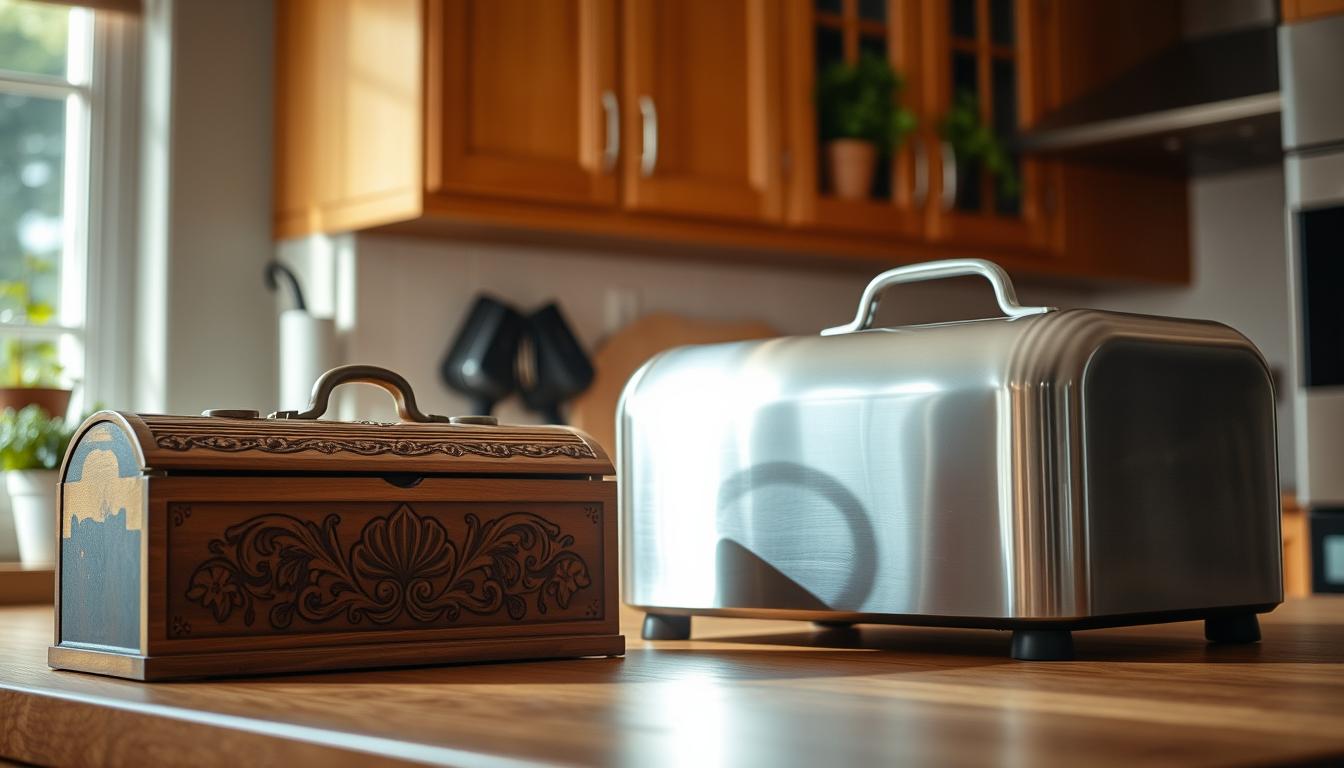
Ultimately, you’ll weigh the warm, natural design against metal’s easier wipe-down durability when you make your final choice.
Metal bread boxes: steel bread box and stainless steel options
If you want a low-maintenance, durable option that matches modern kitchens, consider stainless steel or painted steel models.
Why these metal models are common: stainless steel and steel resist warping and wipe clean fast in a busy kitchen. That makes this material ideal when you move a unit often or use it as a general counter organizer.
How metal affects moisture and odor
Metal surfaces do not absorb moisture like natural materials. Humidity control depends on vents and how often you open the lid.
Odor retention: stainless steel holds fewer smells than porous materials, but crumbs or trapped moisture in seams can still cause odors. Empty and wipe interiors regularly.
Style, color, and daily use
Stainless steel fits modern counters, while painted steel comes in neutral tones or fun colors if you want a decor-forward piece.
- Durability for kids and heavy use
- Easy-clean surfaces for quick maintenance
- Pick a model with vents and the access style you prefer
Bread box selection: the decision factors that matter most
Choose a storage solution that matches how you buy and use loaves so nothing gets crushed or fades fast.
Size and capacity planning
Measure by loaves: think in whole loaves and their height. If you often bring home large bread or multiple loaves, leave extra headroom so slices stay intact and air can circulate.
Countertop fit and footprint
Measure the counter space and clearance. Account for roll-top slide space, lid lift, or door swing so the unit works where you place it.
Price versus quality
Spending more usually gets smoother hardware, durable finishes, and better seals and vents. Cheaper plastic models save money up front but often lack long-term durability and proper ventilation.
Design features that matter daily
Compare roll-top, hinged lid, and front door styles for how you reach in. Windows add visibility but can tempt you to open more often.
Ventilation and airflow
- Vents help regulate humidity and cut mold risk.
- Controlled air exchange slows both drying and condensation.
- Pick a model with adjustable vents if your kitchen runs warm or humid.
Large bread box vs. compact boxes: choosing the right capacity for your household
Pick capacity based on how much you actually store each week, not what looks nice on the counter.
If your household bakes often or brings home multiple loaves, a larger unit makes sense. A large bread box lets you store several loaves, plus buns or bagels, without stacking or crushing.
Think in practical terms: how many loaves do you keep overnight? Do you need vertical room for tall artisan loaf shapes? Measure that height and length before buying size and capacity.
Preventing overcrowding in smaller boxes
Stuffing too much into a small unit restricts airflow and creates moisture hotspots. That speeds spoilage and can press slices flat.
- Rotate stock: place older loaves in front so you use them first.
- Use a cutting board as a shelf only if it does not trap crumbs or block vents.
- Avoid stacking soft loaves: keep them side-by-side when possible.
Match your kitchen layout to the shape: wide, low models suit shallow counters; taller, narrow boxes work where vertical space is free.
Decision logic: pick the smallest unit that comfortably fits a typical week of loaves without compression. That balances storage needs, countertop space, and freshness.
Lids, tops, and access styles that change real-world freshness
How you open and close a storage unit affects freshness just as much as the material it’s made from. Every opening trades interior air with room air, and that swap shifts moisture and staling over time.
Single lid, roll-top, and front door: quick comparison
A simple single lid sits on top and is easy to lift but needs vertical clearance. A roll-top saves overhead space and often glides smoothly in tight kitchens. A front door opens outward and is handy for frequent access, though it needs clear front room.
Design and ergonomics shape behavior. If reaching the top is awkward, you may leave the lid cracked or open longer. That extra open time increases air exchange and speeds drying or condensation cycles.
- Why it matters: each open changes humidity and affects texture.
- Windows help: clear windows reduce unnecessary openings by letting you see stock at a glance.
- Real kitchens: warm summer air brings humidity in; dry winter air pulls moisture out—your routine alters outcomes.
Decision tip: pick the access style you will use multiple times a day without fuss. A lid you can open quickly and close firmly helps control air, moisture, and time on the counter for fresher results.
Countertop style and kitchen design: matching materials to your decor
A well-chosen countertop unit can complete a kitchen’s look while staying practical every day. Think of your storage piece as part of the room’s furniture, not a hidden afterthought.
Farmhouse chic: wood-finish and wooden options
Wood finishes complement warm neutrals, open shelving, and vintage accents. A wood piece blends with butcher-block counters and matte brass hardware to enhance a cozy, lived-in vibe.
Choose a model with simple lines and visible grain to reinforce that farmhouse feel without overwhelming the counter.
Modern kitchens: steel finishes and clean lines
Steel and stainless steel pairs naturally with appliances and minimalist design. A sleek steel unit reads as intentional when matched to chrome or black hardware.
Pick a model that echoes your cabinet pulls and light fixtures for a polished, cohesive result.
Color choices: neutral tones vs. statement colors
Neutral tones (white, black, brown) calm a small kitchen and keep the surface visually light. Use these if you want the counter to recede.
Statement colors—mint green, thecoming pink options, or bold hues—work as focal points in themed kitchens. Let color be the accent, not the only feature.
- Match finishes: align hardware tones (black, brass, chrome) across organizers.
- Mind clearance: confirm the model opens smoothly where you plan to place it.
- Prioritize cohesion: choose a style that fits your counter footprint and daily reach.
Beyond bread: what else you can store in bread boxes
A good countertop container doubles as a general-purpose baked-goods keeper for everyday treats. Use your storage unit to keep pastries handy and protected from dust and pets while you serve throughout the day.
Cakes, muffins, and cupcakes stay fresher when sheltered from drafts. Muffins and unfrosted cakes benefit from limited airflow, which slows drying without trapping condensation.
Clear plastic boxes with lids for display and transport
Clear plastic containers with a tight lid are ideal if you need visibility for gifting or selling. They make transport simple and let you show off cupcakes or slices without opening the lid repeatedly.
- Expand value: use a countertop case for multiple baked goods so your purchase pulls double duty.
- When plastic makes sense: choose clear plastic for display and lightweight transport, but dry items before storing to limit condensation.
- Tradeoffs: plastic is convenient but can trap odors and moisture; clean it thoroughly between uses.
At-home tip: dedicate your unit to daily bread most weeks, and keep a separate sealed plastic carrier for frosted or highly scented items to avoid flavor transfer.
Shopping guidance: decide if you want a multipurpose food storage unit or a bread-first design. Pick vents or removable lids if you plan mixed use.
How to “test” freshness at home without a lab
Start a short, controlled test you can run on your counter to see real differences between wood and metal storage. This is a hands-on way to observe texture, condensation, and early mold so you know what works in your kitchen.
A simple time-based comparison you can run
Pick one loaf and slice it uniformly. Place equal portions into a wood or bamboo unit and a metal unit at the same time.
- Same loaf: use identical slices to avoid variation.
- Same routine: open each container the same number of times per day.
- Same spot: keep both units side-by-side on the same counter area.
What to watch for during testing
Check texture daily for stiffness or sogginess. Look inside for droplets or pooled moisture on surfaces.
Note any small spots of mold, especially near seams or where crumbs gather.
How to interpret results and tweak placement
If you see condensation, that signals too much trapped moisture and you should increase air exchange or vents. If slices dry quickly, try a slightly less drafty spot or a looser lid to reduce air flow.
- Move units away from sunlight and stove heat.
- Avoid placing near dishwasher steam or warm appliances.
- If you buy more than you finish, freeze extra portions and refresh in the oven to cut waste.
Top picks and use-case roundup: best bread box choice by lifestyle
Choosing the right model comes down to space, style, and how many loaves you actually eat. Below are practical categories to match common habits and kitchens.
Best for small kitchens
Space-saving footprints like roll-top or compact front-door designs fit a single loaf without crushing it. Pick a shallow depth if vertical clearance is limited.
Best for style-first shoppers
Bamboo suits warm, natural counters while stainless steel complements modern finishes. Look for fun color options if you want a statement piece or search “culinary couture” filters for curated looks.
Best for value
Good value balances build, easy cleaning, and vents. Avoid tiny plastic models that look cheap and lack proper airflow. A midpriced steel model often wins on long-term performance and price.
Best for high-capacity storage
Pick a wide, low design for multiple loaves. Use a removable cutting board as a divider only if it doesn’t block vents and is easy to wash. If you buy a 3-loaf bundle (about $36 in some offers), plan to freeze extras and reheat when needed.
- Shopping cue: verify dimensions, venting type, and lid style before you buy.
- Tip: match size to your typical weekly loaves, not rare splurges.
Conclusion
Longevity for your loaf comes from matching ventilation, size, and access to how you use your kitchen each day.
The real winner is the unit that balances airflow and humidity for the type of bread you buy and your routine. Pick the right size and capacity, choose an access style you will use often, and favor adjustable vents and easy-to-clean surfaces.
Rule of thumb: if you want warm, natural decor, a wood or bamboo option feels right; if you want wipe-clean durability and modern style, metal often fits better.
To prevent waste, don’t overcrowd the container, clear crumbs regularly, and move it if you see condensation or early mold.
Action step: measure your counter, list your typical weekly bread, then pick the bread box that fits your routine so your loaf stays fresher longer.