
You set the goal for kitchen order when you pick an extra-tall jar that keeps long noodles intact and fits your shelf space. This guide helps you judge what “pasta container height” means in real kitchens, from lid clearance to easy scooping.
Quickly learn which storage choices protect freshness and reduce broken strands. You will see which shapes and seals cut down on mess and keep food visible so you can rotate stock without hassle.
Key buying points include airtight sealing, durable materials, right capacity, and easy cleaning. With those checks, you move from browsing to confident selection and better pantry flow.
– Choose tall, narrow designs to keep long pasta whole and visible.
– Prioritize airtight seals and washable materials for lasting freshness.
– Fit the jar to your shelf and plan space for other food items.
Why extra-tall pasta storage containers matter for your kitchen and pantry
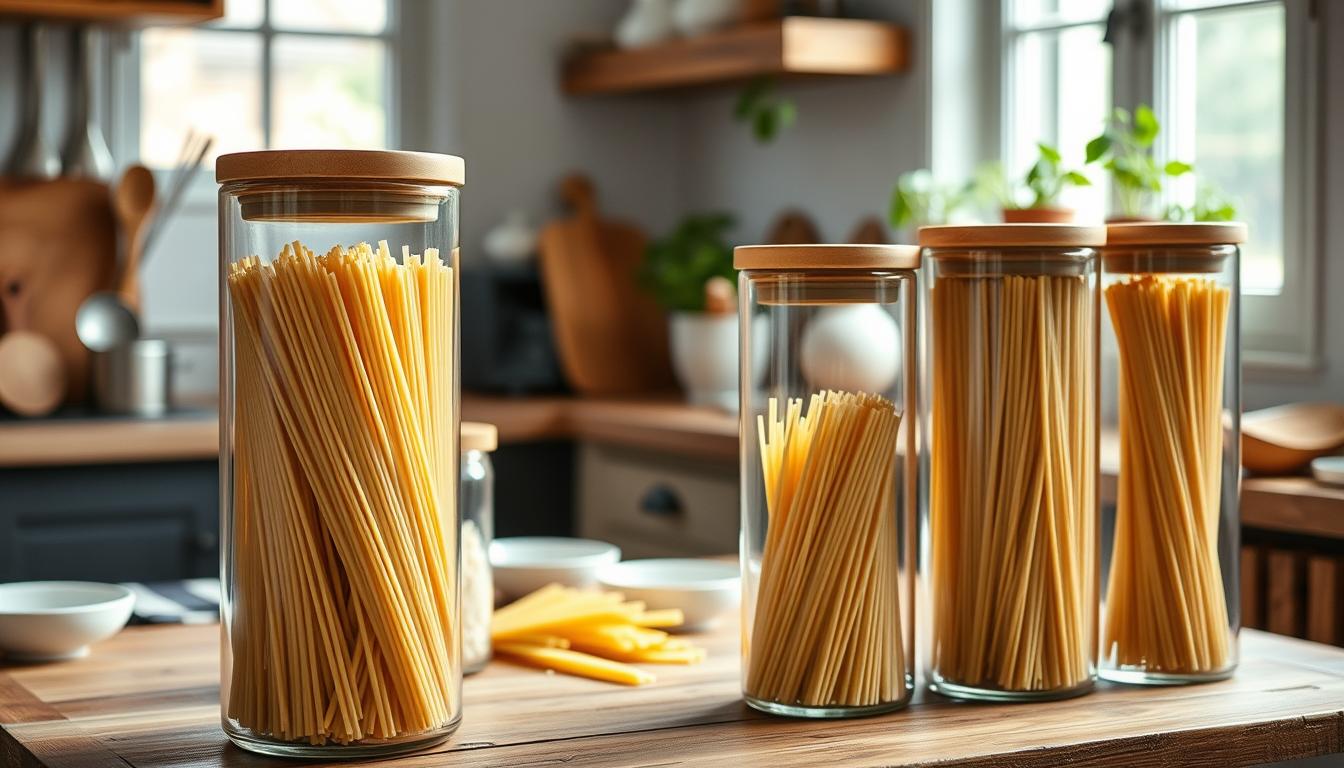
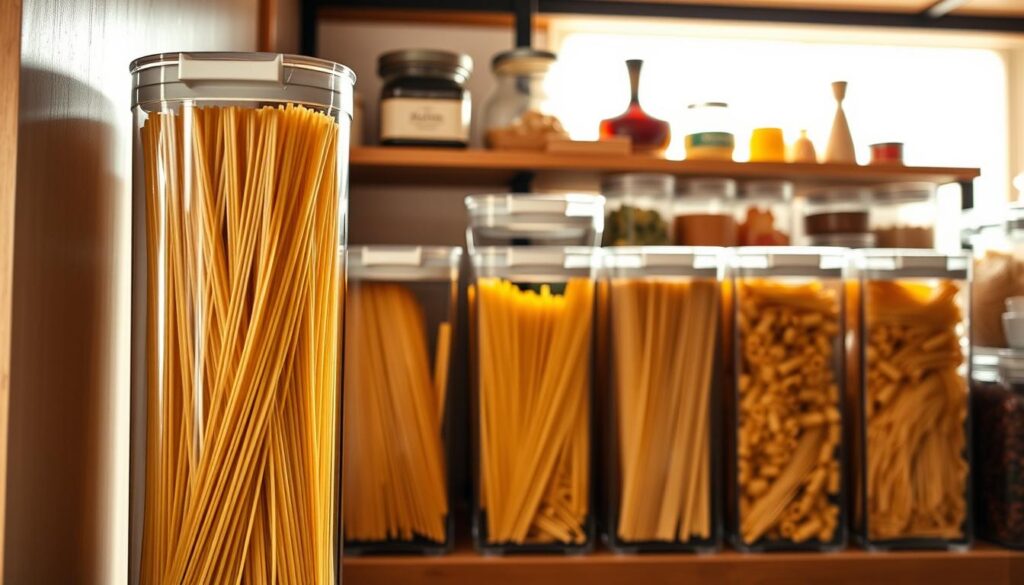
Tall, upright storage keeps long noodles intact and makes your pantry easier to scan. You get fewer broken strands, faster meal prep, and a neater shelf in the same step.
Keep spaghetti and linguine protected from breakage
Storing long strands upright prevents you from bending or snapping them to fit. When you avoid forcing packages into short jars, you cut waste and keep servings tidy.
Improve pantry organization with vertical storage
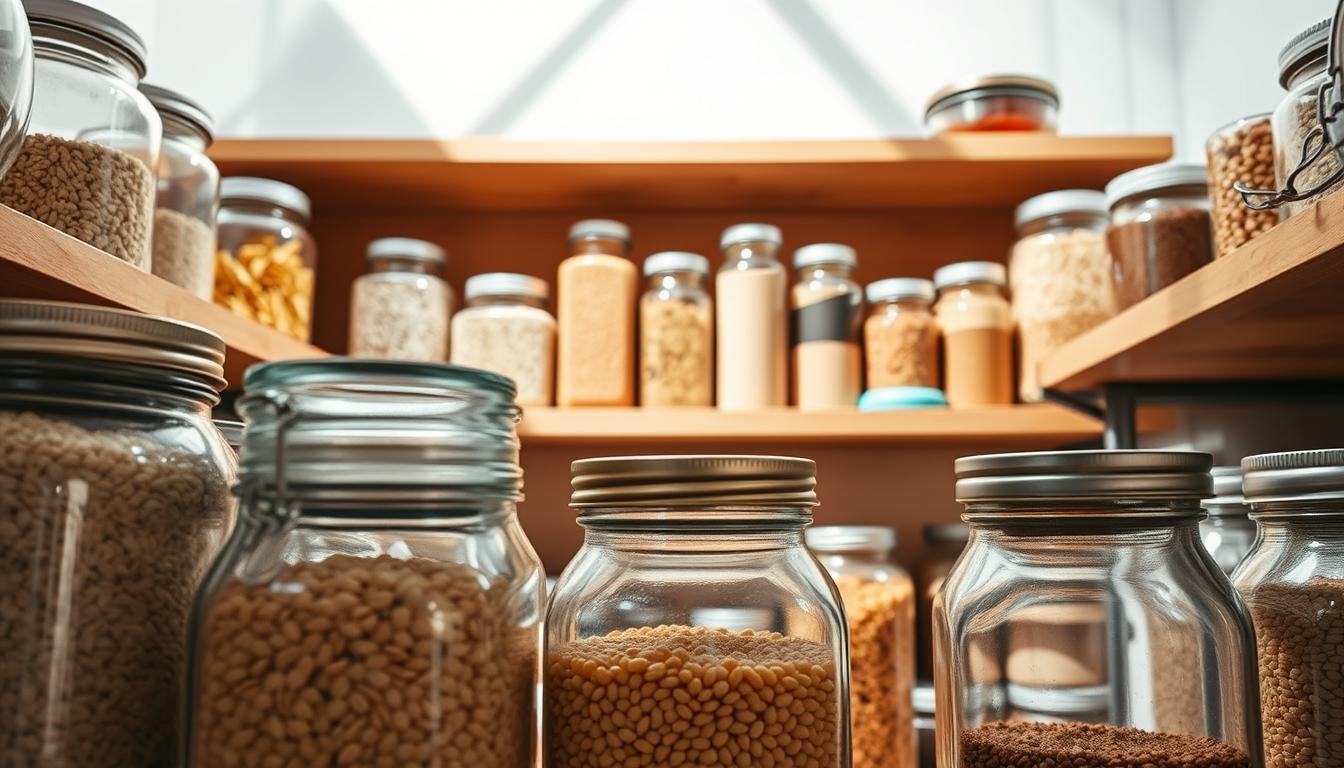
Vertical designs line up neatly on shelves and reduce clutter from bags and boxes. Standardizing shapes makes it easier to group pasta storage with grains and other food items.
Support fresher food storage with an airtight seal
An airtight lid and a dependable seal limit moisture and odors, helping dry goods stay fresh longer. Stable openings and clear sides also let you check levels at a glance so you restock on time.
- You reduce spills with a stable base and practical opening.
- You simplify organization by using matching storage container styles.
- You speed up meal prep when you can reach the right item fast.
Pasta container height: how tall should your container be for spaghetti and linguine?
Measure your long noodles before buying to make sure they stand upright without bending.
Start by measuring a few strands of spaghetti or linguine. Compare that length to the usable interior of any storage container you consider, not just the listed exterior value.
Measure pasta length to match design
Interior geometry matters. Straight walls give more usable space than tapered designs. Check product details for inside clearance so the full length fits without forcing or snapping strands.
Choose enough clearance for the lid and easy removal
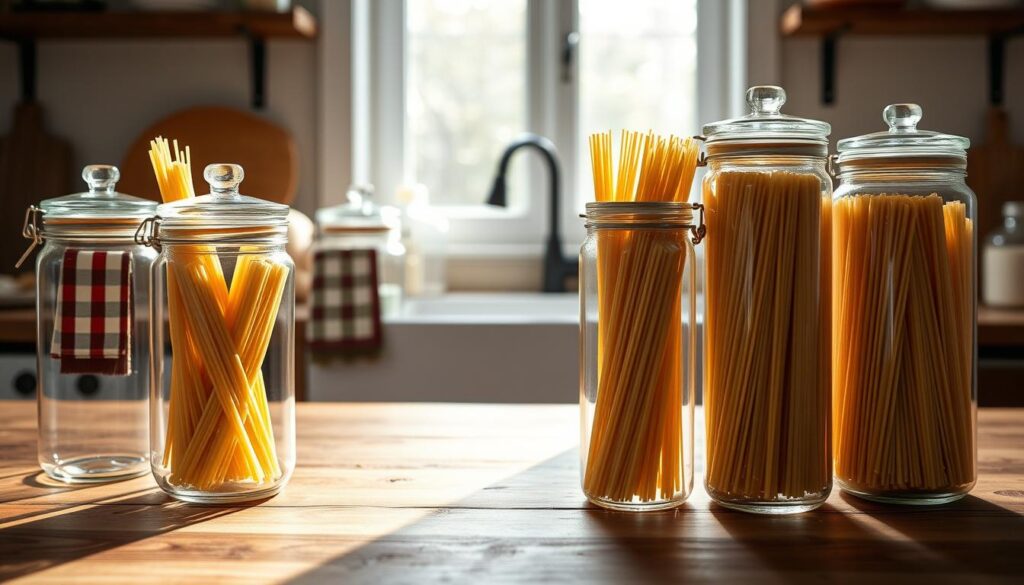
Leave a little room between the top of the noodles and the lid. That clearance lets you lift servings out cleanly and prevents the lid from pressing down on fragile strands.
Balance height and capacity with your pantry shelf space
Match tall jars to your shelf spacing so you do not block stacked food storage above. Consider capacity versus reach: a very tall option may not give better capacity if the opening is narrow.
When a set makes sense for mixed pasta shapes
A matching set keeps your pantry tidy and makes labeling easier. Choose at least two sizes so wide shapes and long strands each have the right fit and access.
- Measure first, buy once.
- Check interior design and lid clearance.
- Fit capacity to your shelf and cooking habits.
Key features to look for in airtight pasta containers
A reliable airtight system begins with a lid that locks well and keeps a consistent seal. Check how the lid closes — snap, clamp, or twist — and whether it feels secure each time you open and close it.
Lid design and seal strength for dependable food storage
Look for a gasket and rim that mate evenly. A tight seal limits moisture and pests and extends shelf life for dry food.
Test the closure by pressing and listening for a solid click. That quick check shows whether the seal will hold up over repeated use.
Wide-mouth containers for cleaner scooping and less mess
Wide openings make it easy to scoop or pour without snagging strands. That reduces spill cleanup and speeds meal prep.
Clear plastic vs. other materials for at-a-glance content checks
Clear plastic lets you confirm content levels at a glance so you know when to reorder. Compare plastic to glass for weight, cost, and breakage risk.
- Details to confirm: gasket fit, lid type, and intended pantry use.
- Stability: choose storage containers with a steady base to avoid tipping.
- Design notes: product details should state “airtight” if meant for long-term food storage.
Capacity and storage planning for spaghetti, linguine, and more
Plan capacity around how often you cook to keep weekly meals flowing without last-minute refills. Match the size you buy to how many servings you prepare each week so your shelf supports your routine.
Measure common package sizes and pick a storage container that fits them with some breathing room. That extra space lets you pour and close the lid without bending long strands like spaghetti or linguine.
Match container capacity to how often you cook
If you cook pasta twice a week, a medium size holds several boxes and reduces trips to the store. For daily cooks, choose larger food storage options so you refill less often.
Plan for cereal, grains, and mixed products
Standardize style across products for neat organization in your kitchen. Use zones—breakfast, baking, and long-grain goods—so you group similar food and avoid duplicate buys.
- Balance size and use: pick a set if you want matching looks and stackable storage containers.
- Keep accessibility: store spaghetti where you can reach it fast while leaving room for cereal and rice.
- Rotate stock: place newer food at the back so older items are used first and you restock before you run out.
Plastic, durability, and dishwasher safe convenience
Check how plastics stand up to daily use so your storage choices last.
Before you buy, confirm the maker rates both the base and the lid as dishwasher safe. Many listings only note the base; lids and hinges can warp under heat.
Dishwasher-safe food storage containers: what to confirm before you buy
Look for top-rack guidance and a stated temperature tolerance. That helps avoid warping when you run the dishwasher.
Durability for daily kitchen use and long-term pantry storage
Check how the material feels in-hand and whether the product resists cracking if tipped. Repeated washing and opening can stress hinges and seals over time.
Odor and stain considerations for plastic food storage
Separate strongly scented items from neutral dry goods to limit lingering smells and stains. Choose plastics that clean clearly and dry fast so your pantry stays readable.
- Confirm both pieces are dishwasher rated, not just the base.
- Follow care labels: air-dry and top-rack when advised.
- Prefer durable plastics that resist scratching and staining for long use.
Extra-tall container sets vs. single containers: choosing what fits your pantry
Think about your shopping rhythm and shelf layout before you commit to a set or a single tall piece. Start by listing what you store most and how often you reach for it.
When a matching set improves organization
Faster, consistent shelving
A coordinated set brings instant visual order. Matching shapes and sizes make it easier to stack and label, and they simplify rotation of stock.
When a single extra-tall option is the better value
Buy only what you use
If you mainly keep long noodles in one spot, a single tall unit can save money. Compare the price per product versus how many pieces you will actually use.
- Choose a set when you want quick pantry uniformity and matched storage containers.
- Pick a single unit if you store one type of long item and want the best value.
- Check product stock and whether add-on pieces are available later.
- Weigh the price against real use so you do not buy extras you won’t need.
Price, stock, and product details to check before checkout
Compare value by usable volume, not just the advertised size. A taller listing may have less usable space if the opening is narrow or walls taper.
Confirm what’s included on each product page. Missing lids or extra seals change the real cost and affect airtight performance.
Check stock before you plan a pantry refresh. Out-of-stock items can delay a matched set and force you to buy different models.
Quick checklist before you hit checkout
- Compare price by usable capacity so you know cost per serving.
- Verify the lid is included and rated for food storage use.
- Use the quantity selector to order the number you need for spaghetti or other long goods.
- Note original price vs. current price to spot genuine discounts.
- Read product details for interior dimensions, material, and dishwasher guidance.
Align your purchase with routine so the set or single piece you buy supports how often you cook and how you rotate food in your pantry.
Shipping and delivery details for US orders
Factor transit and processing times into your order so you’re ready to wash and label items the day they arrive.
Free UPS® Ground and flat-rate options
You get free UPS® ground shipping on orders over $75. For orders $75 and under, a limited-time $3.99 flat rate applies.
Processing and delivery timeline
Orders normally ship within 1–2 business days from our Northern California facility and distribution network. Processing can take longer during peak holiday volume.
Ground transit may add up to 7 days after processing, depending on distance. Expedited service appears at checkout when available but still follows the 1–2 day processing window.
Where we ship and address limits
We ship to all 50 U.S. states, including Alaska and Hawaii. We cannot deliver to PO boxes or Military Addresses, so use a physical street address.
Tracking and support
Shipments send Monday–Friday; you’ll receive an email confirmation with tracking details so you can watch delivery progress. If an order is delayed, email [email protected] with your confirmation number and order details.
- Plan costs: free UPS® ground over $75 or $3.99 flat under $75 (limited time).
- Expect: 1–2 business days processing, up to 7 days transit for ground.
- Note: shipments to all U.S. states; no PO boxes or Military Addresses.
Conclusion
Wrap up your choice by matching real-use needs to product specs, not marketing copy. Measure usable interior, check the lid action, and confirm the seal before you commit. This keeps long strands whole and your pantry storage tidy.
Prioritize airtight performance by testing closures and noting gasket fit. That step helps food storage stay fresher and gives consistent results over time.
Factor in plastic durability, cleaning guidance, and how the unit fits your daily routine. Choose the right number of pieces—one tall option or a set—based on real use.
Buy with product details in hand: usable dimensions, care notes, and lid type. Focus on size and fit, lid performance, material care, and how the containers support an organized pantry.