
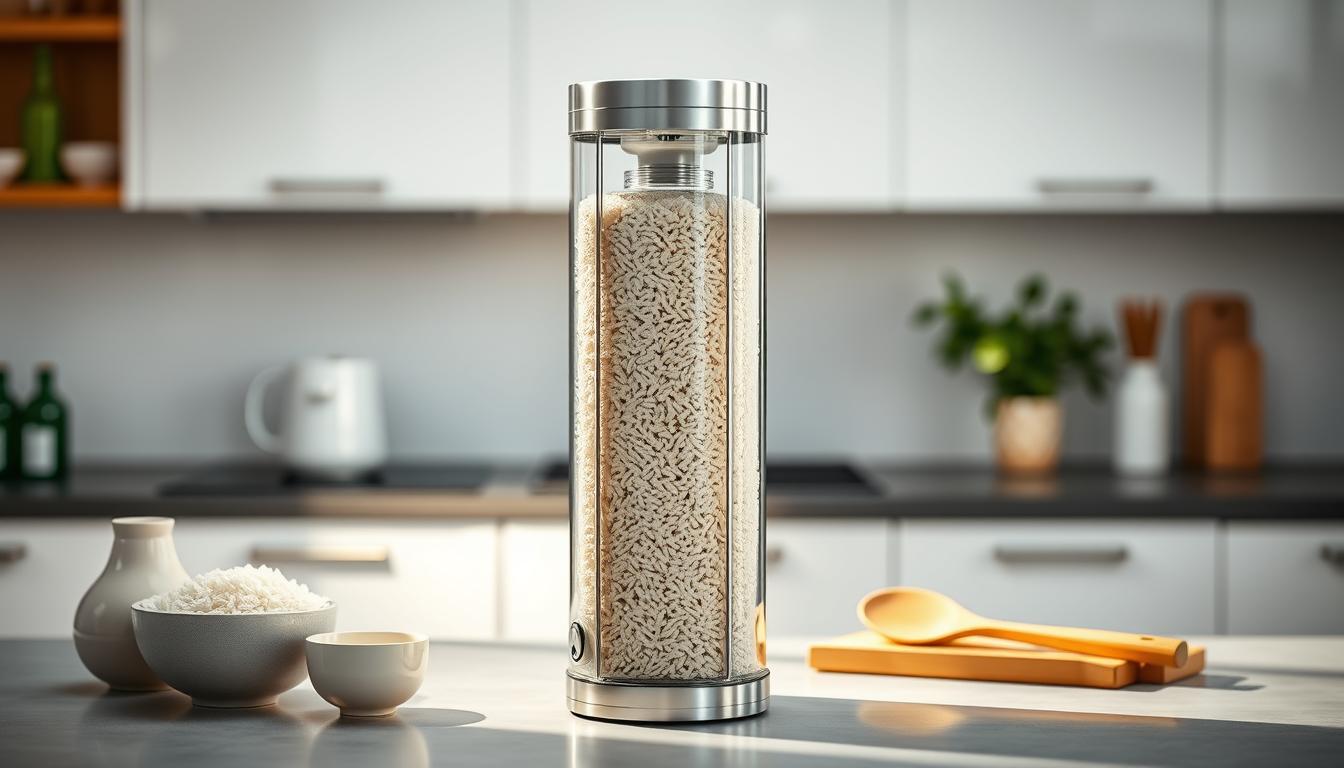
If you want neater meal prep, a vertical dispenser can help. This device pairs airtight storage with a lever-based, gravity-fed system for tidy, consistent portions. It beats keeping dry goods in a torn bag on a shelf.
You’ll learn how Storing rice in dispensers supports freshness and makes measuring faster. The guide shows what to look for when you buy: size, seal quality, and ease of use.
These units solve common pantry problems: exposure to moisture, lingering odors from other food, and messy scooping that leaves spills and dust. The vertical design uses gravity to release grains cleanly, so you keep counters and shelves tidy.
Busy home cooks, rice-cooker users, and bulk buyers benefit most. One well-sealed container can simplify weeknight prep and cut waste between refills. Later sections cover daily use, pest prevention, and simple cleaning tips.
Why Rice Storage Matters for Freshness, Shelf Life, and a Cleaner Pantry
How you keep uncooked grain at home determines its flavor and longevity. Proper storage keeps out dust, pests, and the moisture that drives clumping and mold.
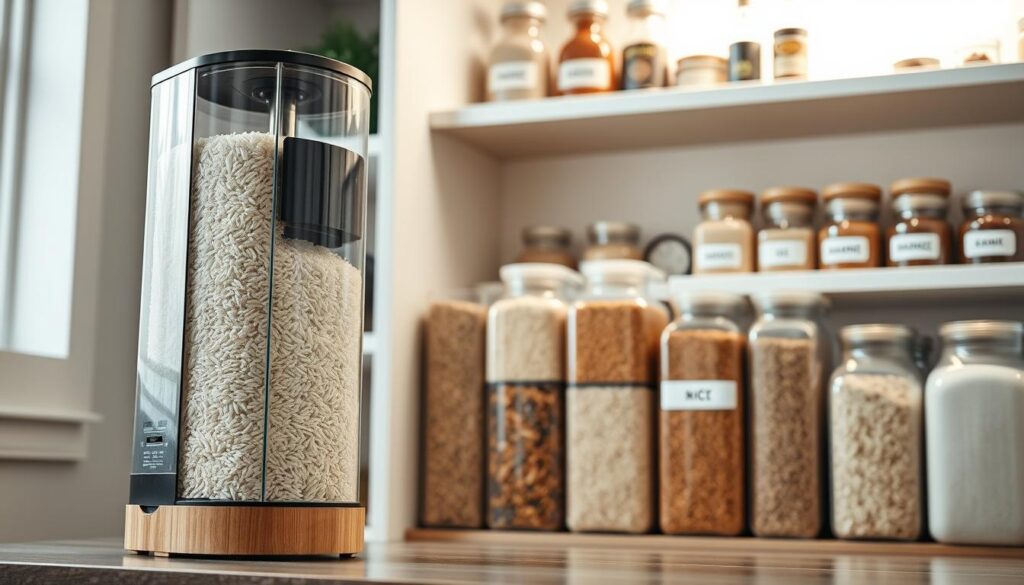
Don’t leave unopened bags on a busy shelf. Repeated exposure to air and humidity speeds quality loss. Temperature swings near stoves, dishwashers, or sunny windows make this worse.
- Odor transfer: rice soaks up strong aromas like onion or garlic, which harms taste.
- Shelf life: white rice can last years when sealed; brown rice typically keeps about six months on the shelf because bran oil oxidizes.
- What to watch for: off smells, stale flavor, discoloration, or oily notes—especially with brown rice.
Better containers cut scattered grains and crumbs that invite pests and simplify cleanup. The goal is not only long shelf life but also everyday convenience—fresh, easy-to-measure grain at your fingertips.
Storing rice in dispensers: How to Keep Uncooked Rice Fresh and Ready to Measure
Choose a cool, dry spot on your shelf away from the stove or vents. This simple placement reduces temperature swings and extends shelf life for your grain.
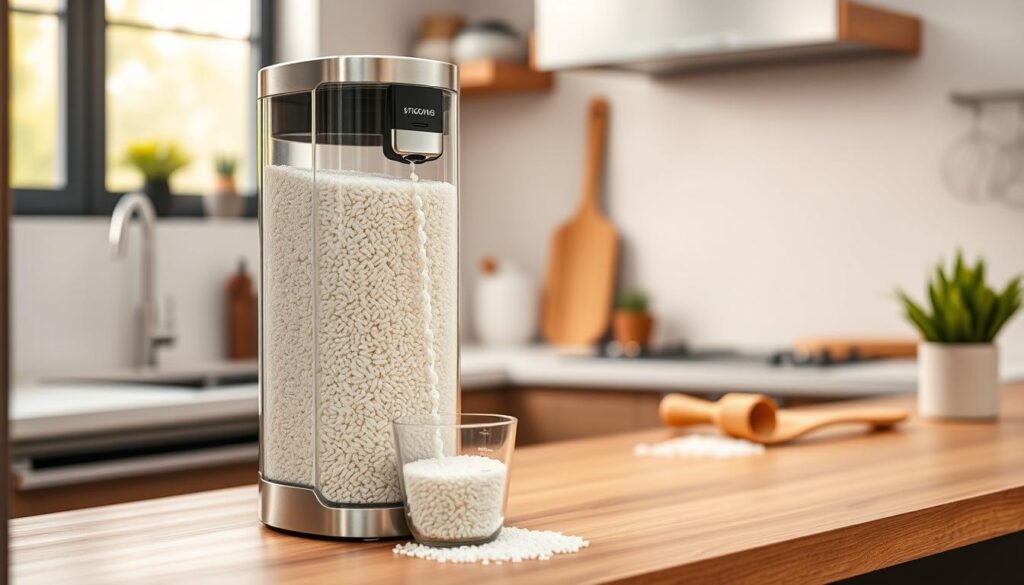
Use an airtight container with a reliable gasket so moisture and dust stay out. A tight seal also lowers the chance of pantry pests and keeps food tasting clean.
- How it works: a hopper guides rice down, gravity feeds the grains, and a lever gate drops a measured cup of rice for consistent portions.
- Refill and rotation: add new rice on top and move older stock forward so rice stored longest gets used first.
- Pest prevention: freeze new bags about three days before loading to kill bugs or eggs, then keep the seal intact.
For brown rice, consider chilling; its oil oxidizes faster than white rice and refrigeration can add months to usable life. Wipe the container, check the gasket, and clear any stuck grain during refills to maintain smooth dispensing.
How to Choose the Best Vertical Rice Dispenser for Everyday Kitchen Convenience
Pick a dispenser that balances weekly needs with the space you have on your shelf. Measure shelf height first so a tall, narrow unit doesn’t hit a cabinet or block other items.
Capacity and footprint
Match capacity to real life: estimate how much you cook each week, then choose a size that avoids overbuying. Taller units save width but need vertical clearance.
Portion control
Look for consistent cup dispensing: a smooth lever and well-fitting gate give repeatable portions. Confirm the cup aligns with your rice-cooker cup or standard measuring cup to cut waste.
Materials and sealing design
Prioritize food-grade builds: choose plastic or stainless steel with a tight lid and gasket. That keeps out moisture, pests, and dust.
Versatility beyond rice
Pick a model that handles other grains like beans, quinoa, or pasta without jamming. Clear walls help you track inventory and make cleaning simple.
- Buying checklist: capacity, shelf fit, lid seal quality, cup consistency, ease of cleaning, suitability for other food.
Conclusion
A simple dispenser can turn daily prep from messy to reliable in minutes. It keeps your rice protected, cuts spills, and gives repeatable cup portions so you cook faster on busy weeknights.
Remember the essentials: keep storage cool and dry, maintain a tight seal, and avoid placing food near strong odors. White rice lasts far longer on the shelf, while brown rice needs cooler handling because its oils shorten life.
If pests worry you, freeze new bags for about three days before filling the unit. Once sealed, the container will guard grains and food from moisture and bugs.
Next steps: measure shelf space, pick a capacity you will refill, and choose a model you’ll clean regularly. Small habits save hours and reduce waste.