
When you plan a walk-in pantry layout for your home, you create more usable storage and free prime cabinet and counter space in your kitchen. A good setup combines shelving, a clear walkway, smart zones, and proper door flow so you can store nonperishables, small appliances, and overflow without feeling cramped.
This guide walks you through the most efficient options — U-shaped, galley, single-wall, and three-wall — and shows when each works best for real households. You’ll learn shelf sizing rules, visibility and accessibility principles, and how to group items so your system stays tidy for years.
Expect practical tips that focus on how you cook, shop, and entertain now, not on fanciful trends. The goal is better kitchen functionality and increased market appeal through thoughtful design and smart use of vertical space.
Key takeaways: clear definition of a practical layout, what you will learn in this guide, and the core principles—visibility, accessibility, category grouping, and vertical storage.
What a Walk-In Pantry Layout Needs to Do for Your Kitchen Today
Clearing bulk goods and extras into a dedicated closet instantly makes your kitchen feel larger and work better. Moving backstock and overflow frees cabinets for plates and cookware and clears counters for meal prep. This change gives you usable storage space and a clean cooking zone.
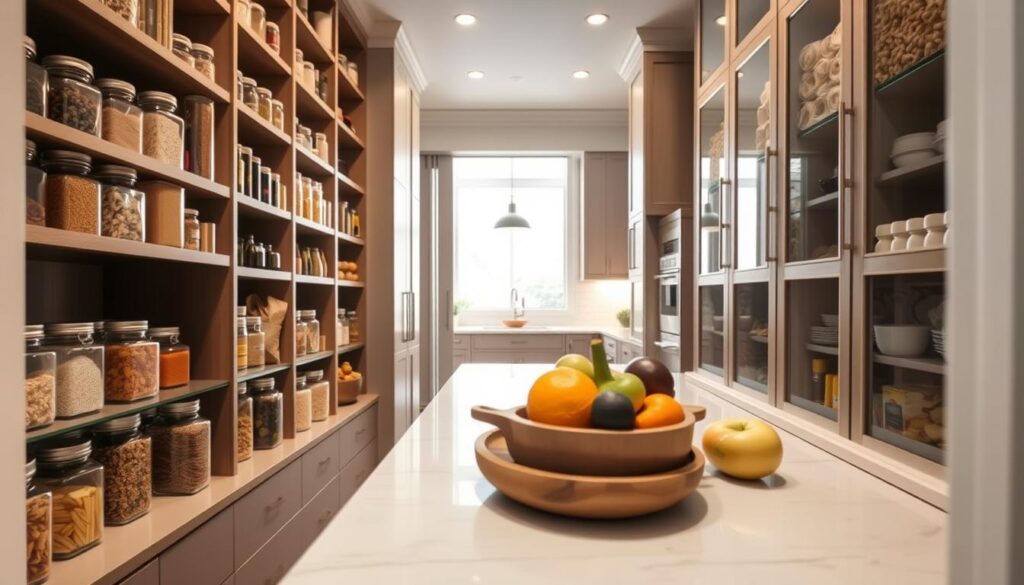
How a well-planned space frees up cabinets and counters
Putting large packages, seasonal items, and small appliances off the main counters keeps daily tools at hand. Group duplicates so you see what you have and avoid buying more.
What “cool, dry, and visible” storage really means
Keep the room ventilated, avoid direct sunlight, and aim for steady temperature to protect food storage. Store labels forward so you can scan shelves at a glance.
How your household habits should shape your storage
Assess what your family buys and how you cook. If you buy in bulk or prep lunches, plan lower shelves for heavy boxes and kid-height snack spots. Include a shelf for paper goods and cleaning essentials so your home has one easy-to-find spot.
Pro tip: Use simple zoning and clear containers—pantry ideas you’ll expand on later—to keep this organization consistent as your needs change.
Measure Your Room and Map Your Walkway Before You Build Shelves
Before you add any shelves, measure the room and mark a comfortable way with painter’s tape. This simple test shows whether the planned storage will feel roomy or cramped when you carry groceries and turn to reach items.
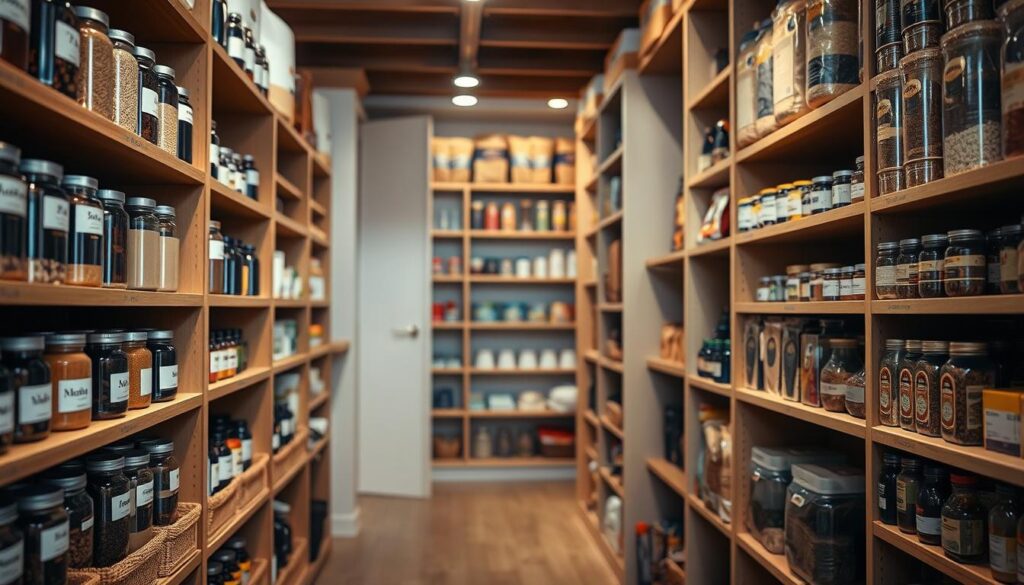
Choosing shelf depth so items don’t disappear in the back
Keep shelf depths modest. Narrower shelves improve visibility and stop boxes from getting shoved into the back where they become forgotten.
Tip: If you must use deep shelves, add a shallow front shelf or pull-out trays so items stay easily accessible.
Using vertical space without making essentials hard to reach
Stack taller shelves to the ceiling for seldom-used goods and keep daily items between shoulder and waist height. This preserves floor space and keeps what you need within reach.
Planning for step stool or ladder clearance
Designate a tidy spot for a step stool or plan for a sliding ladder clearance so upper shelves don’t become “dead space.” Test aisle width with tape to ensure you can open doors and move without bumping shelves.
- Measure the room and tape the walkway before building.
- Balance number of shelves with how you move through the space.
- Use vertical zones and plan step-stool storage for safe access.
Walk-in pantry layout options that maximize efficiency
A thoughtful configuration turns limited shelf runs into a nimble, high-capacity storage solution for your kitchen. Below are four common options and when each fits your shopping and cooking habits.
U-shaped with wrap-around shelving
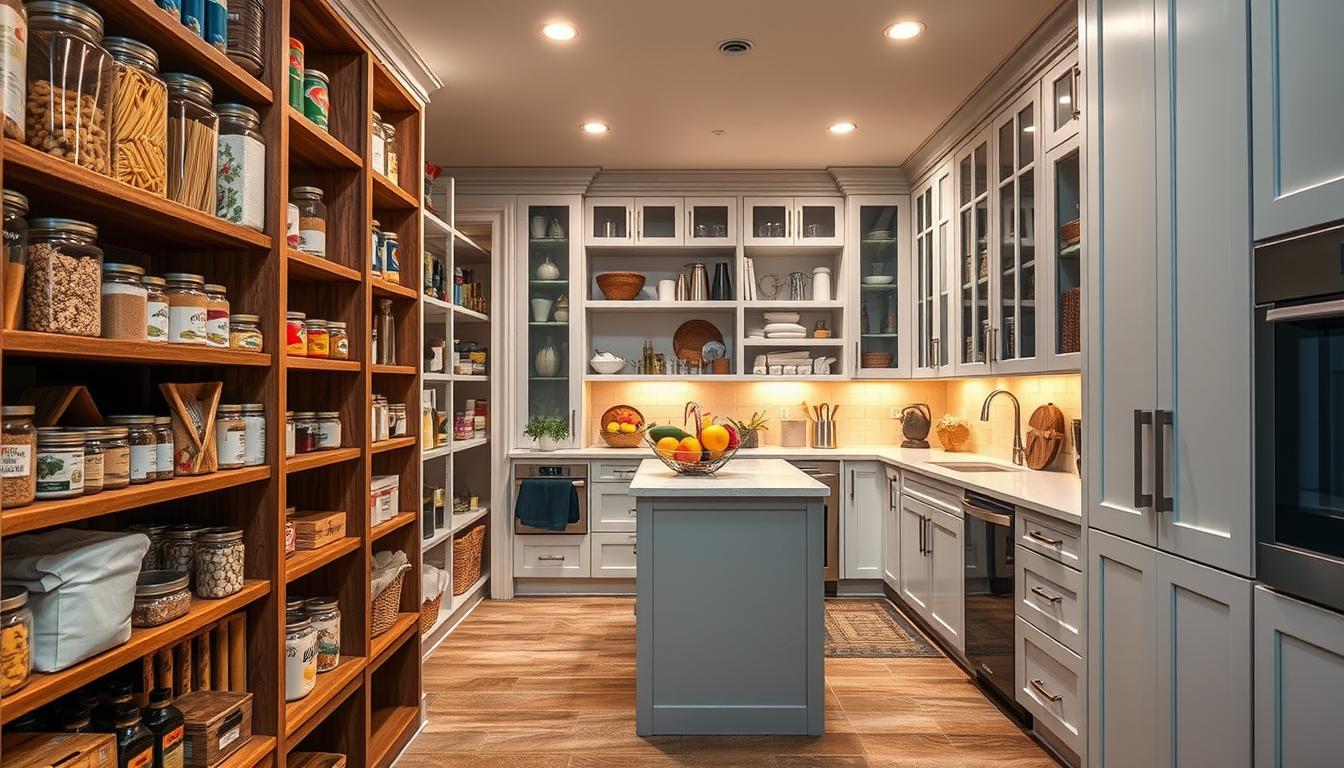
Best for high-capacity storage: Counters on three walls give you prep space and a spot for small appliances. Wrap-around shelving reduces wasted wall area and makes categorizing easy.
Galley-style with opposing shelves
Use floor-to-ceiling shelving on both sides and keep the center aisle clear. Split zones side-to-side — staples on one wall, dinnerware on the other — for faster inventory and grab-and-go access.
Single-wall for a small kitchen
This vertical, bookshelf-style run is ideal for a small kitchen or tight closet. Choose shallow shelves and clear containers so limited shelf depth feels organized, not cluttered.
Three-wall shelving for compact spaces
Stack shelves to the ceiling and use a deeper back wall with narrower side ledges for cans and bottles. This design squeezes big storage into a compact footprint without losing access.
- Compare how each option fits your kitchen footprint and storage goals.
- Choose based on how you shop — bulk buyers need depth; frequent shoppers need easy reach.
- Match the design to how much grab-and-go access your household requires.
Shelving Systems That Make Every Shelf Easy to Use
Good shelving turns wasted wall space into easy-to-reach storage you’ll actually use every day.
White metal wire shelves for budget-friendly flexibility
Pros: lightweight, sturdy, and easy to reconfigure as your needs change. They cost less than solid wood and install quickly.
Cons: wire can show small items and requires liners for tiny goods or loose crumbs.
White built-in shelves for a clean, custom look
Built-in shelving brightens the space and pairs well with nearby cabinetry. This option hides awkward corners and gives a tailored, high-end feel.
Stained wood shelves for a warm farmhouse feel
Wood adds character and warmth. Choose sealed, treated boards for durability, wipe-down cleaning, and high weight capacity.
Adjustable shelf heights to eliminate wasted space
Measure your tallest boxes and cans, then plan adjustable gaps so you don’t lose vertical inches. Use a mix of fixed cabinets and open shelves to hide clutter or stow appliances.
Make Corners and Awkward Spots Work Harder
Those dark corner spots tend to swallow bottles and boxes — smart accessories bring them back into use. With a few simple tweaks, you can turn an awkward nook into reliable corner storage and stop digging for what you need.
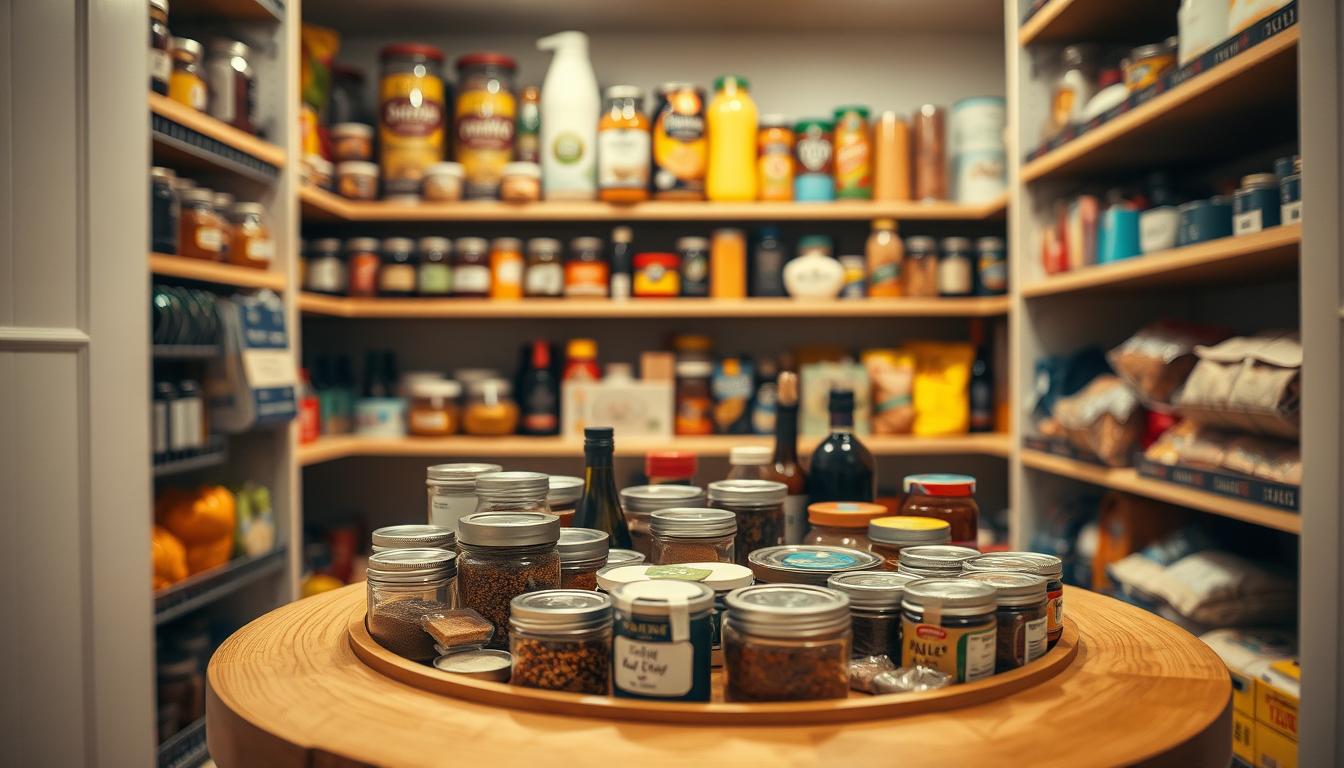
Lazy Susans for oils, vinegars, and condiments
Lazy Susans make items visible and accessible. A quick spin lets you reach oils, vinegars, and condiments without searching to the back. Use full-circle units for deeper shelves and half-circle trays for shallow corners.
L-shaped shelving strategies for corner pantry layouts
Combine basic L-shaped shelves with rotating platforms to keep the corner useful without long reaches. Place lightweight, frequently used bottles in the corner and keep heavy bulk boxes on straight runs.
- Corners become “black holes” when items pack too deep; these pantry ideas fix that.
- Size lazy Susans to your shelf depth: full-circle for deep, half-circle for shallow.
- Audit corner shelves monthly as a simple way to remove expired items and avoid duplicates.
Choose the Right Pantry Door for Functionality and Flow
Choosing the right door can change how easily you move through your kitchen and access stored goods. A thoughtful entry solution improves traffic flow when you carry groceries or cook with others.
Pocket door solutions for a small kitchen
Pocket doors slide into the wall, so there is no swing clearance. That makes them ideal in a small kitchen where every inch counts. They also keep sightlines clean when closed.
Sliding barn door styles that save space
Sliding barn doors remove swing issues and add rustic or modern interest. Choose hardware that matches your cabinetry finish and hang it on heavy-duty rollers for smooth use.
Double doors for a wider, easier entry
Double doors create a broad opening for bulky items and give full visibility into zones. They work well if you need quick two-handed access or plan to pull out large trays.
Glass, mirrored, and frosted options
Glass or frosted doors borrow light and make darker rooms feel larger. Mirrored doors add depth. Keep in mind glass requires tidier shelves since it reveals what’s inside.
Black statement doors for bold style
A black door can be a deliberate design touch that highlights the storage as part of your kitchen’s overall style. It works with farmhouse, industrial, or minimalist looks.
- Improves traffic flow when carrying groceries.
- Pocket doors save space and hide clutter.
- Glass options brighten but demand neat shelving.
Build Zones So Everything Has a Logical Home
Divide your storage into clear zones so every item has a predictable home and you waste less time searching. Zoning mirrors how you shop and cook, making daily routines smoother for everyone in your household.
Dry goods and canned goods zones for quick inventory
Group dry goods like pasta, rice, and baking staples together. Keep canned goods—soups, beans, and tomatoes—on one nearby shelf so you can scan totals quickly.
Snack and drink zones so your family can find items fast
Put snacks and drinks at kid height and near the door for fast grab-and-go access. This reduces clutter and cuts down on constant searching.
Serveware and entertaining zone for platters, glassware, and extras
Store serveware and extras on one shelf or a shallow cabinet. This frees kitchen cabinets and keeps party items ready when you host.
Household essentials zone for paper goods and cleaning supplies
Designate a spot for essentials like paper towels and cleaners. Keep chemicals separate from food and label shelves so everyone knows where to restock.
- Mirror zones to how you shop and cook for intuitive organization.
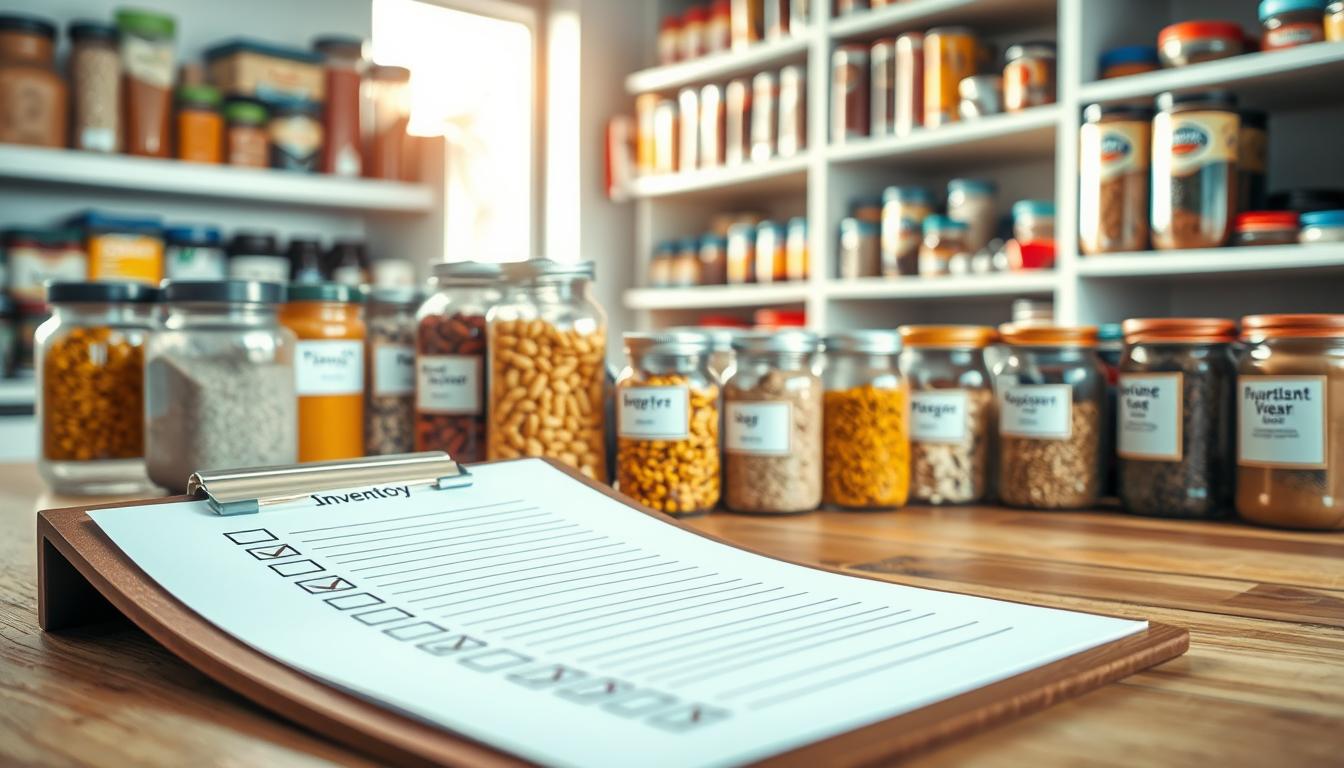
- Label shelves and keep a simple restock checklist to track low items.
- Audit zones seasonally to cut duplicates and expired goods.
Containers, Jars, and Bins That Save Space and Reduce Visual Clutter
Swap bulky boxes for clear containers and you’ll instantly reclaim usable shelf space and calm visual clutter. This simple change makes it easy to scan what you have and avoid duplicates.
Clear, airtight jars for staples
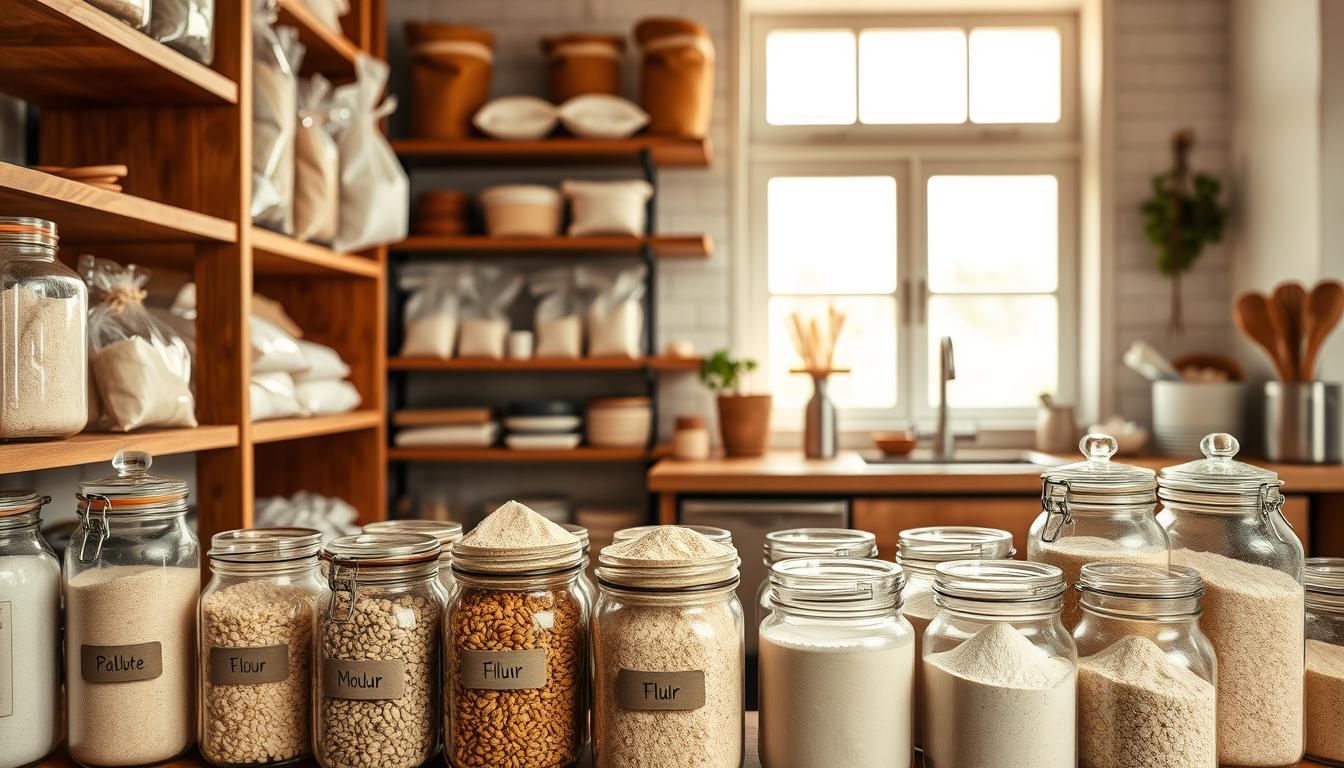
Clear, airtight jars are ideal for flour, sugar, pasta, and other baking staples. Visibility helps you spot levels at a glance, and airtight seals keep food fresh and deter pests.
Stackable containers to use vertical space
Choose clear, stackable containers that match your shelving heights so you stop wasting the air above packages. Fit lids snugly and test stack stability before filling.
Stacked bins for vertical organization
Stacked bins are a game-changing solution in small spaces. Assign each bin a category—snacks, breakfast, baking—so you can pull a whole category down instead of digging through boxes.
Matching containers for a cohesive look
Uniform containers reduce visual clutter and make you more likely to keep the system tidy. Add labels with contents and expiration dates to speed rotation and avoid buying extras.
- Quick wins: swap packaging to save space and make inventory fast.
- Labeling: include contents + expiration on jars and bins for simple rotation.
- Fit first: pick containers that match shelf heights so every inch of space works.
Use Baskets and Dividers to Keep Small Items Organized
A few well-placed bins can turn chaotic shelves into a calm, usable storage system overnight. Use baskets and dividers to keep small items grouped so nothing wanders into odd corners or gets lost behind tall boxes.
Woven baskets for texture and fast sorting
Woven baskets add warmth against white shelving and make sorting quick. Put packets, snacks, and fresh produce in their own basket so family members can grab what they need without rifling through packages.
Wire baskets and crates for an industrial pantry feel
Metal wire baskets and crates create an industrial pantry feel and boost airflow. They make grab-and-go storage easier and show contents at a glance, which speeds up restocking and reduces wasted buys.
Vertical dividers for flat cookware and boards
Vertical dividers keep baking sheets, cutting boards, and pans upright so they don’t topple. This saves space and makes each item easy to lift out without dislodging a stack.
- One basket = one category to keep organization simple for everyone.
- Mix woven and wire styles but repeat a color or material to tie the design together.
- Use dividers near drawers or lower shelves for safe, upright storage of flat items.
Drawers, Pull-Outs, and Slide-Out Shelving for Easy Access
A simple set of pull-outs can convert tucked-away cabinets into fast, organized access points. Pull-out drawers bring the front of a shelf to you so you stop reaching, bending, and digging for packages.
Use narrow baskets inside drawers to protect delicate packages like bread or nuts. Group boxes and bags by type to prevent crushing and keep similar items together.
Slide-out shelving is a smart solution when you want to upgrade a cabinet without a full remodel. It turns deep cabinet shelves into easily visible, easily accessible runs.
- How pull-outs change use: they deliver items to you instead of forcing you to shuffle things back.
- Where they matter most: lower cabinets, deep shelves, and spots for heavy goods.
- Labeling tip: add simple tags on each pull-out so family members return items to the right spot.
Keep high-turn items—snacks, breakfast supplies, coffee—on the most reachable pull-out levels to save time every day.
Add Counter Space for Prep, Drop Zones, and Small Appliances
A short stretch of countertop can become the hub for morning coffee, meal staging, and a tidy landing spot for deliveries. This small upgrade boosts everyday functionality and keeps your kitchen flow smooth when you unload groceries.
Butcher block for warmth and everyday use
Butcher block is warm, durable, and forgiving for daily prep. It pairs well with open shelves and gives a tactile touch that softens metal appliances.
Plan outlets and a coffee station
Place an outlet above the countertop for a coffeemaker and toaster. Reserve a shelf nearby for mugs and beans so your small appliances stay neat and ready without crowding the work surface.
Keep bulky items low and hidden
Store heavy appliances—slow cookers, air fryers, stand mixers—on lower shelves or in lower cabinets. That reduces lifting risk and makes them easier to pull forward when needed.
- Create a drop zone by the door for bag sorting and quick staging.
- Use a short counter run in a U-shaped plan to balance prep and storage.
- Hide rarely used appliances behind cabinet doors to cut visual clutter.
Mobile Storage That Adapts to How You Cook
A simple cart on casters turns seasonal buying and party prep into an easy-to-manage routine. Mobile pieces give you flexible storage for changing grocery habits and make heavy goods easier to handle.
Rolling cart ideas for snacks, canned goods, and meal prep
Use each shelf for a purpose: top for spices and small appliances, middle for snacks and canned goods, bottom for bulk baking supplies. That way you can roll the cart to your counter while you cook and return it when you’re done.
- Designate one shelf for grab-and-go items to speed morning routines.
- Keep heavy cans low to lower the center of gravity and reduce tipping.
- Turn a cart into a beverage station by adding a tray and napkin caddy.
Wooden bins on castors for potatoes, onions, and bulk items
Wooden bins on casters are a durable solution for heavy staples. They slide out from under a bottom shelf so you avoid lifting awkward loads.
- Provide ventilation with slatted sides or small air gaps to cut spoilage.
- Keep produce separate from dry goods and label each bin for quick checks.
- Give mobile pieces a dedicated footprint so they don’t block the door or walkway.
Mobile storage is a practical way to increase usable space and keep your kitchen workflow smooth during busy weeks or events.
Lighting and Visibility Upgrades That Instantly Improve Your Pantry
Good lighting turns a cramped storage room into a fast, reliable tool you use every day. Better illumination helps you spot expired items, speed inventory checks, and avoid the frustration of digging in dark corners.
Under-cabinet and motion-sensor LED lights are the easiest upgrade. They switch on when you enter and focus light where you need it most. Install strips under each shelf run and at eye level so labels read clearly during quick evening grabs.
Reflective shelving and paint choices
Bright white shelves bounce light and make the space feel more open. High-gloss paint increases reflectivity and gives a slightly luxe look without reducing usable space.
Pick a color that complements your kitchen cabinets so the room ties into the rest of your home. If you cook often, choose a neutral white for true-to-color label visibility.
- Light placement tip: prioritize the deepest shelves and corners so hidden clutter becomes visible.
- Bulb temperature tip: use daylight (5000K–6500K) for accurate labels; warm light (2700K–3000K) if you want a cozy feel.
- Small upgrade payoff: faster restocking, fewer duplicates, and a space that feels tidy and functional.
Style-Forward Walk-In Pantry Ideas That Still Prioritize Storage
A single splash of pattern or texture can turn a plain storage room into a memorable, useful space. These style-forward ideas keep storage practical while adding personality so your space feels intentional, not tacked-on.
Wallpaper and peel-and-stick accents
Peel-and-stick wallpaper gives a quick pop of color behind shelves. Use it on a back wall to frame jars and baskets without committing to a full redo.
Beadboard, trim, and paneling
Beadboard adds texture and protects walls from scuffs. Trim work creates a cottage style that still reads clean and purposeful.
Café curtains and painted glass doors
Café curtains hide everyday clutter while keeping lower shelves accessible. Painted or frosted glass doors add character and preserve light. Choose clear for display, frosted for privacy, or a painted band for a bold touch.
Mural moments
A hand-painted mural on a single back wall becomes a focal point. Keep the rest of the storage simple so the artwork shines without reducing function.
- Keep storage first: pick one decorative move, not five.
- Use durable finishes where shelves touch walls.
- Match a single accent color across containers for a cohesive feel.
Specialty Layouts and Upgrades for Entertaining and Luxury
A dedicated service zone transforms storage into a staging area that speeds hosting and keeps your kitchen calm.
What sets a butler pantry apart is its role as a staging and serving space, not just extra storage. You’ll find zones for plating, a countertop landing, and extra cabinetry for linens and glassware.
Butler pantry features for serving and hosting
Plan dedicated cabinets for stemware and linens, plus open shelves for frequently used pieces. Leave counter space for plating and a spot for small appliances you use while entertaining.
Wine fridge, wine rack, and stemware storage considerations
Add a compact wine fridge beside a wine rack so bottles sit secure and at serving temp. Install a stemware holder under a shelf to save space and keep glasses handy.
Sliding ladder for tall cabinetry and safe access
Choose a sliding ladder when you build floor-to-ceiling cabinetry. It improves access, looks luxurious, and is safer than standing on stools.
- Check climate: confirm the room stays suitable for wine before adding a fridge.
- Dual use: these upgrades should serve daily routines as well as special events.
Cabinets vs. Open Shelves: Picking the Best Storage Mix for Your Needs
A smart storage mix balances hidden spots for overflow with visible shelves for daily staples. Your choice affects how neat the room looks, how easily you find things, and whether guests see clutter when the door opens.
When cabinets are best for concealed storage and a clean look
Use cabinets when you want to hide visual clutter and keep a tidy appearance. Closed cabinets are ideal for backup boxes, small appliances, and items you only pull out occasionally.
When open shelving wins for grab-and-go organization
Open shelves make inventory checks fast and reduce forgotten goods in the back. Keep everyday staples, jars, and canned goods on visible runs so you can scan levels at a glance.
A hybrid approach for appliances, backstock, and display items
Pair lower cabinets for heavy appliances and backstock with open shelving at eye level for daily use. Add a small display shelf for cookbooks or serving pieces to keep style without losing function.
- Depth matters: deep shelves hold more but add bins or pull-outs to keep the back reachable.
- Decision checklist: who uses the pantry, how often you shop, and whether you prefer to “hide it and close the door.”
Conclusion
A smart storage plan frees up kitchen real estate while keeping everyday goods easy to find. The efficient formula is simple: the right walk-in pantry structure, a clear walkway, correctly sized shelves, and simple zones that match how you shop and cook.
Prioritize visibility and access so you actually use the storage and don’t lose items in the back. Good organization speeds inventory checks and cuts wasted purchases.
Pick one small upgrade you can do now—containers, lighting, a door swap, or clear zoning—and one larger project to plan later, such as built-ins, pull-outs, or a short countertop. These ideas deliver big returns in use and value.
Keep rules simple so everyone in your home can maintain them. Next step: measure your space, choose a plan, and make a short shopping list of essentials—bins, containers, labels, and lighting—to get started.