
You’re deciding if a premium pantry system justifies the cost. This introduction helps you weigh daily convenience, freshness, and long-term value when choosing a storage solution.
What this short review does: it focuses on real sealing performance, stacking, cleaning effort, and whether the sizes you need are cost-effective for your kitchen.
Expect a clear comparison of POP 1.0 vs POP 2.0 and the main lid differences — stainless vs white — since the lid drives cleaning and accessory choices.
Note the limits: these are built for dry food and pantry organization, not for leaky lunches or wet leftovers. Pricing was checked March 5, 2026, and Sizzle and Sear rates the line 4.5/5.
Later sections use concrete sizes, dimensions, and pantry-fit tips so you can match flour, rice, pasta, and snacks to the right volumes and avoid wasted space or money.
What You’re Getting With OXO Good Grips POP Containers
If you want quicker refills and fewer spills, a sealed modular storage system can change how you use your pantry.
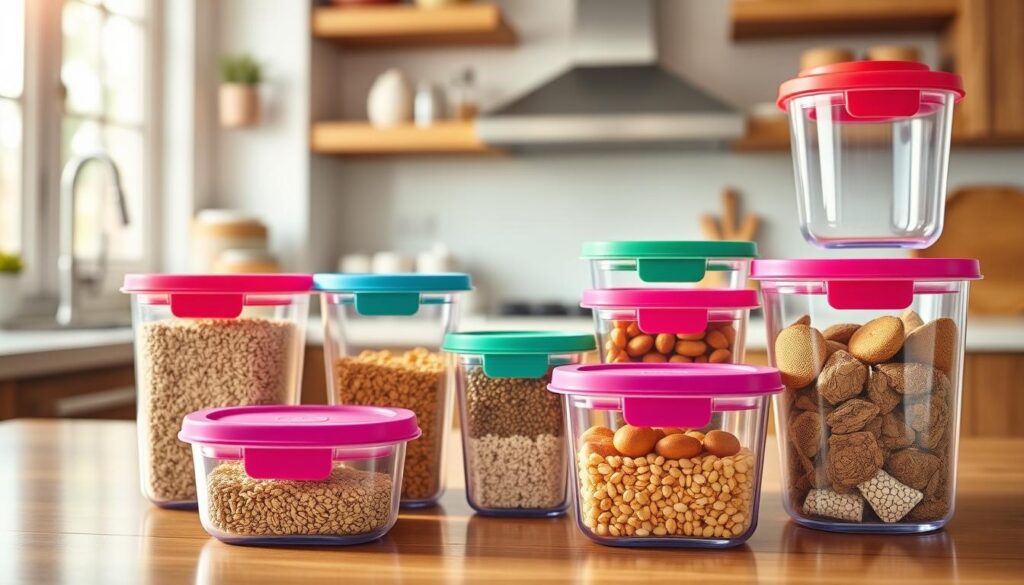
Easy push-button seal: press the button to lock an airtight seal, press again to open. You don’t need wrist strength to twist a lid, so grabbing snacks or flour is faster and kinder to aching hands.
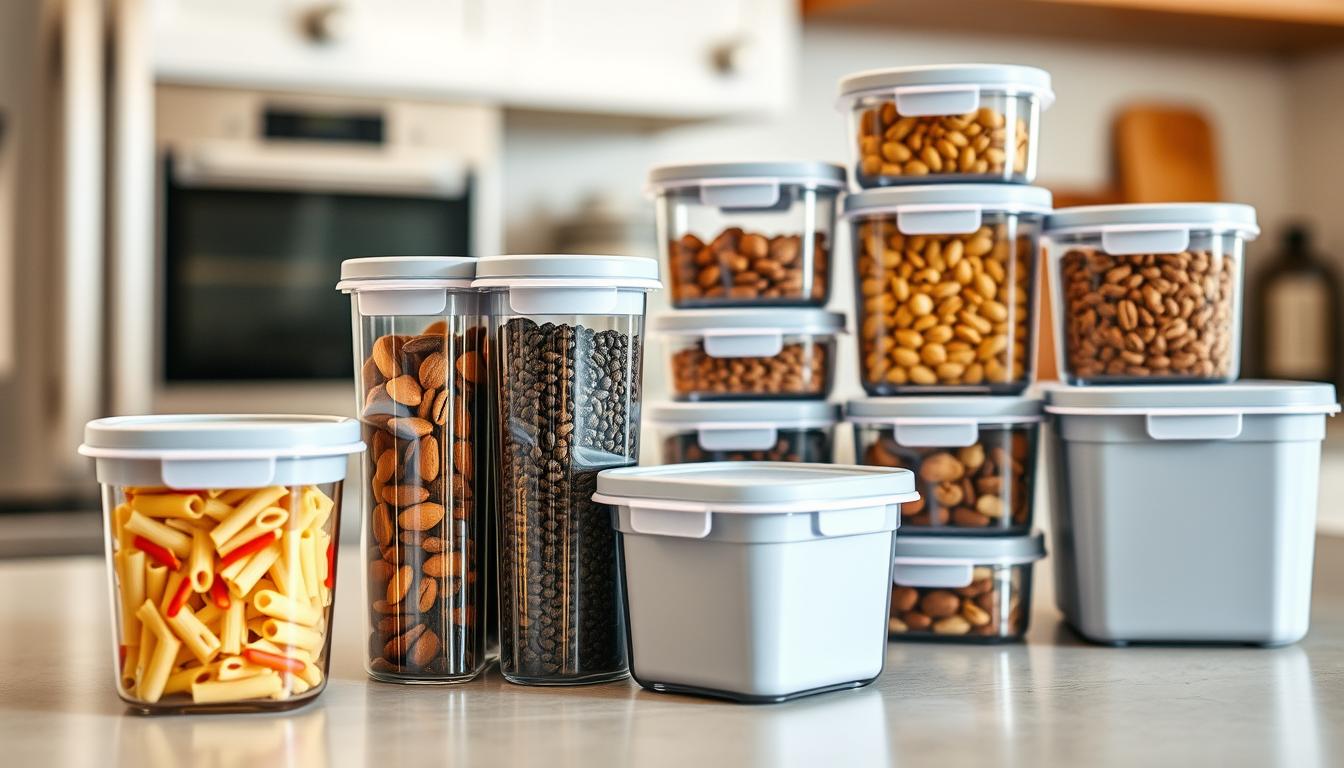
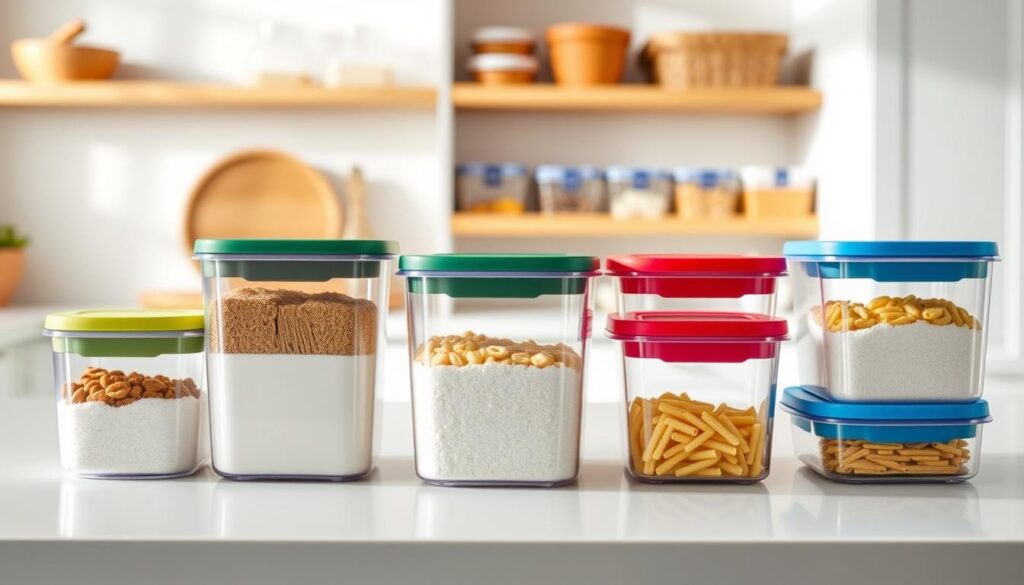
Stackable, uniform design: the modular footprint lets you build neat rows, reduce empty gaps, and keep labels facing forward. That saves shelf space and speeds up meal prep time.
- BPA-free bodies: the clear container is dishwasher-safe.
- Lid caveat: lids have small parts that need disassembly and extra drying to avoid trapped water.
- Best uses: dry staples like sugar, oats, rice, pasta, baking items, and everyday snacks.
These are not meant for soups, saucy leftovers, or travel meals where a leak-proof seal matters more than easy opening. For bulk buying, decanting into a sealed bin keeps food fresher and your kitchen shelves neater.
OXO Pop containers review: Build Quality, Durability, and the OXO Guarantee
Build feel and warranty support often decide whether a storage system becomes part of your daily routine. You judge the product by the way the button presses, how clean the seal closes, and whether the lid releases without fuss.
How the mechanism feels over time and why it matters
The button should travel smoothly and click with a clear feel. A clean seal engagement means fewer crumbs and less wasted food.
Over months of use, small friction points pop up. That friction can make repeated opening feel tiring and annoying in day-to-day kitchen tasks.
Warranty experience and what “guarantee” means
Responsive service reduces risk. In one example, a years-old can opener was replaced after the owner sent photos, place, and approximate purchase date.
That same process applies if a lid or seal fails: you may need images and a rough purchase time. Quick part replacement keeps you from replacing the whole system.
- What build quality looks like: consistent sealing, smooth button travel, predictable stacking.
- Durability expectation: resistance to cracking under normal home use for years.
- Purchase factor: warranty means you can replace one piece rather than the entire set.
When you decide, remember you’re buying a system—lids, seals, and service shape the long-term experience more than the sticker price.
POP 1.0 vs POP 2.0: Which Version Should You Buy Today?
Choosing between the original and the refreshed model comes down to one main part: the lid. The “2.0” refresh (introduced in 2019) focuses on lid geometry and functional updates that affect daily use and long-term convenience.
Lid shape, height, and usable space
POP 1.0 lids have rounder corners and extend deeper into the container. That extra depth reduces usable volume for flour, rice, or pasta.
POP 2.0 uses a flatter, squarer lid that preserves interior space and gives a cleaner look on pantry shelves. That subtle design change affects how much fits in each bin and how neat rows appear.
Cleaning and disassembly you’ll notice
Disassembly differs between versions. The 2.0 gasket and the matching container are dishwasher-safe together, while guidance for 1.0 asks you to treat the gasket more carefully.
That matters if you plan to run lids through the dishwasher often. Fewer extra steps = less time spent on maintenance.
Accessory connector and everyday workflow
POP 2.0 adds a protrusion under the lid that accepts small accessories: scoops, a brown-sugar keeper, measuring cups, and a date dial. Keeping a scoop attached saves drawer clutter and speeds measuring.
Compatibility rules and the bottom line
1.0 and 2.0 lids are not interchangeable. Mixing versions complicates replacements and future accessory use.
- Shopping shorthand: “2.0” = post-2019 lid redesign and accessory-ready.
- Space impact: 2.0 preserves more usable capacity than 1.0.
- Buy logic: favor 2.0 for future-proofing unless a deep deal on 1.0 offsets compatibility limits.
Stainless Steel Lids vs White Plastic Lids: Price, Style, and Size Availability
A small lid swap can give your shelf a high-end feel without replacing every bin. The bodies are identical; the difference is purely the lid finish. Stainless adds a modest premium but does not change sealing, capacity, or function.
Where each lid makes sense
Use stainless lids on open shelves and countertops where design matters. White lids work well inside a closed pantry or cabinet where size options matter more than looks.
Practical mix-and-match strategy
- What you pay for: the look and a small price bump—nothing about storage or seal quality changes.
- Size availability trap: niche sizes often come only with white lids, so an all-stainless set can limit layout choices.
- Swap safely: you can trade lids between stainless and plastic within the same POP version to get the sizes you want.
Compatibility warning: lids are not cross-compatible between POP 1.0 and POP 2.0. Use the mix-and-match approach to spend the premium only where it shows and keep your pantry functional and stylish.
Real-World Performance: Seal Strength, Stacking, and Daily Usability
Small interactions tell the story. You want a system that opens with little strain, stacks without sliding, and keeps dry goods fresh without drama.
Easy-open lids for limited hand strength
Easy-open means you press a large central button instead of twisting. The lid lifts off with minimal hand force.
This helps people with arthritis or Parkinson’s open snacks and staples independently and with less time and frustration.
Stacking and space-saving organization
The bottom of each container nests into the top of the lid, creating stable vertical stacks.
This lets you build a tidy grid on shelves and turn awkward zones into usable space for everyday use.
Leak expectations and the right use
These bins form an airtight seal for dry food but are not fully leak-proof for liquids or saucy leftovers.
If leak resistance is your priority, choose a product designed for wet food transport. For pantry staples and snacks, these are a strong, practical choice.
- Quick takeaway: ideal for dry storage, snack access, and space-saving kitchen organization.
- Not ideal for: wet lunches or soup transport where leaks matter most.
Cleaning and Care: Dishwasher Tips, Lid Drying, and Avoiding That “Water in the Lid” Problem
A quick wash isn’t enough—these lids need a small routine to avoid trapped water and odd smells.
Start by disassembling the three-piece lid for a full clean. Take apart the button, gasket, and outer ring so you can reach hidden grooves. This removes crumbs and oil that hide in seams.
Drying time reality and prevention
Even hot dishwasher cycles leave pockets of water. If you stack lids upright to save space, you may see “sloshing” when you lift them.
Right after the cycle, shake each piece and lay parts flat on a rack so air flows through the grooves.
When to deep-clean vs. simple refills
- Deep clean: when switching food types, after spills, or if you detect odors.
- Quick refill: for the same dry food day-to-day—skip full washing to save time.
- Practical tip: plan washing into your weekly routine to avoid extra chores.
These steps keep the system hygienic and protect the seal. With minimal care, the oxo pop system stays useful without adding daily maintenance to your kitchen routine.
Choosing the Right POP Set: 20-Piece Starter Set vs 12-Piece Steel Set vs Buying Individual Containers
Picking the right starter set can save you money and prevent wasted shelf space. Before you buy, measure shelf height and depth and list your top dry goods. That simple prep keeps you from paying for sizes you don’t use.
White-lid 20-piece starter: what you get
The 20-piece white-lid set gives a broad mix. It includes tiny 0.2 Qt spice bins up to two 6.0 Qt large bins and a 4.4 Qt for flour or oats.
Why it works: you get many sizes to learn the system and a ready pantry grid without buying extras.
Stainless 12-piece starter: fewer pieces, ready-to-display
The 12-piece steel set trims duplicates and adds a half-cup scoop plus 36 removable labels. It covers common pantry needs while giving a uniform, countertop-ready look.
Why it works: fewer bins, fewer extras to buy, and the scoop reduces one more trip to the drawer.
When sets save money — and when they don’t
- Set value: a multi-piece kit lowers cost per unit if you use most sizes.
- Common mistake: buying a bundle that leaves you with many small bins when you actually need bulk sizes.
- Decision steps: measure your space, list your top 10 dry goods, then map each item to a target size before you commit.
In short, start with a set if you want to learn the system quickly. Buy individual pieces when you already know the exact sizes and want to avoid wasted space or rebuys. The right mix saves money and keeps your kitchen and pantry consistent; the wrong mix costs more over time.
Best OXO POP Container Sizes for Pantry Staples Like Flour, Sugar, Rice, and Pasta
Pick the right bin sizes and you’ll avoid half-filled storage and awkward bags that won’t fit. Below are the practical size matches for common dry staples, with dimensions so you can plan shelf layout.
Medium Big Square — 4.4 Qt (6.5” x 6.5” x 9.5”)
Best for a 5 lb bag of flour, oats, or sugar. This is the daily driver for baking-heavy kitchens. It holds a full bag without wasted headspace and fits neatly in most cabinets.
Medium Rectangle — 2.7 Qt (6.5” x 4.3” x 9.5”)
Ideal for a 5 lb bag of rice and short pasta shapes. The rectangle footprint lines up well in rows and saves depth while keeping bulk accessible.
Tall Rectangle & Tall Small Square — 3.7 Qt / 2.3 Qt
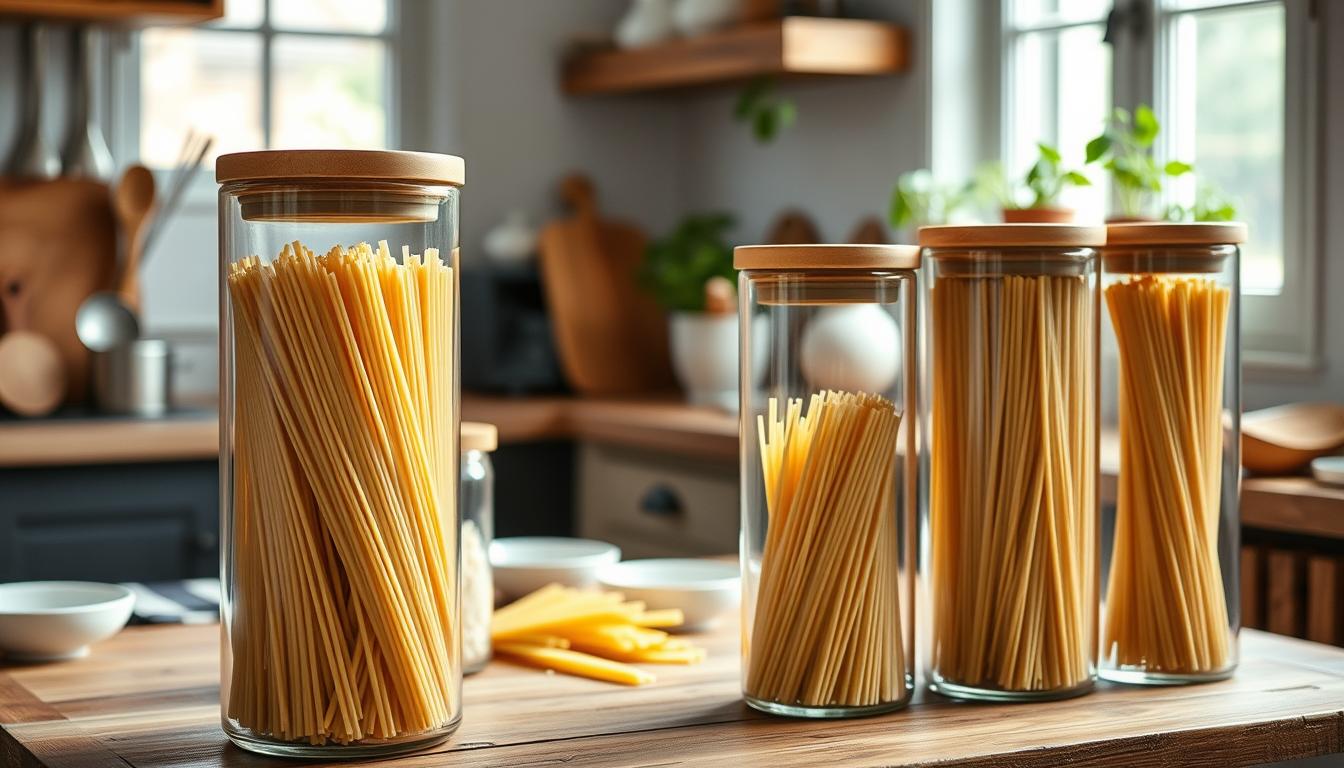
The 3.7 Qt tall (6.5” x 4.3” x 12.6”) stores long noodles upright so boxes don’t collapse. Use the 2.3 Qt tall small square (4.3” x 4.3” x 12.6”) when you keep smaller amounts but still need full-length storage.
Pantry-fit planning
- On a 17″ x 21″ sliding shelf: four 4.4 Qt plus two 2.7 Qt fit comfortably.
- On an 11″ x 21″ sliding shelf: two 4.4 Qt and two 2.7 Qt fit well.
- Practical buy tip: start with a 4.4 Qt and a 2.7 Qt, then expand by actual use and shelf space.
Best Small POP Containers for Spices, Baking Ingredients, Snacks, and More
Small, well-chosen bins can turn a messy spice shelf into a neat, grab-and-go baking station.
Mini square for spices (0.2 Qt)
0.2 Qt Mini Square — 3.3” x 3.3” x 3.1” fits individual spice jars and tiny amounts of seeds.
Use these on tiered risers so labels face you and you can grab one-handed while cooking.
Short mini square for baking add-ins (0.5 Qt)
0.5 Qt Short Mini Square — 3.3” x 3.3” x 6.3” is ideal for baking powder, baking soda, cocoa, and chocolate chips.
It tames messy bags and keeps ingredients fresher longer, saving time at the mixer.
Short small square for powdered sugar and candies (1.1 Qt)
1.1 Qt Short Small Square — 4.3” x 4.3” x 6.3” holds powdered sugar and small candies.
Add a dusting scoop to turn this into a quick-access baking station.
Short rectangle for brown sugar (1.7 Qt)
1.7 Qt Short Rectangle — 6.5” x 4.3” x 4.25” fits packed brown sugar well.
Use the brown sugar keeper accessory or a small slice of bread to keep moisture and avoid hardening.
Mini rectangle for salt and tea (0.6 Qt)
0.6 Qt Mini Rectangle — 6.5” x 4.3” x 3.1” sits near the stove for salt or on a tea shelf for loose leaf tins.
Its low height makes one-handed opening easy when you’re mid-recipe.
- Build a small system: pick two 0.2 Qt, one 0.5 Qt, one 1.1 Qt, one 1.7 Qt, and one 0.6 Qt to cover most baking and snack needs.
- Useful accessories: half-cup scoop, rice cup, dusting scoop, and brown sugar keeper — note that only one accessory fits under a lid at a time.
- Practical tip: start with what you use daily and expand to avoid extra space and cost.
Conclusion
A tight seal and easy access matter most when you store flour, sugar, rice, and snacks every week. Choose this system if airtight dry-food freshness, fast access, and stackable pantry organization are top priorities for your kitchen.
Who benefits most: households that decant bulk staples and anyone who needs easy-open lids for limited hand strength. POP 2.0 is usually the best long-term buy for its updated lid design and accessory connector. Pick stainless lids for open shelves and white lids when size flexibility matters.
Trade-offs to know: lids need occasional disassembly for a full clean, drying can take extra time, and these are not the right containers for wet, leak-prone leftovers. Start with core sizes (4.4 Qt + 2.7 Qt) and add small baking and spice pieces as needed.
Bottom line: the price makes sense when you use store dry staples daily and want a consistent system. If you only need a few storage containers, buy the right sizes instead of a large set to save money and space.