
Ready for a practical refresh? You’ll build a simple system that works every day, not just for photos. This brief guide shows how a functional pantry helps you spot food fast, cut duplicate buys, and make cooking less stressful.
Start by resetting and planning. Then add containers, labels, and smart storage so putting away groceries saves you time. The flow is clear and repeatable for closet pantries, wire shelves, or larger spaces.
When your space works, errands and weeknight meals feel easier. Joseph Joseph found 96% of people felt more motivated after decluttering their home, so a quick refresh can boost your mood too.
Keep it simple for everyone in the family. Follow the step-by-step plan here and you’ll have a system that lasts, helps reduce food waste, and frees up time for things you enjoy.
Start With a Full Pantry Reset for a True Fresh Start
Begin with a full clear-out so you know exactly what space you really have. Remove every item so you can see shelf depth, usable corners, and wasted zones.
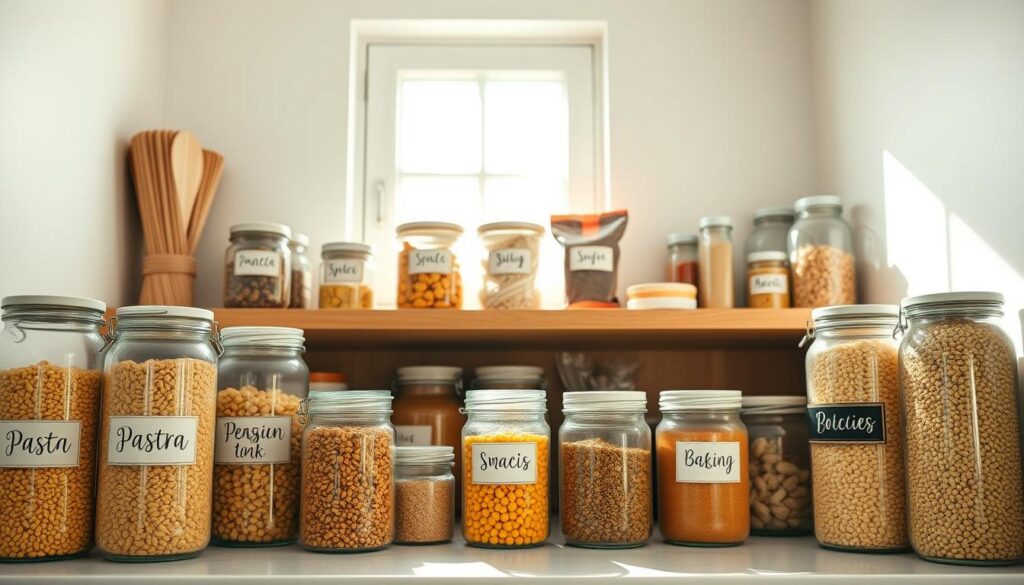
Pull everything out so you can see your real pantry space
Lay items on the counter and scan what you own. This shows duplicates and odd-shaped products that steal room.
Toss expired food and stale snacks, then donate unopened extras
Sort quickly into keep, toss, and donate piles. Immediately discard expired food and stale snacks. Donate unopened cans or extras you won’t use.
Wipe down shelves and add shelf liners to prevent messes and damage
Clean crumbs and sticky residue before you reload. Liners protect wood or paint and make future clean-ups faster, per Catherine Benson.
- See what falls over or gets lost in the back.
- Note friction points that waste time or cause spills.
- Keep a short list of product sizes you actually use.
When you finish this reset, you’ll be ready to plan the layout and avoid buying storage you don’t need.
Plan Your Pantry Layout Before You Buy Containers
Map your shelves and daily habits before you spend on containers. Measuring first prevents wasted purchases and keeps your setup practical for real life.
Start by measuring shelf width, shelf height, and depth. Pay special attention if you have deep shelving where items tend to disappear.
Identify awkward corners and dead zones now. Note spots where jars fall or bottles get pushed to the back so you can plan turntables or handled bins later.
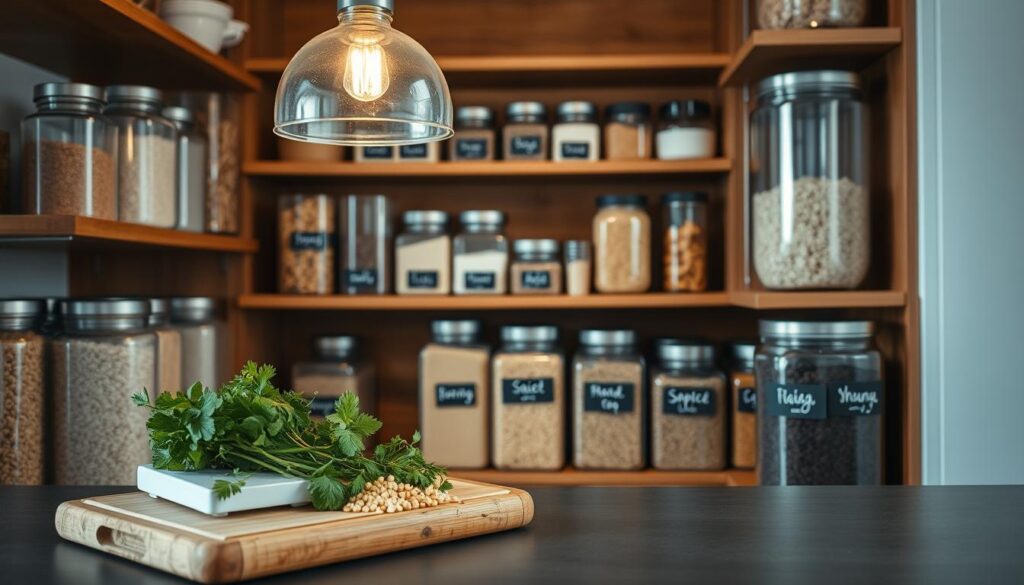
Sketch a shelf plan that matches how you use the space
Draw a simple plan showing where you unload groceries and which items you reach for daily. This makes it clear which shelves need tall storage or stackable bins.
Buy the right containers — not a set you’ll regret
- Match container sizes to real items like cereal boxes, pasta, and baking staples.
- Choose open bins for quick-grab snacks and airtight storage containers for flours and grains.
- Avoid pre-made sets that leave unused sizes and waste money.
Plan to maintain: zoning by use makes restocking fast and keeps the space organized long-term.
Pantry Organization Ideas That Make Your System Easy to Maintain
Design your layout around how your household actually cooks and snacks every week. Group items by how you use them so daily tasks feel automatic. Clear zones cut decision fatigue and keep the shelf tidy with minimal effort.
Create zones that match how you cook, snack, and unload groceries
Set dedicated areas for breakfast, baking, snacks, and weeknight meals. When each thing has a spot, everyone in your family knows where to put items back.
Group duplicates together to reduce visual clutter and make restocking simple
Keep identical goods side by side. This makes it easy to see quantities at a glance and prevents you from buying extras that will sit forgotten.
Use “recipe shelves” or meal-prep bins when you follow repeat routines
Create a shelf or labeled bins with ingredients for your go-to meals. Laura Cattano’s method speeds cooking and cuts prep time on busy nights.
Keep the most-used items at eye level for fast access
Place daily essentials where you naturally look first. The top and bottom shelves can hold overflow or bulk goods, while the middle stays for everyday use.
- Family-friendly: Clear zones help kids and partners restock correctly.
- Less waste: You’ll spot what you already have and avoid duplicate purchases.
- Next step: Use clear containers to make these zones easy to maintain and visually consistent.
Use Clear Storage Containers to See What You Have at a Glance
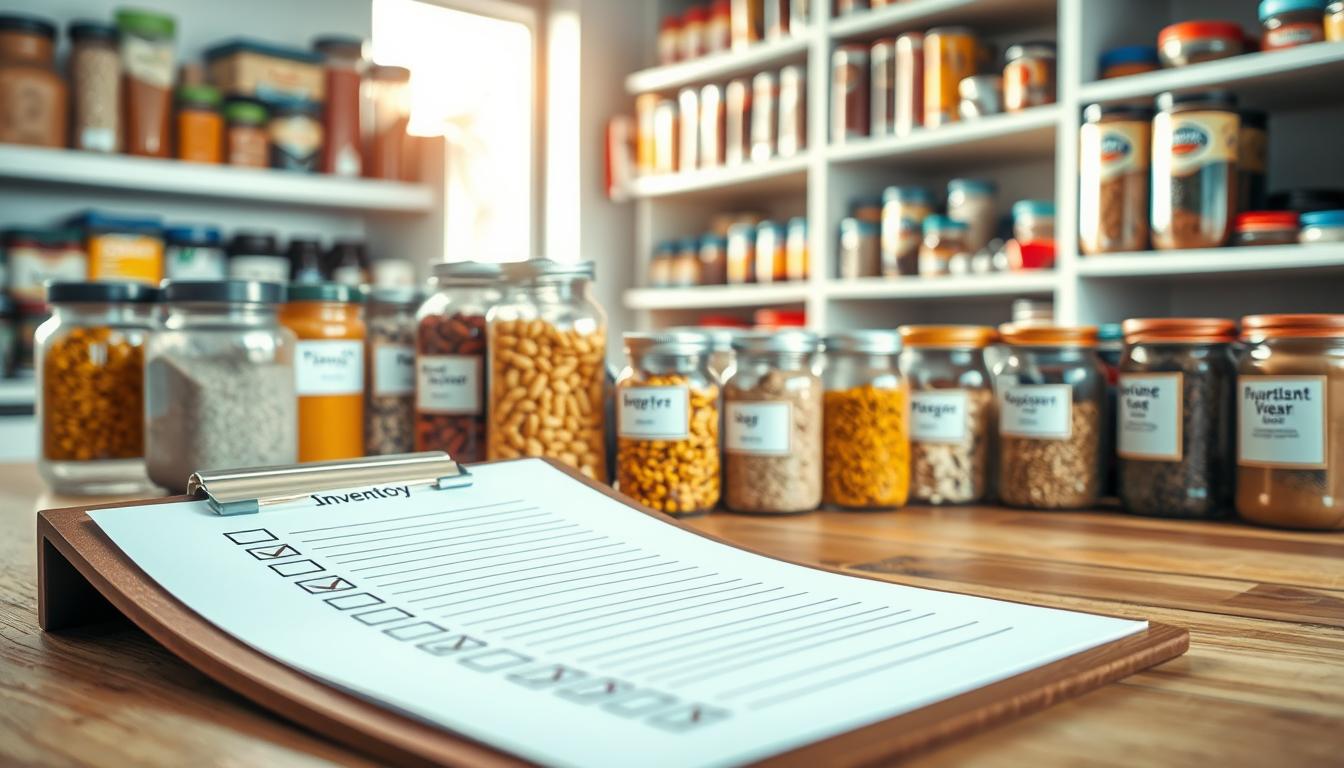
Clear, see-through containers instantly show what you have so you stop buying extras.
Decant boxed dry goods like pasta, cereal, and crackers into stackable containers to maximize vertical space. Boxes become easier to stack and less likely to topple.
Transparent bins help you spot low levels of staples before you run out. That visibility cuts duplicate buys and makes your shopping trips more efficient.
Choose the right materials for the job
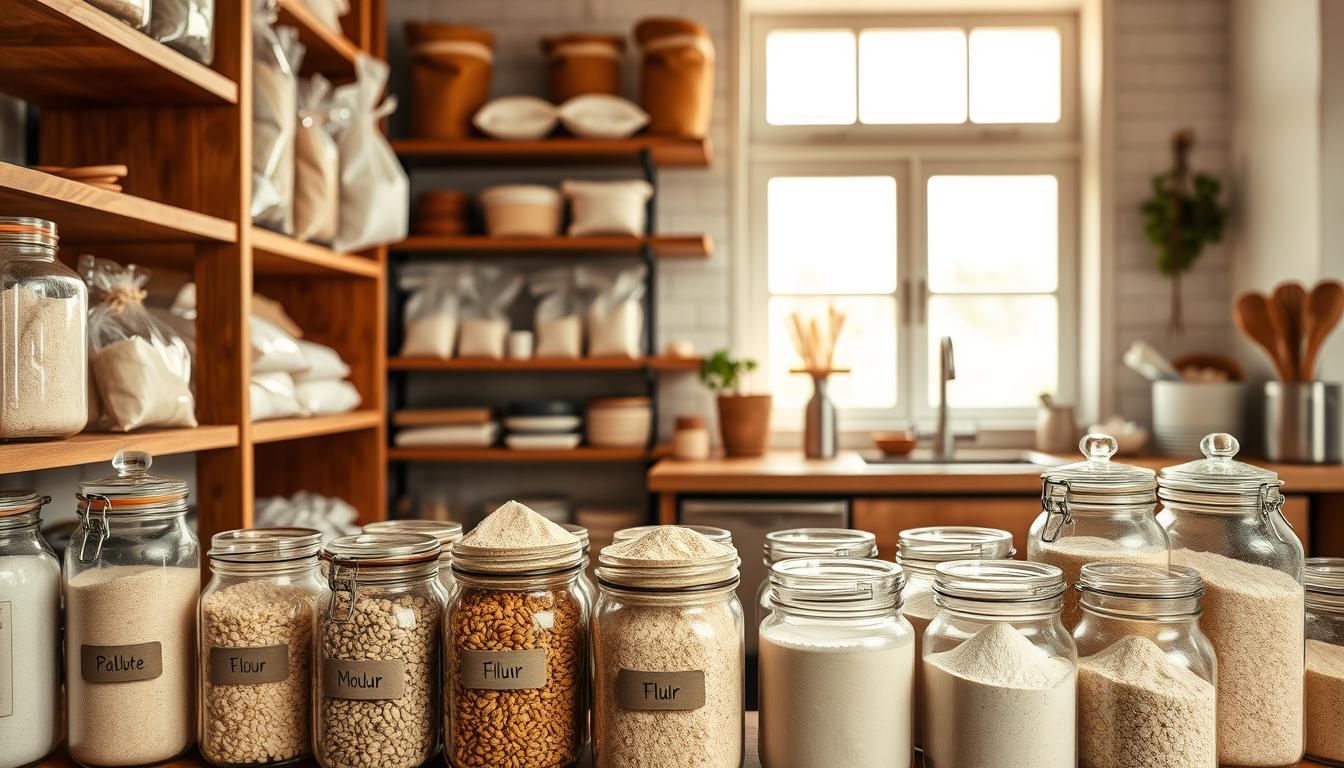
Use plastic bins for grouped categories and bulk products where durability matters. Glass jars work great for flour, grains, and spices because they are reusable and easy to clean.
Stack safely to use the full shelf height
Pick stackable, stable containers so you use vertical space without creating unstable piles. Vertical storage makes the most of each shelf and frees up horizontal space.
- When to decant: boxed dry goods become neater and stackable once transferred.
- Shopping benefit: clear storage containers let you see what’s low so you avoid buying duplicates.
- Cleaning & sustainability: reusable containers reduce packaging clutter and wipe clean easily.
- Baking zone tip: dedicate jars for flour, grains, and baking ingredients to keep that area consistent.
Next upgrade: airtight pop-top containers add freshness and one-handed convenience for frequent snacks and staples.
Don’t Be Afraid of Airtight Pop-Top Containers
Airtight pop-top containers can feel unfamiliar, but they often become the easiest part of your daily routine. They open fast, seal tight, and keep food fresher longer, which means fewer stale packages and less waste.
Many people worry pop-top storage is pricey or awkward. In practice, the lids are designed for quick access and one-handed use—perfect for crackers, pretzels, or cereal you grab while cooking.
Place your most-used containers at eye level so the shelf looks tidy and you reach for favorites without bending. Pick sizes that match what you already buy to avoid wasted space.
- Seals cut stale snacks and extend freshness for opened items.
- One-handed pop-open lids speed up busy mornings.
- Stackable designs reclaim vertical space and build upward safely.
Once you decant, labeling keeps everyone consistent and your system working day to day.
Label Everything So Everyone in Your Family Stays Consistent
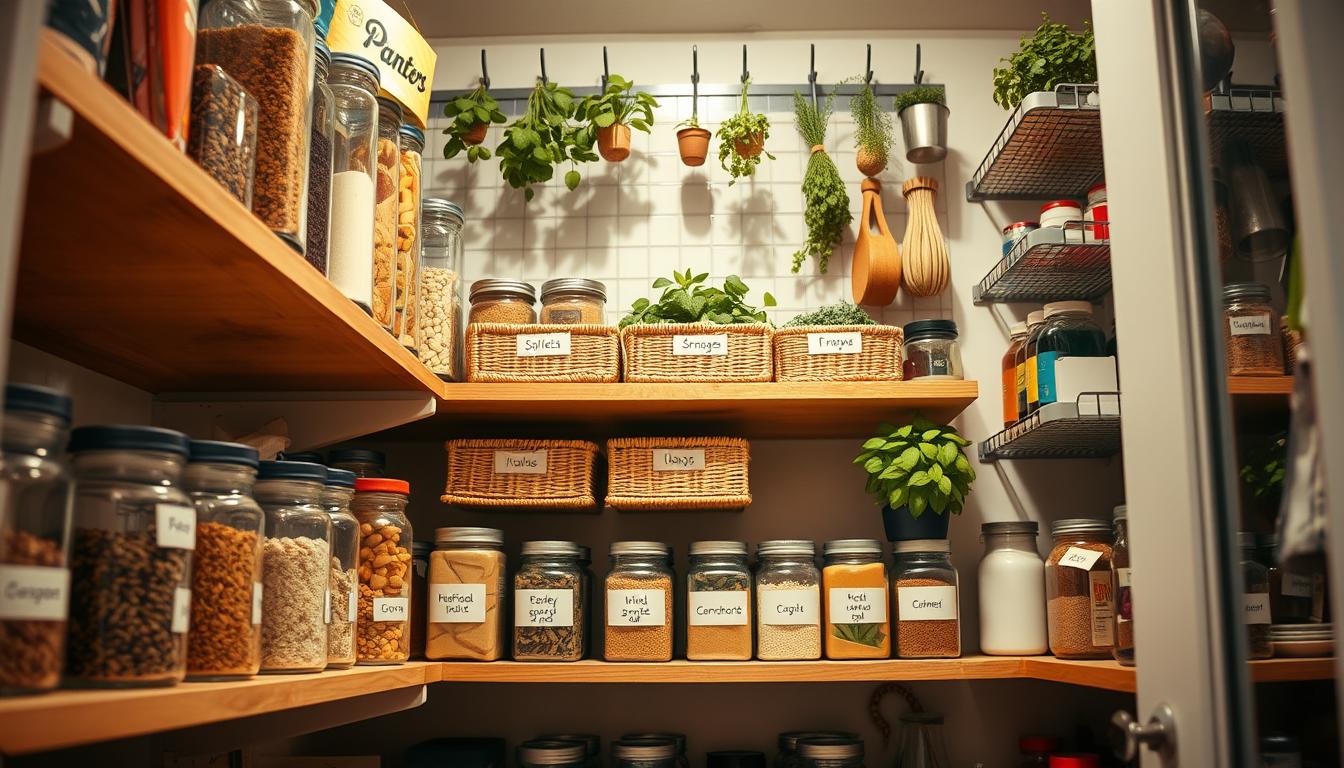
A simple labeling system turns guesswork into a five-second decision. Clear labels tell each person where things belong so returning goods is fast and polite. This reduces clutter and keeps your system working over time.
Label tools and style choices
Use a durable label maker for long-lasting tags or print clean paper labels for a uniform look. Both work — pick what fits your shelf style and your budget.
What to label and where
Mark bins, jars, and baskets with plain category names you already use on your grocery list. Label similar groups (snacks vs. lunchbox snacks) to avoid mix-ups like salt versus sugar.
Expiration dates and rotation
Tape expiration dates discreetly on the back of containers. That way you can rotate older pantry items first without cluttering the front labels.
- How labels help: they act as the glue of your pantry system and stop questions about where products belong.
- Consistent wording speeds restocking and cuts duplicate buys by showing what you already have.
- With clear tags you’ll notice what needs to be eaten soon, which reduces waste and saves time.
Next step: after labeling, add vertical shelf helpers to free up more room and improve visibility.
Make the Most of Vertical Space With Smart Shelving Add-Ons
A few smart add-ons turn wasted height into practical, reachable storage. These fixes give you extra room without a remodel and help keep frequently used goods front and center.
Add shelf stackers to double short-item capacity
Shelf stackers effectively double shelf capacity for short cans and jars. You create extra tiers so labels stay visible and nothing hides at the back.
Use under-shelf drawers for small packets and grab-and-go items
Under-shelf drawers slide in under existing shelving and add a tidy place for snack packs, condiment packets, or tea bags. They also allow airflow and keep small items from scattering.
Install shallow shelves where visibility matters most
Shallow shelving is perfect for spices and small bottles. You can see every label at once, which stops jars from getting lost and speeds meal prep.
- Create extra shelves without remodeling — stackers fit on existing shelves to hold more goods.
- Visibility advantage — tiers prevent labels from being blocked and reduce hidden items.
- Grab-and-go drawers — keep packets and single-serve items ready and tidy.
- Solve awkward areas — these add-ons work well where fixed shelving doesn’t match what you store.
- Efficiency boost — better vertical storage means fewer overstuffed shelves and less daily mess.
Next step: your pantry door offers another hidden area for more clever storage.
Turn the Back of Your Pantry Door Into Bonus Storage
Use vertical door space to keep small goods close at hand and off crowded shelves. The back of the door is often unused real estate that can hold frequently needed items without stealing shelf room.
Over-the-door baskets are an easy fix. Hang baskets for condiments, spice packets, wraps, and small products so you stop digging at the back of the shelves.
Create a simple bag solution: assign one dedicated basket for reusable bags. That single basket prevents bags from spilling onto shelves and the floor, and makes putting them away one quick step.
- Why the door works: it keeps high-frequency items visible and frees horizontal shelf space.
- Use baskets for small packets, wraps, and lightweight products that otherwise clutter shelves.
- Visibility improves: you’ll reduce digging, especially in narrow layouts.
- Usability note: avoid heavy cans on the door if your hinges are light-duty; stick to lightweight, daily things.
Make it maintainable: when returning bags and small items takes one step, everyone follows the system. Next, you’ll contain larger categories on shelves with bins and baskets for a calmer look.
Use Baskets and Bins to Contain Categories (and Calm the Chaos)
Group like items into neat containers so each shelf feels intentional, not chaotic.
Corral snacks, baking supplies, and breakfast goods into labeled bins so you stop hunting through piles. When each category has a container, restocking becomes a five-second task and family members return things correctly.
Corral snacks, baking supplies, and breakfast items into labeled bins
Use one bin per category—snacks, baking, breakfast—so loose packages don’t spread across shelves. Label each container clearly to cut mistakes and speed tidying.
Use uniform baskets for a cohesive look across shelves
Matching baskets create a calm, intentional look even when shelves are full. The uniformity effect reduces visual clutter and makes the whole space feel organized.
Pick handled bins so you can pull items forward from deep shelving
Handled bins are a deep-shelf fix: pull the bin forward and everything comes with it. Use them for messy categories like chips and snack bars so varied packaging stays contained.
- Keep a single backstock bin for duplicates and bulk goods.
- Use bins for messy, variable-sized packages to reduce shelf scatter.
- Finish with a turntable or lazy Susan in corners to prevent lost goods.
Fix Hard-to-Reach Corners With Lazy Susans and Swivel Storage
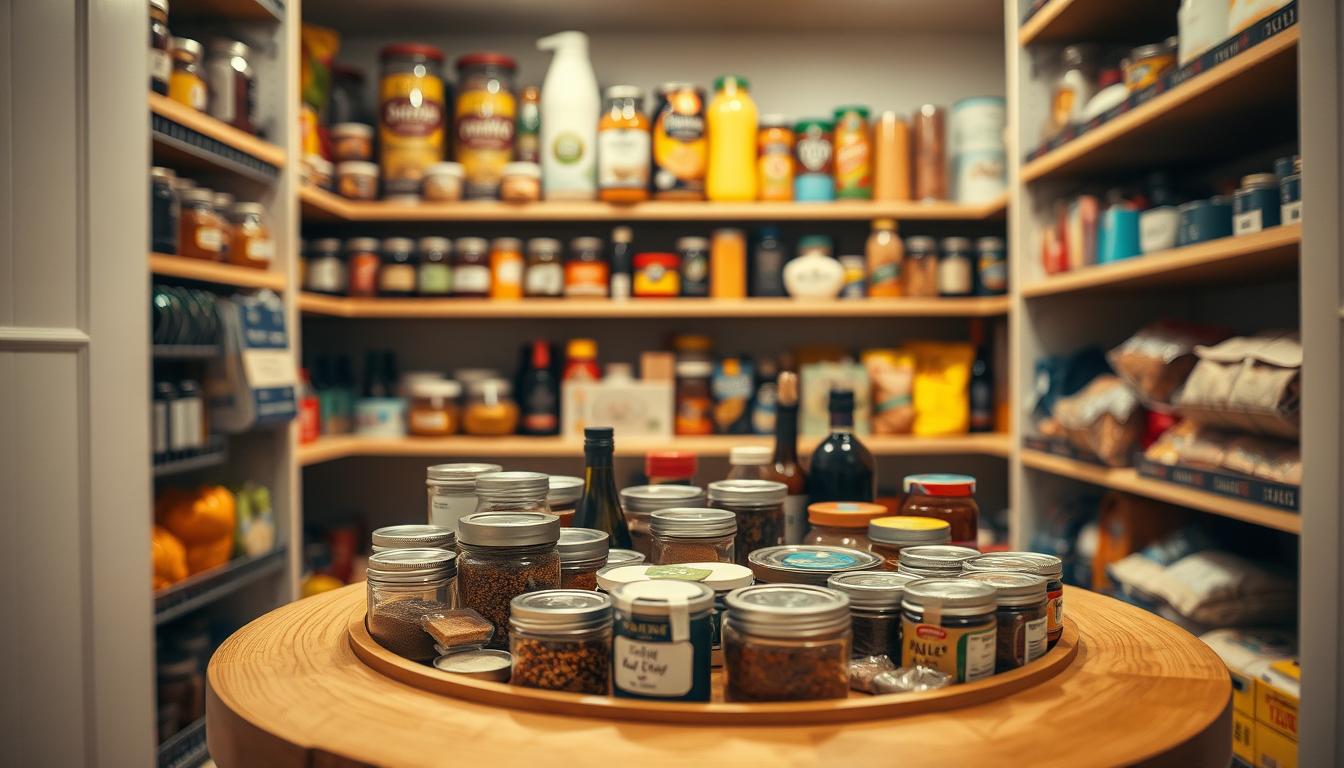
A rotating tray can turn your deepest, darkest shelf into the easiest grab zone. Visibility is the main problem: there’s often one pantry item stuck in the back that you forget and then buy again.
Lazy Susans and swivel trays let you spin spices, jars, and condiments forward in one smooth motion. They work best in corners, on deep shelves, and where small things tend to topple or hide.
Spin spices, jars, and condiments forward instead of digging in the back
Use a small turntable for spice bottles and a larger one for jars and condiments. This saves time and stops duplicates from piling up.
Try tiered turntables to fit more items without blocking labels
Tiered turntables add capacity while keeping labels visible. They let you stack more pantry items in the same footprint and still see everything at a glance.
- Main corner issue: hidden items lead to waste and repeat buys.
- Best use: corners, deep shelves, clustered small goods.
- Tip: group similar things on each turntable for easy maintenance.
- Next step: if shelves are very deep, sliding drawers and dividers improve access even more.
Upgrade Access With Sliding Drawers and Shelf Dividers
If you dread digging for snacks, a simple drawer upgrade changes how you use each shelf. Deep shelving often hides goods and makes your pantry feel cluttered again.
Install sliding drawers to eliminate “lost” items on deep shelves
Sliding drawers are a game changer because they bring everything to you. Pull-out trays let you access snacks, packets, and small products without unloading the whole shelf.
Use separators to keep bags, bottles, and tall items upright
Shelf dividers and separators stop avalanches when you grab one thing. Upright storage prevents spills and speeds restocking because categories stay put.
- Why deep shelves fail: hidden goods mean you can’t see what you own, so items get forgotten.
- Where drawers matter most: snacks, packets, and smaller products that slip behind larger boxes.
- Measure first so the drawer hardware fits your shelf depth and clearance.
- Safety & speed: upright dividers protect bottles and bags and make your daily routine faster.
Next step: once access is solved, use the floor space with purpose to finish your organization plan.
Use the Floor Space on Purpose (No Loose Items)
Turn the floor into a functional layer of shelving with clear rules and sturdy containers. Treat that bottom area as planned storage so nothing rolls or gets forgotten. A simple rule prevents loose items from becoming daily clutter.
Treat the floor like an extra shelf with bins for drinks and bulk goods
Set heavy drinks and bulk goods in low, sturdy bins so they stay put. This keeps bottles upright and labels visible, which helps you spot duplicates at a glance.
Store small appliances neatly in baskets instead of letting them sprawl
Use handled baskets for slow cookers, blenders, and rice cookers. Baskets keep appliances together and make it easy to lift them out when you need them.
Keep kid-friendly snacks low so your pantry stays organized longer
Place kid snacks on the lowest shelf or in a low bin so children can reach their own treats safely. When everyone can access what they need, they are more likely to return items properly.
- Rule: nothing loose on the floor — only planned bins and baskets.
- Choose heavy-duty bins for drinks and bulk goods to prevent tipping.
- Use baskets for appliances so the kitchen floor and shelves stay clear.
- Keep snacks low for easy access and less shelf disruption by the family.
Visual calm matters: grouped floor bins keep labels facing forward and duplicates together. When the lowest layer is tidy, the whole space feels simpler to maintain. Next, you’ll wrap up with a short routine to keep this system working long-term.
Conclusion
Close by setting a small, weekly check that preserves your refreshed pantry space. Summarize the process you followed: reset, plan, zone, then add containers, labels, and access upgrades that match your pantry. This keeps your shelf layout realistic and easy to use.
Make maintainability the goal. Toss expired items quickly and keep most-used items front and center so putting groceries away stays simple. Use containers and clear tags to cut decision time and reduce duplicates.
These practical tips saved you time and cut waste. Start small—one shelf of labeled bins or a single category zone will change how your pantry functions and make daily meals easier.