
You’re choosing between durable non-plastic options for everyday food storage. Think about how often you reheat, how you store meals, and how much wear you expect from your containers.
This guide covers everyday use: leftovers, meal prep, pantry items, reheating, and serving. It’s not just about what looks good on a shelf.
Expect tradeoffs: one material often shows contents clearly and is easy to check for cleanliness, while the other can feel heavier, more insulating, and long-lasting when well made.
Many people switch from plastic for peace of mind about chemical migration. This article will point out material differences, safety flags like questionable glazes, lid-and-seal issues, and U.S.-specific sustainability notes.
By the end, you’ll know when each option is the smarter choice and how to shop confidently for storage that fits your kitchen and routine.
Ceramic vs glass jars: the quick difference that impacts your food storage
Make a fast, practical choice by matching the container to how you cook, store, and reach for food. Start with safety: “inert” and “non-leaching” mean the base surface won’t react with food or pass chemicals into it.
What “inert” and “non-leaching” means for what you eat
In plain terms, inert means the surface stays put — it won’t dissolve or change when it touches food. Non-leaching means nothing harmful migrates into what you store.
Glass is typically non-reactive and impermeable to liquids and gases. The other major option is fired clay with a glaze. That glaze determines long-term safety and how well smells or flavors stick.
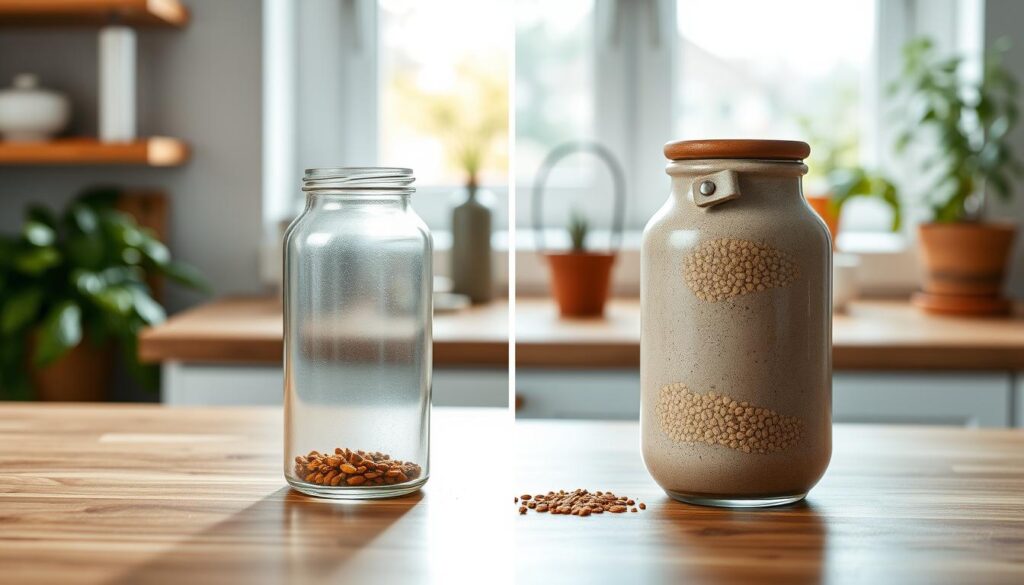
Why weight, breakability, and everyday use matter in your home
Weight affects whether you actually use a container every day. Heavier pieces feel substantial, so you may prefer them for serving or oven-to-table use.
- Failure modes: glass can crack or shatter from impacts or thermal shock.
- Edge wear: ceramic often chips at rims or handles if knocked.
- Quick rule: pick glass for visibility and easy cleaning; choose ceramic for heat retention and a more stable feel.
Glass jars and glass containers for food storage: strengths and tradeoffs
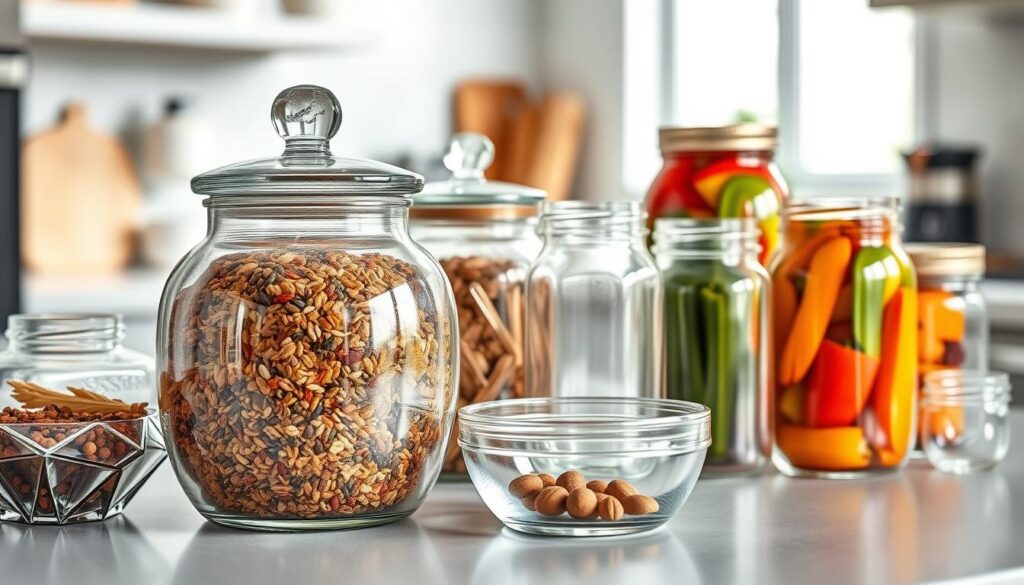
Choosing the right option starts with the types you’ll see in stores. Most kitchen glass falls into three groups: soda-lime (common and affordable), tempered (extra strength), and borosilicate (better thermal shock resistance).
Safety profile to know before you buy
Most non-crystal glass is food-safe — soda-lime, tempered, and borosilicate are generally inert. One major exception is lead crystal; avoid it for any direct food contact.
Everyday advantages you’ll notice fast
Glass containers resist odors and stains from tomato sauces, spices, and strong aromatics. They clean well in a dishwasher and make it easy to see contents at a glance.
Heat, cold, and thermal shock
Many well-known brands (for example, Pyrex and Snapware) list microwave-, oven-, freezer-, and dishwasher-safe uses, but always check the label. To reduce cracking risk, avoid sudden temperature swings.
Where glass can fall short over time
Glass is heavier and can chip or develop hairline cracks after repeated heating and impacts. Inspect pieces periodically and retire any with visible faults before reheating.
A common weak link and smart fixes
Plastic lids are often the weak part of an otherwise durable set. A simple approach is to leave headspace, vent or remove lids when microwaving, and avoid overfilling to protect seals and reduce heat contact.
- Shopping tip: prefer established brands with clear specs for safety and longevity.
- Types at a glance: soda-lime (budget), tempered (tough), borosilicate (heat resistant).
- Maintain: check for chips and cracks, and follow manufacturer use instructions.
Ceramic jars and ceramic containers: what makes them different materials
D materials, firing, and surface treatment determine how a piece behaves in daily use. Understanding those three parts helps you choose cookware and storage that match your routine.
What the material actually is
Traditional pieces are clay-based mixes—kaolin, quartz, feldspar, silica and sometimes cement—shaped and fired until dense. Those are what you usually see in kitchen items.
Advanced technical materials include engineered carbides, oxides, and nitrides. They appear in high-performance parts like electronics or industrial components, not typical kitchen sets.
How glazing changes performance, care, and safety
The glaze is the food-contact decision lever. A well-fired, non-porous glaze makes the surface smooth, easy to clean, and resistant to stains.
Glaze composition is also where safety questions come from. Ask brands about testing for lead or cadmium and look for clear food-contact certifications.
- Buy smarter: favor higher firing temperatures and clear safety claims.
- Care tip: avoid clanging pieces together and store with padding to prevent chips at rims and edges.
- Label note: marketing terms like “glass ceramic” can blur real differences—focus on the tested food surface instead.
Next up: when a well-made, food-safe glazed piece becomes your best all-in-one choice for cooking, serving, and storing.
When ceramic jars are the better choice for food storage
Choose a fired, glazed container when you want one piece to handle baking, serving, and storing without transfer. Many pieces are oven-, microwave-, dishwasher-, and freezer-safe—check the maker’s guidance before first use.
When you want a single container for cooking, serving, and storing
You save time when you can bake a casserole, bring it to the table, and tuck leftovers into the fridge in the same dish. That flow reduces dishes and keeps food handling simple.
When you prioritize heat management and stability
Thicker fired pieces diffuse heat more evenly and hold temperature longer than thin alternatives. For family meals, that steady feel can be safer and more comforting on the table.
When you want a longer-life piece and a sturdier feel
Pick this material if you plan to keep the set for years. It often earns a permanent spot in your home because it looks good displayed and stands up to daily use.
- You cook casseroles, baked pasta, or roasted vegetables and want one-dish storage.
- You prefer a substantial feel over lightweight convenience.
- You plan to keep the same set for long-term use, not replace it yearly.
Honest tradeoff: these pieces are heavier and can chip at edges, so buy well-made items and handle rims with care for the best life and storage performance.
Food safety considerations: lead, cadmium, and how to shop with confidence
When you pick a container, safety concerns like lead and cadmium must come first. These contaminants can migrate from decorative glazes or crystalware into food over time.
Glass safety: not all pieces are equal
Standard kitchen glass is usually inert and safe, but lead crystal is different. Lead oxide gives crystal its sparkle and can leach into acidic foods or drinks.
Glaze and regulatory guidance for fired pieces
FDA limits aim to reduce exposure, but “within limits” is not the same as “lead-free.” Ask manufacturers for test results if glaze composition is unclear.
What to avoid and red flags
- Decorative or vintage items with unknown glazes.
- Imported pieces lacking food-contact documentation.
- Products with no clear testing or safety claims.
Practical buying checklist
Ask these questions: Where is it made? Is the glaze tested for lead/cadmium? What standards do you test to? Is this intended for food contact?
Mind lids and plastic parts: if a container uses plastic lids, vent or remove them during microwaving and avoid direct contact with very hot food to reduce chemical exposure and prolong seal life.
Performance in real kitchens: odors, stains, moisture, and storage time
Everyday kitchen performance often comes down to how well a container holds smells, stains, and moisture. That practical view helps you pick the best option for meal prep, leftovers, and pantry items.
Odor and flavor
You usually notice less lingering garlic or curry in glass or a well-glazed ceramic than in plastic. Both non-plastic materials have low porosity, so they resist absorbing strong tastes and smells.
Stain resistance and cleanup
Tomato sauce, turmeric, and berries rinse away from glass and quality glazed pieces more easily. Dishwasher use is safe for most glass items and many glazed pieces, but avoid abrasive pads that can dull a finish.
Moisture, freshness, and storage time
Seal quality matters more the longer you store food. Wet foods and soups need an airtight lid to stay fresh over time. Crispy items do better with vented storage to keep crunch.
- Match the container: soups and saucy meals → airtight, oven-safe options.
- Pantry dry goods → either material works; stackability may guide your pick.
- Cut produce → choose containers that balance humidity and airflow for best shelf life.
With simple care and the right lids, both materials offer clear advantages for your food storage needs.
Lids, seals, and space: the details that change the “best” container choice
Small lid choices often dictate whether a container fits your daily rhythm in the kitchen.
Compare lid materials in practical terms so you can pick the right pairing for your storage needs.
Lid materials compared: glass, ceramic, silicone, and plastic
Plastic lids are common and convenient, but you should limit heat exposure and avoid high-heat uses.
Silicone gives flexible, reliable gaskets that improve airtight performance and handle hot-to-cold shifts well.
Rigid glass or ceramic tops look nice and add weight, yet they may not seal fully unless paired with a gasket.
Airtight storage: when a perfect seal matters most
Airtight seals matter most for meal prep, chopped onions, strong-smelling foods, and liquids. For these use cases, leak resistance and gasket quality protect freshness and prevent spills.
If you mainly keep food at home for short periods, airtight performance can be secondary to durability and stackability.
Stacking and cabinet space: how shape and weight affect organization
Footprint and form change how efficiently you use space. Rectangular bodies usually pack tighter than round ones.
Weight influences how high you stack—heavy tops make tall stacks risky, especially on high shelves.
- Prioritize leak resistance and gasket quality if you transport lunches or soups.
- Choose durable, easy-to-stack pieces for stationary home storage where space matters.
- Storage habits that reduce breakage: don’t overload tall stacks, avoid slamming lids, and store lids separately when possible.
Decision rule: the best outcome often comes from the lid system, not just the body. Match lids to how you use containers and the space you have at home for the most practical, long-term solution.
Sustainability and long-term value in the United States
Recycling and reuse shape the real environmental outcome more than product labels. What is “recyclable” on a tag may not reflect local processing, contamination, or collection rates where you live.
Glass recycling reality and recovery rates
In theory, glass is 100% recyclable and can be reused endlessly without quality loss. In practice, recovery varies by region. EPA data shows about 31.3% of U.S. glass containers were recovered in 2015.
This gap means recyclability doesn’t guarantee recycling. Single-stream contamination and local market demand affect what actually gets processed over time.
Ceramic disposal and reuse-first logic
Many municipal programs don’t accept fired clay and glazed pieces. That makes curbside recycling for some materials hard to access.
Because well-made pieces can last decades, keeping and reusing them often delivers the best sustainability payoff. Broken items can be reused in craft projects or crushed and used as base or drainage mixed with cement in landscaping.
Durability, value, and a values-based choice
- Ground reality: pick glass if circular recycling infrastructure is your priority.
- Long life: pick quality fired pieces if you want fewer replacements and lasting use.
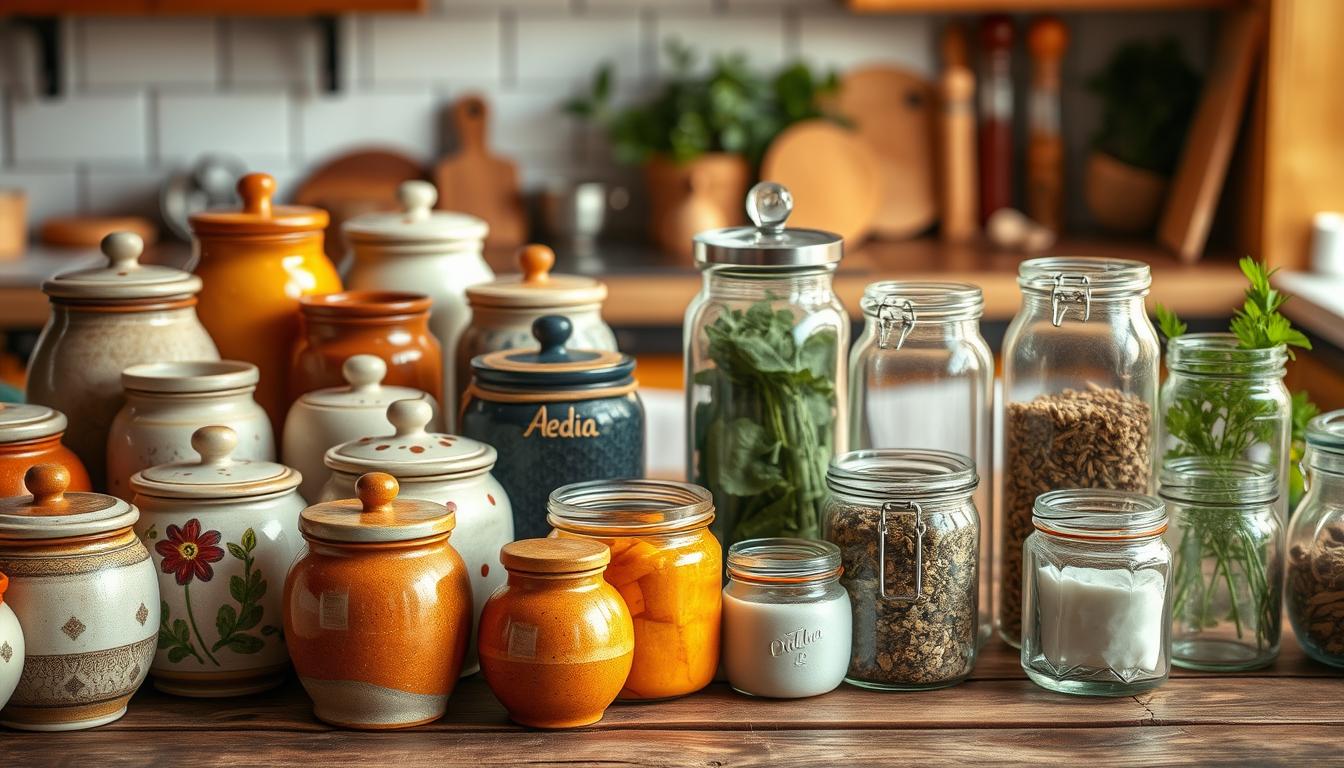
- Practical reuse: use crocks as countertop canisters, utensil holders, or pantry organizers to extend useful life.
Your final choice should match your local recycling options and your goal for long-term durability. Over the long run, extended use often outweighs end-of-life limitations.
Conclusion
Deciding which pieces to keep in your kitchen comes down to how you cook and store most days.
Choose glass when you want clear visibility, easy cleanup, and a widely accepted, food-safe default. Choose ceramic when heat handling, a solid table feel, and long-term use matter more to you.
Keep safety simple: avoid lead crystal, be cautious with unknown glazes, and ask makers for testing or sourcing details. These steps are a small but vital part of buying smart.
Remember lids drive real performance. A great body can fail with a poor seal, so match lid material and airtightness to how you transport and refrigerate meals.
Quick next step: audit what you store most (soups, produce, pantry staples). Then pick one or two types of containers that fit your routine — that’s the most sustainable way to actually use what you buy.