
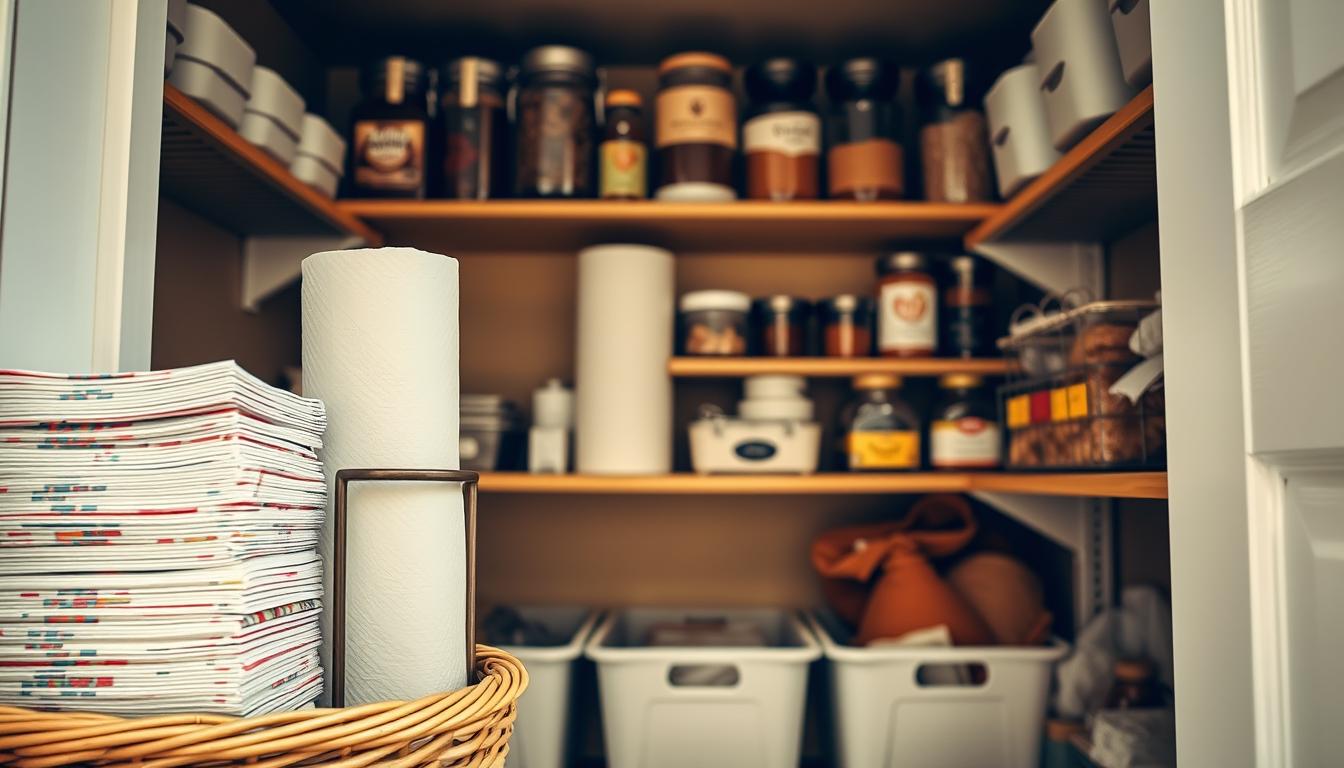
Paper products are light but bulky. In a small pantry they can steal shelf room and create clutter fast. Experts like Meredith Goforth, Ashley Murphy, and Darla DeMorrow recommend removing outer packaging for “automatic visibility” and keeping extras out of sight but easy to reach.
You’ll build a simple, repeatable system that keeps everyday supply within reach and backstock contained. First, assess your shelves and protect items from crushing. Then assign zones, choose bins, and set a quick restock routine.
This approach saves time hunting for items, helps you avoid accidental overbuying, and keeps your kitchen calmer day to day. The core principle is automatic visibility so you restock before you run out. These solutions work in apartments, condos, and compact kitchens without remodeling.
Assess your small pantry space and what you actually need to keep
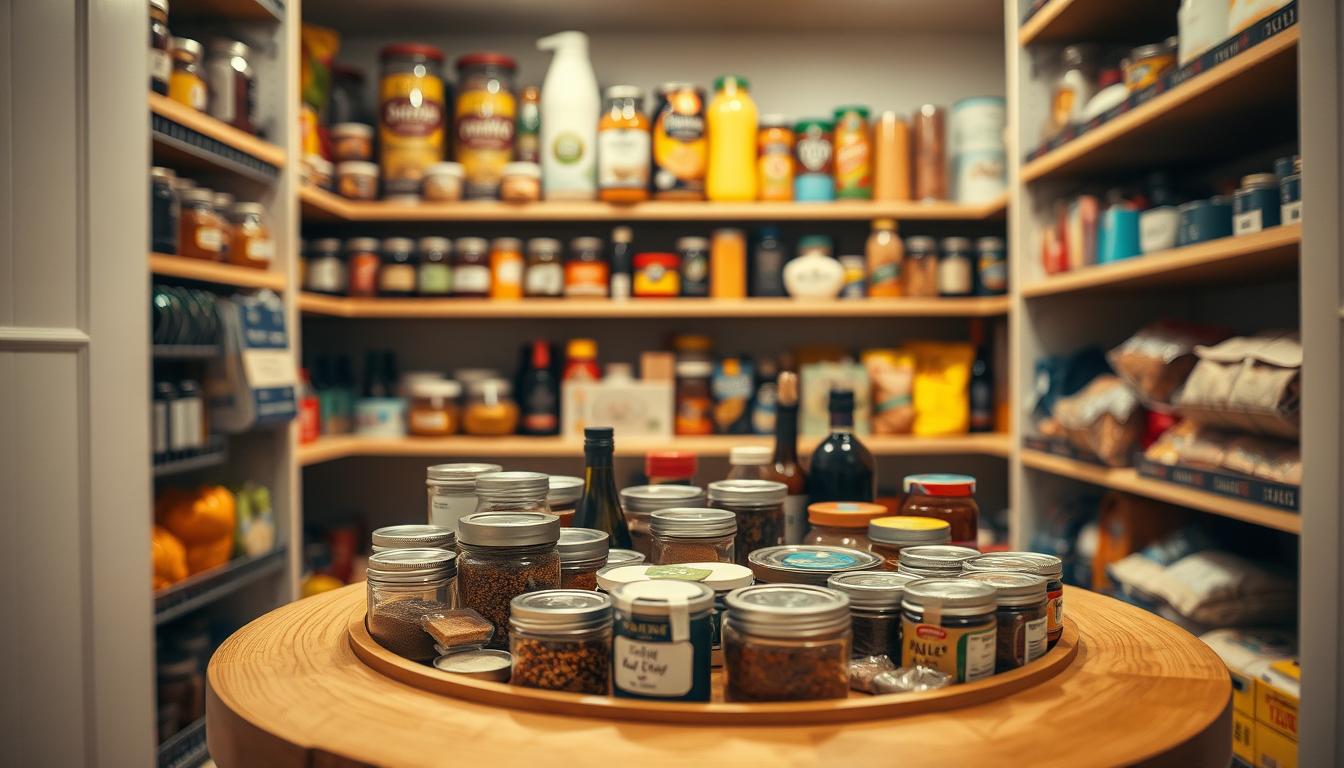
Start by mapping your pantry so you know exactly how much space you have and what must stay. A quick, honest audit helps you decide what to store and where. This keeps clutter from spreading into food, spices, or appliances.
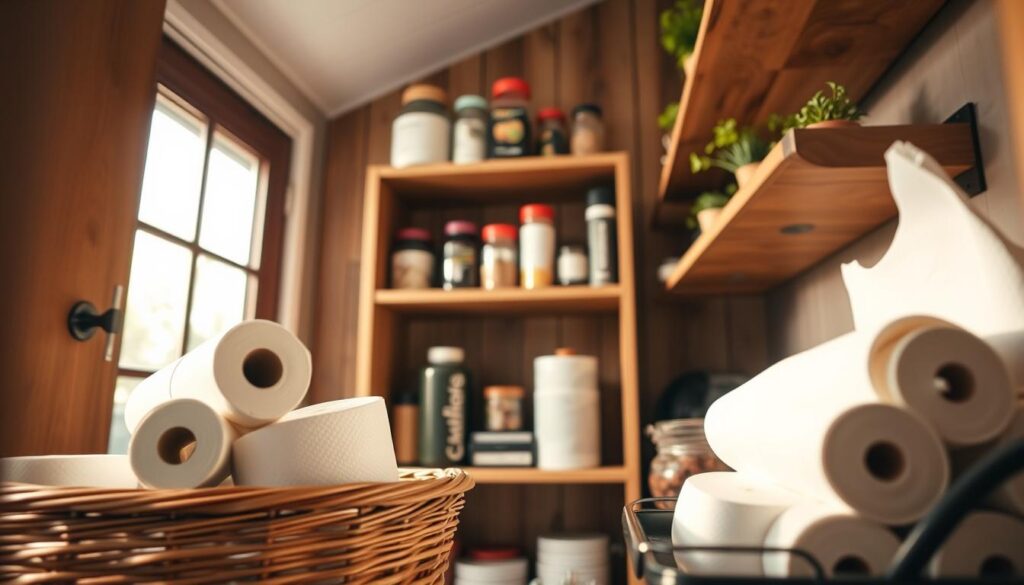
Measure before you buy
Measure shelf width, shelf height, cabinet depth, and door clearance. Confirm the top shelf and any skinny gaps that could hold overflow. Buy organizers that fit the room you actually have, not the one you wish for.
Set par levels and pick one zone
Choose a realistic par level based on household size and weekly use so you don’t overstock bulky packs. Then assign a single zone—one shelf, one side of a closet, or one cabinet section—to keep items contained.
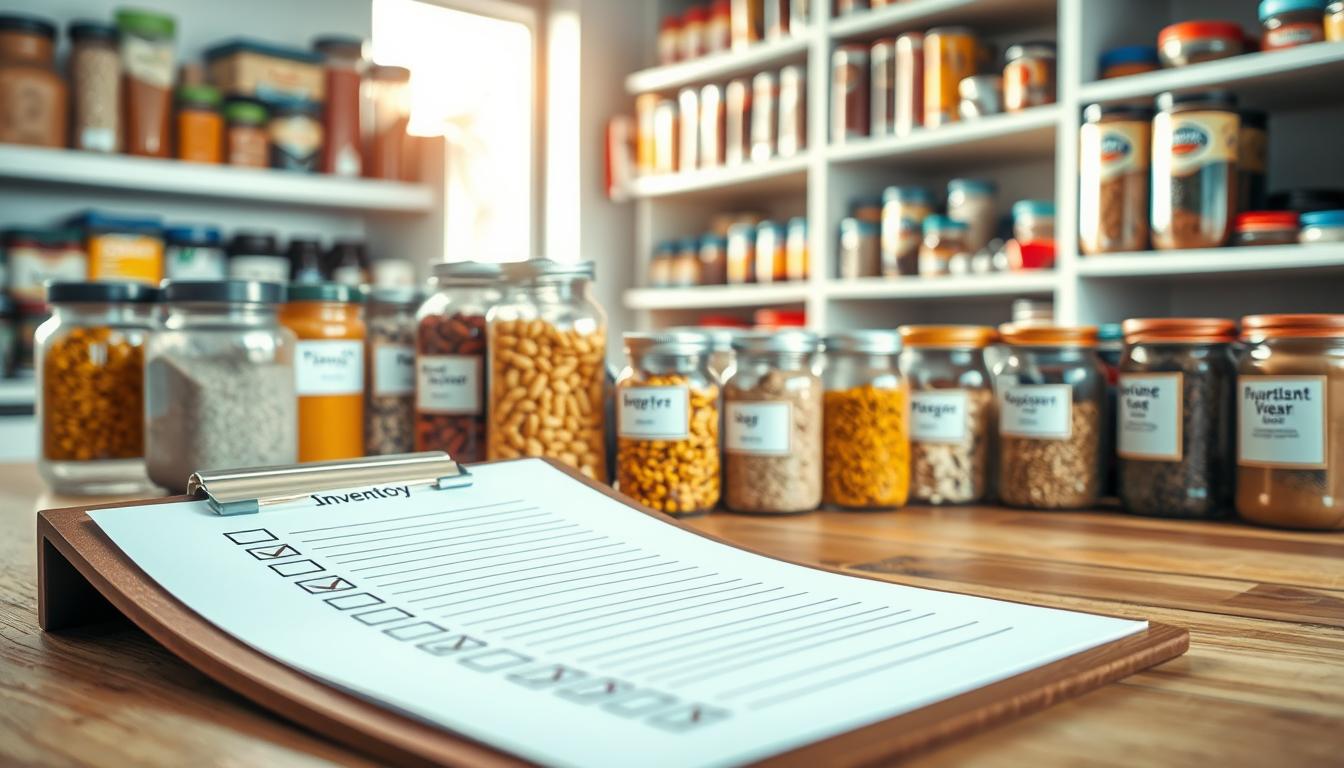
- Fast pantry audit: walk shelf by shelf and decide what you need keep.
- Note tight spots: the back corner or top shelf often become useful overflow.
- Map your system: “one in use, a small backup nearby, everything else contained” so everyone returns things the same way.
Prep paper towels and napkins for storage to save space and prevent damage
Small prep steps make a big difference. Remove bulky outer wrappers so rolls and stacks fit tighter and you can see inventory without digging.
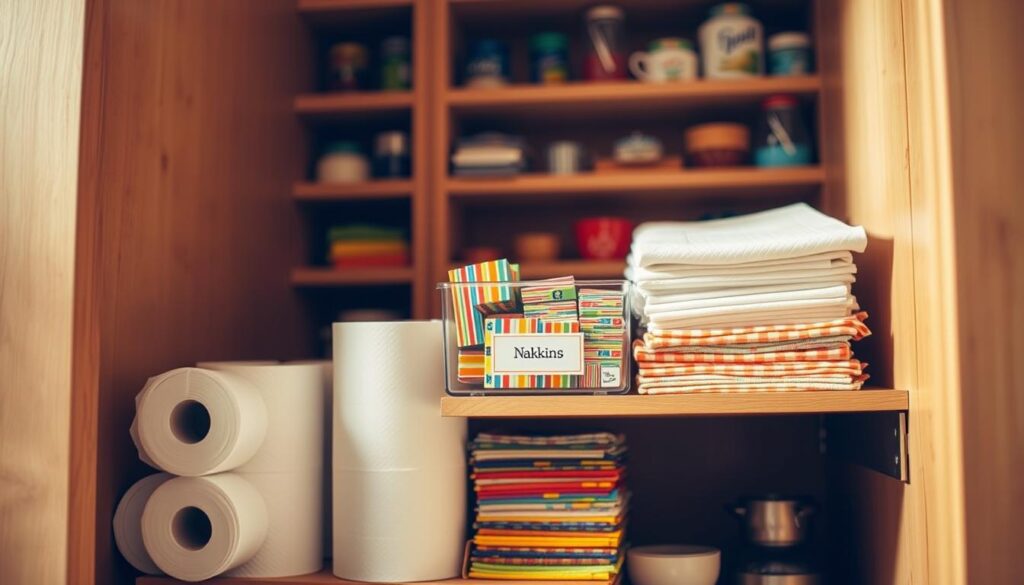
Remove outer packaging for visibility and less plastic
Meredith Goforth recommends breaking down multipacks to reduce leftover plastic and keep automatic visibility.
- Stand rolls upright, line them in neat rows, or corral loose packs into one container.
- Unwrapping prevents a hidden pile of slump‑ing rolls that hides what’s left.
- Prep exact quantities your bins hold so restocking takes seconds, saving you time.
Check for moisture risk and relocate damp-prone spots
Keep napkins and rolls away from sinks, leaky pipes, mop-prone floors, or cool, damp shelves.
Do a quick touch test when you restock: cool or stained surfaces mean move items and add airflow right away.
Organizing paper goods with easy-access vs. backstock placement
Keep daily supplies at arm’s reach and move the rest to a single, low shelf for quick grabs. This split reduces visible clutter and speeds up restocking.
Keep one roll on the dispenser and store extras out of sight
Keep one roll ready on a dispenser so spills take seconds to handle. Decide where extras live so your kitchen stays functional instead of becoming a staging area.
Maintain a small, everyday napkin stack on the counter
Place a small stack where your family actually eats. A neat tray or napkin holder makes the easy choice the tidy choice and cuts down on paper clutter.
Place refill packs nearby for quick restocking
Store refill packs in a nearby bin or on the next-closest shelf so restocking takes seconds. Use one simple organizer—tray, small basket, or holder—so refills are obvious.
Use a lower pantry shelf for backstock
Keep extras on a lower shelf for visibility and grab-and-go access. Backstock stays out of the way but is still easy to reach without a step stool.
- Separate use-now from store-for-later to prevent counters from becoming cluttered.
- Choose one quick restock spot so time to refill is under a minute.
Use bins, baskets, and shelf systems that fit a tight pantry
Pick storage pieces that make inventory obvious and use every inch of tight shelving. Choose containers that match your shelf depth so nothing hangs off the edge or hides in the back.
Line rolls in neat rows across a shelf to maximize width. Turning awkward cylinders into a tidy grid makes it easy to count at a glance and prevents rolls from rolling into the back.
- Use one large basket for loose packs so they don’t slump into a pile or snag when you grab something else.
- Pick mid-sized, see-through bins for napkins so they stay clean and don’t get crushed on lower shelves.
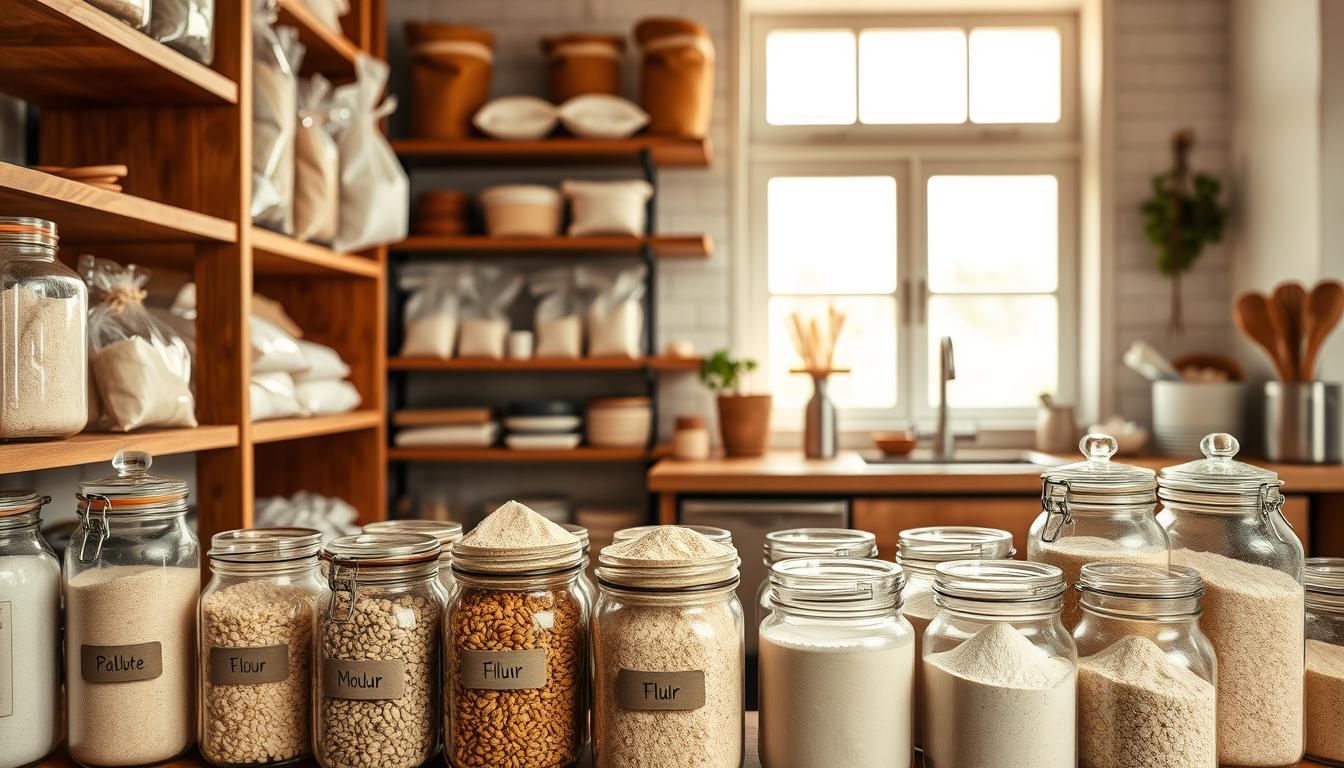
- Add clear labels that match your categories (Paper Towels, Everyday Napkins, Guest Napkins, Party) so everyone returns items the right way.
- Treat each bin like a file: think file folders and files—each shelf holds folders, each bin holds one category to keep things easy to sort.
- If shelf height is tight, use stackable containers or shallow drawers so you gain vertical space without toppling stacks.
Keep the system simple and repeatable. With labeled organizers and a consistent way to sort, the pantry stays usable even in a small kitchen.
Make the most of vertical and hidden storage around the kitchen
Look beyond shelves: vertical and hidden spots near your prep area can free up prime pantry space. Use narrow heights, inside cabinet doors, and shallow recesses to keep extras accessible but out of sight. This reduces visible clutter and makes counters easier to use.
Store one to two spare rolls under the sink
If space is tight, keep 1–2 spare rolls under the sink in a waterproof bin with cleaning bottles. Only do this when the area stays dry and items are protected from leaks.
Use cabinet shelves, slim pockets, or shallow storage areas
Shallow cabinet shelves and slim pockets are ideal for napkin backstock. They stop a visible pile on counters while keeping extras at arm height for quick refills.
- Think vertical: use tall, narrow spots and door pockets so storage isn’t limited to the pantry.
- Mirror an office organizer: like a desk, your kitchen works best when tools and backups are near the work zone but not on the surface.
- Place heavy items low, keep frequently grabbed extras within reach, and avoid tucking rolls behind sharp or wet products.
These options give you a cleaner counter and a simple system that fits small kitchens. With a few concealed organizers, you cut down the clutter and make restocking fast and predictable.
Create categories that prevent paper clutter in the pantry and kitchen
Group items by how you use them so the pantry stops growing clutter and starts working for you. Designating zones and adding labels keeps frequently used items accessible and less-used stock tucked away.
Separate daily-use napkins from guest-ready and special-occasion items
Keep everyday napkins within reach so spills get solved fast. Store guest-ready or special-occasion napkins in a distinct, labeled bin so they stay crisp for hosting.
Keep paper towels, tissues, and other paper products in distinct bins to avoid mix-ups
Use clear or labeled containers so your family grabs the right pack. When each category has one home, you avoid accidental borrowing and reduce restocking mistakes.
- Build clear categories so you always know what you own and where it goes.
- Define a simple system rule: one container per category; reassess when it fills.
- Align categories with real habits—snacks, breakfast, lunches, entertaining—for easier upkeep.
Consistency wins: when every item has a category and a home, you spend less time reorganizing and more time maintaining a tidy kitchen.
Store entertaining and themed paper goods so you don’t forget what you own
Storing your festive napkins and plates as a single kit speeds up last‑minute hosting. Keep themed sets together in a mid‑sized, see‑through bin so everything is visible at a glance.
Darla DeMorrow recommends a clear, mid‑sized container to protect fragile pieces and limit how much you keep. If a theme doesn’t fit comfortably, that is a cue to use what you have before buying more.
Bundle matching napkins and plates
Group a full set—napkins, plates, and any coordinating items—so you can grab one kit instead of hunting across shelves. This makes prep faster and cuts down on last‑minute runs to the store.
Limit stock to a single clear bin
- Treat entertaining supplies as a dedicated category so holiday and birthday napkins don’t get lost behind everyday stock.
- Use a clear bin to set a hard limit: if it won’t fit, consider using up or donating extras.
- Keep the bin near your kitchen or pantry so you don’t forget what you own at home and create unseen clutter.
Protect and place for easy access
Choose a lidded or sturdy container and store it on a stable shelf to avoid crushing and dirt. Visible storage helps you use themed items and prevents accidental re‑buys.
Maintain a simple restock routine that saves time and keeps your pantry organized
Set a tiny, repeatable restock habit so your pantry stays usable on busy days. Small actions done often beat long overhaul sessions. Meredith Goforth’s idea of automatic visibility helps you notice low stock before it becomes a problem.
Use “automatic visibility” to spot low inventory before you run out
Keep labels forward and quantities countable. When you can see what’s left, you resupply on time and avoid emergency runs.
Do a quick monthly reset: straighten bins, remove empties, and re-stack
Designate an hour each month to sort containers and toss what you don’t need. Treat the pantry like household papers—sort mail, receipts, and bills on a schedule so things don’t pile up.
- Build a two‑minute restock habit: when you use the last roll, pull one from backstock and add it to your list.
- Check for drift: mixed categories, crumpled packs, or loose napkins out of their bin and fix them immediately.
- Focus on saving time, not perfection; a working system beats a perfect display.
These small routines keep your pantry tidy and cut the time you spend hunting. With steady upkeep, organization becomes simple and reliable.
Buy smarter for small spaces and consider reusable swaps
Buy with your shelf size in mind so what you bring home actually fits the space. Small choices cut down on visible clutter and make your pantry easier to keep tidy.
Shop for the space you have
Match buys to your shelf dimensions: choose smaller packs when storage is tight so oversized multipacks don’t overflow other zones.
- Pick the smallest quantity that fits your par level and shelf measurements.
- Use a simple rule: if it won’t fit in your assigned bin or shelf, don’t buy it for your home right now.
- Check inventory before shopping to avoid duplicate paper items tucked behind other products.
Mix in reusable options to save space and time
Introduce washable cloth napkins or cleaning cloths for non‑greasy tasks. Keep a small paper supply for big messes.
Reusables reduce long‑term storage pressure and cut emergency runs, so you spend less time rearranging overflow and more time using your kitchen.
Conclusion
Finish with one clear page of steps: measure your shelves, assign a single zone, keep a small everyday set within reach, and contain backstock so it doesn’t spread.
Keep core habits simple: clear categories, visible counts, and a short monthly straighten-and-restock reset. These small routines keep the system working without big overhauls.
Treat storage like filing: bins become files, shelves act as drawers, and categories work like file folders. Label everything so you and your family can return items fast.
For home paperwork, sort mail right away and store important documents and kids’ keepsakes in a labeled cabinet or closet. Retention tips: credit card statements—1 year; tax returns/docs—3–6 years; card receipts—60–90 days; ATM receipts—until posted.
Next step: pick one organizer upgrade this week—labels, a clear bin, or stackable drawers—and implement it to see instant progress.