
You’ll learn how risers lift cans and jars into view so you stop buying duplicates. A clear pantry helps your home feel calmer and more useful.
Visible clutter makes a space look worse and can create safety issues on stairs or a stair landing. A simple basket can hold stray items, but it only works if you clear it often.
This is not about a perfect photo. It’s about a practical system that fits busy people, family life, and kids’ snack routines. You’ll spend less time digging and more time cooking.
Expect faster choices, quicker put-away, better use of space, and steady progress. The process uses short sessions—declutter one small area at a time so you do not make a bigger mess.
Later we’ll cover declutter basics, how to measure and set risers, and simple rules and calendar resets. Products can help, but decisions on what to keep and where to place categories make the difference.
Why Tiered Step Organizers Make Pantry “Stuff” Easier to See and Put Away
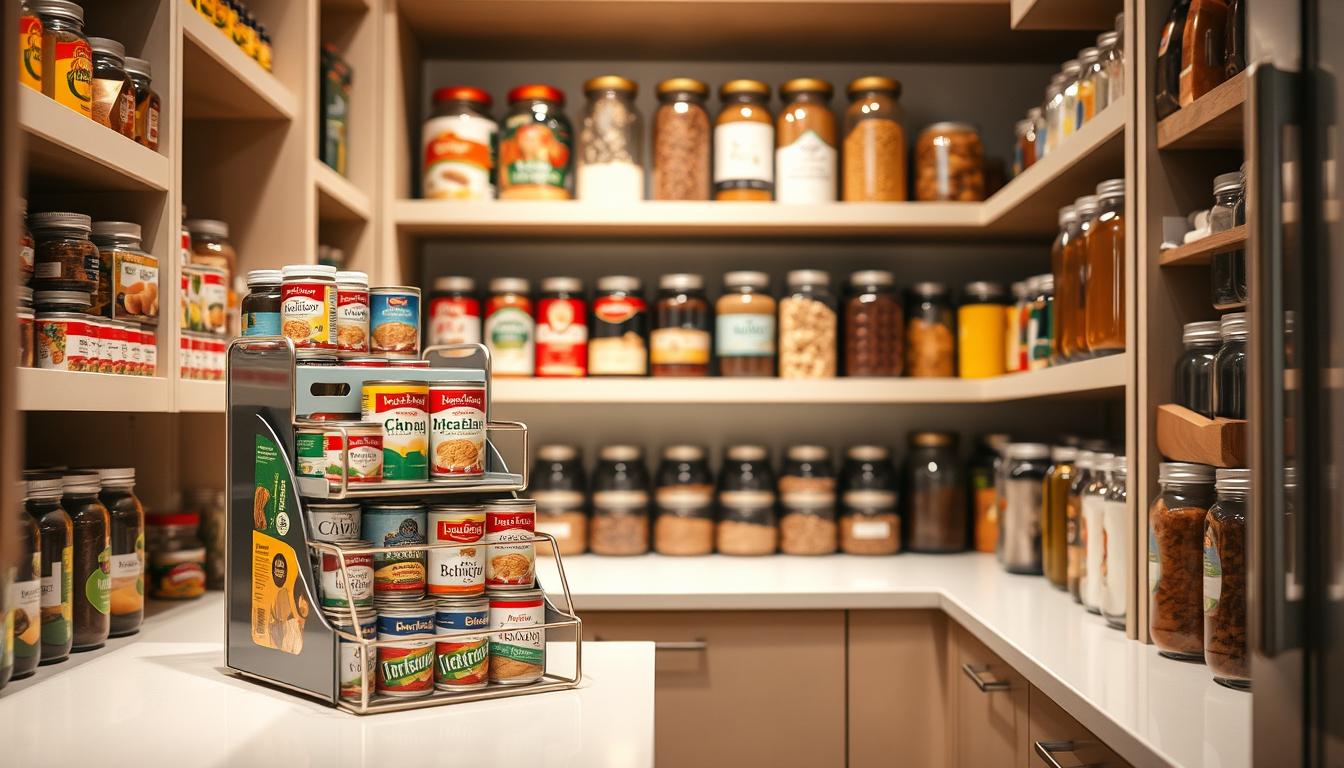
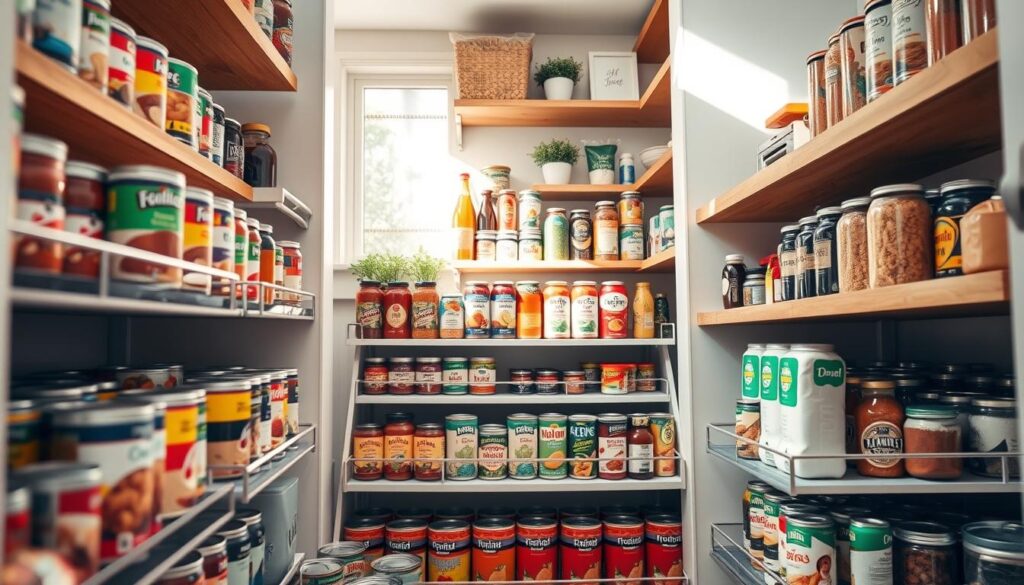
A simple rise in shelf levels makes it easy to spot every can and jar at a glance. That clear sightline reduces hidden items and keeps your pantry useful during a busy day.
How they cut visual clutter and save time
How tiered steps reduce visual clutter and save you time on busy days
When labels face forward, you scan soups, beans, and sauces in seconds. You spend less time searching and more time cooking, which is a real win on a hectic day.
Where risers work best
Where tiered risers work best in your home pantry space
Risers are ideal on standard pantry shelves, deep cabinets, and high shelves that act like a stair for items. They turn wasted depth into usable space and make front-to-back storage simple for your family.
Problem zones that improve fast
Common problem zones: cans, spices, kids’ snacks, and small items that disappear
- Cans that roll to the back and vanish
- Spice jars that get buried behind bottles
- Snack packs that kids toss into the wrong room
- Packets and small jars that hide in corners
- Shelves that act like a temporary stair for household clutter
- Deep shelves where things pile up front to back
- A simple front-to-back, low-to-high system helps kids put items away correctly
- Better traffic flow prevents blocked shelves and frustrated people
- Declutter first so your risers organize space, not excess
Declutter Before You Organize: Clear the Clutter Without Overwhelm</h2>
A 15-minute focus can break pantry clutter into manageable, fast wins you can do today. Short bursts prevent a big mess and let you make steady progress without burning time.
Work in short sessions to make progress today without making a mess
Use timed sessions of about 15 minutes and stop when the timer rings. Work on one shelf or one cabinet and walk away. This keeps the process simple and sustainable.
Use the 1-3-5 method to break pantry tasks into one big win, three support tasks, and five quick resets
- One big win: clear the canned goods shelf.
- Three support tasks: purge expired items, group categories, wipe shelves.
- Five quick resets: front-face labels, toss one wrapper, return a stray item, tidy a bin, note a donate bag.
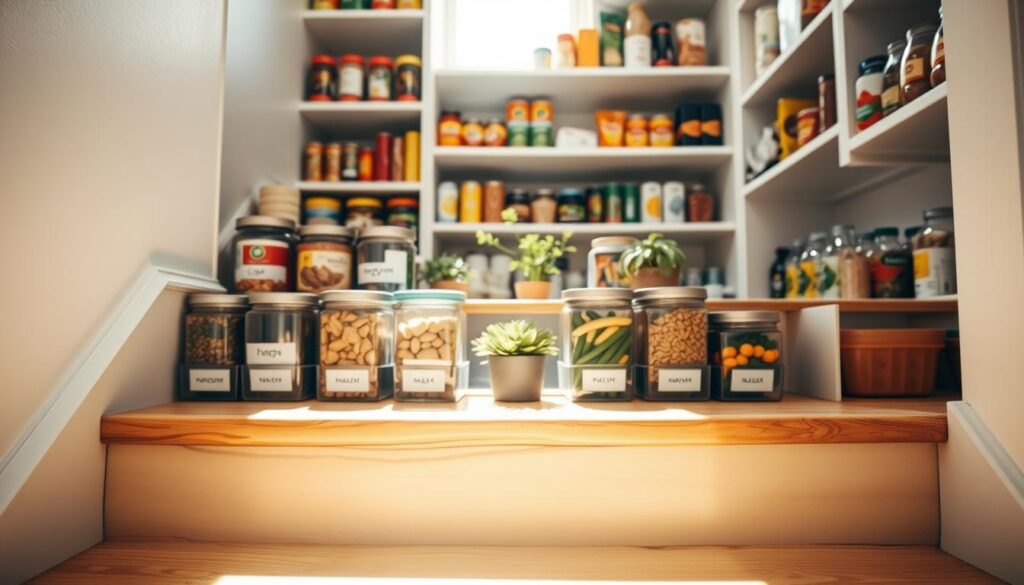
Pull everything out, set deadlines, and use simple rules
Pull one shelf at a time to spot duplicates and expired items. Be honest about what you’ll use and set a deadline this month to donate, recycle, or toss so bags don’t linger in your house.
Keep a donation bin or basket nearby and use a short checklist to reduce decision fatigue. Try the “stairs rule”: if you’re holding something and you’re heading toward the pantry — your head stairs moment — you need put it back now. These small habits help the process stick over the year.
Organizing with tiered steps: A Step-by-Step Setup for Cans, Jars, and Bins</h2>
A quick measurement and a full pull-out set the stage for a practical pantry layout. Start by measuring shelf width, height, and cabinet depth so your stair-style risers and products fit the space.
Sort like with like: pull everything out, group soups, beans, tomatoes, broths, and sauces. When similar items share a place, your household follows the system without asking.
- Build tiers by category: front row = most used to save time during meal prep.
- Use baskets and a small bin for loose packets and snack stuff so things don’t spill across shelves.
- Choose basket sizes you can pull out easily with one hand for quick access by kids and family.
Label the place for each category and set a one-touch put away rule: groceries go directly to their spot. Take a before/after photo of each shelf to track progress and stay motivated.
Keep the focus on practical management. This simple system turns deep shelves into usable space and makes daily chores faster.
Keep It Organized: Maintenance Routines, Checklists, and Family-Friendly Rules</h2>
Keep the progress you made by turning decluttering into small, repeatable habits. A short routine protects shelves and saves you time when life gets busy.
Containment that actually works
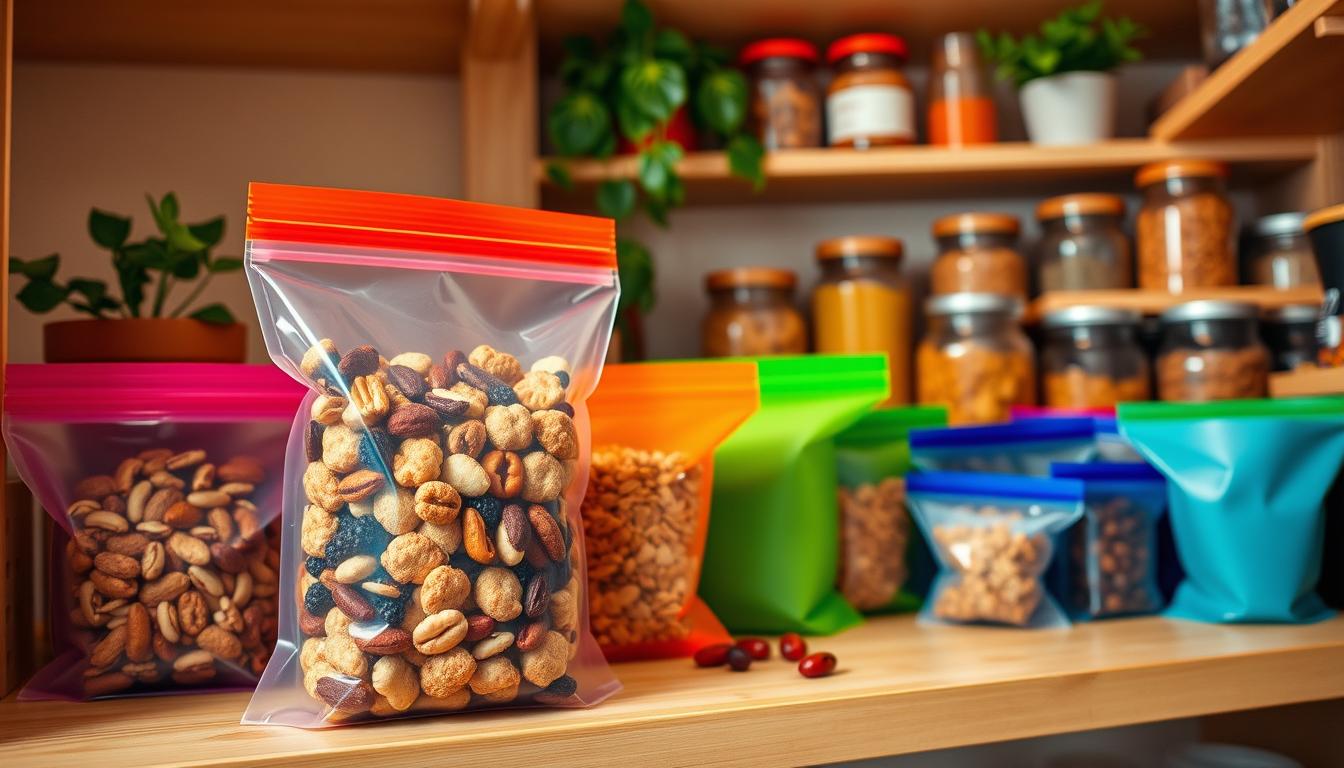
Use baskets and bins so loose items do not spill into walkways or across shelves. When snacks, half-used bags, and bulky boxes live in a bin, the rest of the space stays usable.
Schedule quick resets on your calendar
Block a 10–15 minute job on your calendar each month. Treat it like a recurring appointment so maintenance happens every month instead of one big weekend effort.
A simple checklist for everyday chores
- Restock by category.
- Front-face cans and boxes.
- Wipe a shelf and purge one bin.
- Close the loop: donate or list items by a deadline.
Assign age-appropriate tasks to kids. One small job per person keeps the household system steady and makes the difference between a tidy shelf and lasting progress.
Conclusion</h2>
Finish strong: small shelf changes deliver big time savings and fewer duplicate buys. When things sit where you can see them, you waste less time searching and your home runs smoother. Keep actions simple so the process fits busy life.
Follow the sequence that works: declutter first, measure and set risers by category, then plan a monthly reset. Use short tasks and a clear rule for quick decisions so routines last. Think of it like keeping stairs clear — clear paths prevent problems.
Make one practical move this week: pick a shelf, apply the 1-3-5 approach, and mark a reset on your calendar. This small habit protects your progress all year and helps your house stay useful every day.