
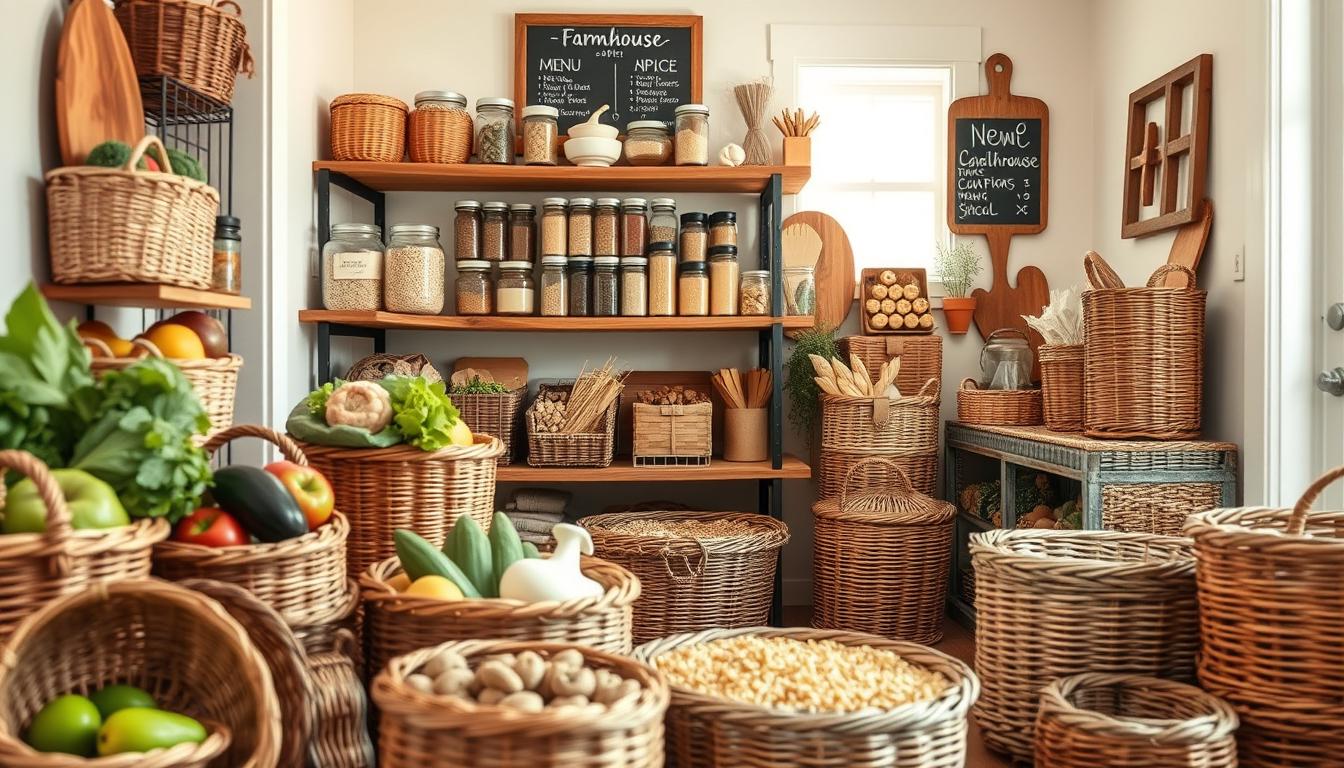
You want a pantry that feels warm, calm, and easy to use. Start by choosing storage that blends natural texture and neutral color to create a simple farmhouse look.
In this guide you’ll learn practical tips: how to measure shelves, which shapes fit best, and which materials work in a busy kitchen. I’ll compare multi-packs, handled rectangular styles, lidded options, divided organizers, and wall-hanging solutions so you can shop with confidence.
Expect less clutter and faster access to everyday items. You’ll see how grouping zones—breakfast/snacks, baking, and bulk—keeps staples easy to find and restock. The advice fits typical U.S. home shelves and cabinets so it works in real life.
Read on for clear, actionable tips that make styling functional, not fussy.
Farmhouse pantry style starts with smart storage baskets
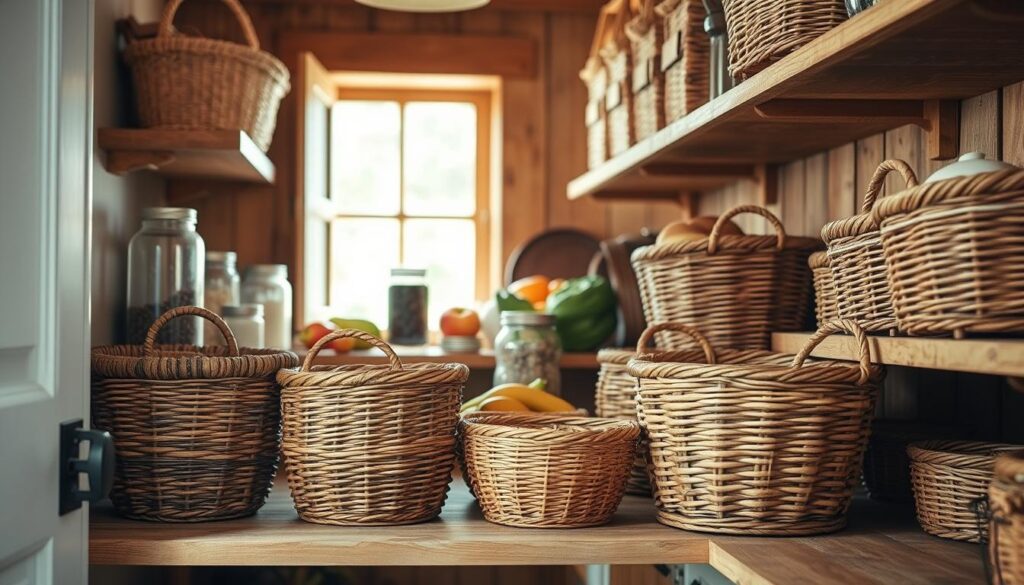
A simple switch to woven storage instantly softens a room and makes daily tasks easier.
Why woven texture adds warmth and structure
Natural-fiber storage—seagrass, rattan, and water hyacinth—brings texture without weight. These materials feel organic and hold up to frequent use.
How a basket system cuts visual clutter
Think of woven pieces as soft architecture: they break up hard lines from shelves and appliances. When you use matching storage baskets, the space reads as calm and cohesive even if labels differ.
- Decorative vs. workhorse: choose lined, lightweight options for display and sturdier bins for everyday pulls.
- Group loose items—packets and pouches—into one basket so restocking is faster.
- Use open shallow baskets for quick inventory and deeper basket styles for bulk storage.
Tie the look through the whole kitchen to keep decor consistent and functional across the room.
What to measure before you buy baskets for your pantry, cabinet, and shelves
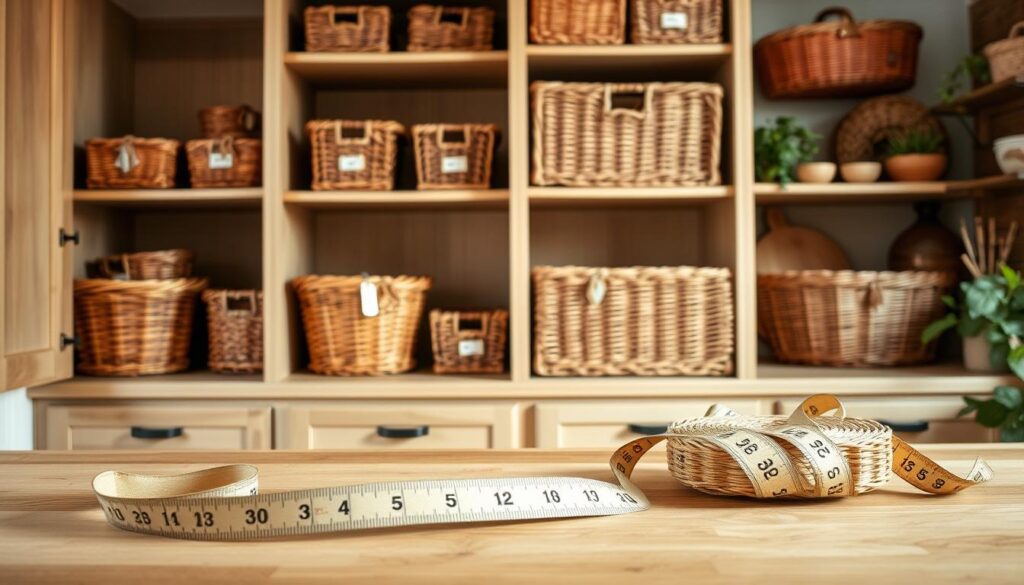
A simple measuring routine is the best way to pick the right size and avoid returns. Take a tape measure and note shelf depth, shelf height clearance, cabinet opening width, and any usable floor area for larger storage.
Shelf depth, cabinet openings, and floor space that determine basket size
Measure shelf depth front to back so items sit fully on the shelf. Note height between shelves for taller containers.
Check cabinet opening width — handled storage must pass through frames. Leave a small buffer on each side so pieces slide without snagging.
Choosing rectangular vs. round shapes for better use of space
- Rectangular pieces usually maximize tight shelf runs and standard cabinet layouts.
- Round shapes work well on corner shelves, turntables, or when you want a softer silhouette.
- Plan by what you store—cans, boxes, or packets—so the chosen size matches daily use.
Final tip: measure first, then buy multi-packs with confidence to avoid “almost fits” returns and wasted time.
Best wicker pantry baskets for a cohesive farmhouse look
Pick a few well-made pieces and you can turn messy shelves into a tidy, farmhouse-ready display.
Core roundup criteria: look for a consistent weave and color, practical handles, and straight sides so rows line up cleanly on standard shelves.
Multi-pack options for matching rows
Multi-pack storage sets are the fastest way to get a professional, uniform look. When all pieces match, the eye reads the shelf as one curated collection rather than a jumble of packages.
Large rectangular basket with built-in handles
Choose a large rectangular option with sturdy handles for bulk items and backstock. These are ideal for heavy goods and make pull-out access simple.
Rectangular handled sets for zoning
Use handled sets to create zones: one set for snacks, one for baking, and another for canned goods. Straight-sided pieces keep jars and boxes upright for easy scanning.
Mixed-size storage set of two
A set containing one large and one small storage basket gives you a catch-all plus a dedicated space for overflow or specialty items.
Small baskets with natural fiber liner for tiny items
Small lined organizers tame the “tiny chaos”—seasoning packets, single-serve snacks, and drink mixes. The liner protects delicate items and keeps crumbs contained.
- Prioritize sturdy handle construction if you plan to load cans or jars.
- Pick straight sides for tight shelf runs and better stacking options.
- Match colors and weave density across a collection for a cohesive look.
Water hyacinth baskets for decorative storage with a rustic, natural finish
Water hyacinth brings an organic, slightly rugged texture that lifts simple shelving into a warm, lived-in look. The material is made from fast-growing plants, so it stays light yet sturdy for everyday use.
Woven water hyacinth basket sets for flexible pantry organization
Woven sets give you flexibility as your needs change. Choose a medium + small set or a 2-pack to build zones over time.
The weave is a touch chunkier than tight rattan, so you get more texture and organic variation. Use these as decorative storage on open shelves or inside cabinets for tidy organization.
Rectangular water hyacinth baskets with handles for easy pull-out storage
Rectangular styles with built-in handles act like shallow drawers. They slide out cleanly and make grabbing snacks, bread items, or backstock faster.
- Best categories: snacks, bread, ventilated produce like onions and garlic, and quick-grab backstock.
- Match warm neutrals and simple labels so the woven texture stays the star of your decor.
- Buying tip: check reinforced handle areas and consistent dimensions if you plan to line pieces side-by-side for a uniform look.
Seagrass and rattan options when you want lightweight, sturdy storage solutions
Choose seagrass or rattan when you want storage that stays sturdy without feeling heavy. These hand-woven natural materials give you texture and strength in one simple swap.
Why natural fiber works in traditional and farmhouse rooms
Seagrass reads airy and coastal-adjacent, while rattan feels classic and structured. Both fit warm, trimmed rooms and pair well with older cabinetry.
Practical benefits and where to use them
Seagrass and rattan are easier to lift than heavy alternatives and keep their shape on shelves. Use them for everyday categories you touch most, like snacks and breakfast items.
- Repeat one material family on visible shelves for a cohesive look.
- Expect natural material variation; small knots and color shifts add charm.
- Choose tighter weaves for small packets and open weaves where airflow helps.
Quick decision rule: pick tighter weaves for little items and more open weaves for produce or ventilated needs. This keeps function and style in balance for your room.
Rectangular storage baskets that maximize shelf and cabinet space
When you need every inch of shelf counted, straight-sided storage wins. Rectangular pieces fit flush against shelf faces and side walls so you lose less usable space.
Straight sides vs. tapered bins: straight edges reduce wasted gaps and create tidy rows. That makes scanning canned goods, jams/jellies, and spice jars faster.
Handle styles for heavy items
For cans and jars pick sturdy cutout handles or reinforced wrapped handles. Cutouts give a secure grip; wrapped handles add comfort for heavier loads.
Sliding-friendly features
Look for smooth bottoms, a rigid frame, and a little front clearance so you can pull a piece without scraping knuckles. These details make your storage easy to use every day.
Labeling and grouping without harming decor
- Use simple black/white labels, kraft tags, or slim label strips.
- Group by use: daily snacks at eye level, baking together, and backstock low.
- Keep label placement consistent (front center or top left) for a calm, symmetrical look.
Wicker baskets with lids for concealed pantry organization
When you want a tidy shelf without seeing mixed packaging, covered storage is the go-to choice. Lidded pieces hide visual clutter and keep seldom-used items out of sight while still matching room decor.
Scalloped edge wicker basket with lid for a soft, decorative look
Scalloped-edge lidded styles add a soft, decorative touch that reads farmhouse when paired with neutral labels. Use them for small baking tools, holiday sprinkles, and party candles.
Wicker basket with lid and built-in handles for stacked storage
When vertical space matters, choose a lidded box with built-in handles. These stack securely and work well on upper shelves where you need grab-and-go access.
- Use lidded pieces to conceal mixed packaging and odd extras.
- Confirm lid fit and handle clearance so the lid won’t slip when you lift the box.
- Repeat the same lidded style across one shelf for cohesive storage solutions.
Divided and sectioned baskets for small pantry items that get messy fast
Divide small, unruly items into tidy sections and you’ll cut daily search time in half. Sectioned organizers keep single-serve packets, bars, and pouches visible so you can grab what you need without digging.
Repurpose a toilet tank topper as a pantry organizer
Try a Wicker Toilet Basket Tank Topper, 3-Section Storage Baskets, 2-Pack as an unexpected option. The shallow divided box fits shelf fronts and makes portioning quick.
Small multi-section basket options for bars and packets
Choose the Small Wicker Baskets with 4 Sections, 2 Pack to keep snack bars and seasoning packets upright. Sturdy dividers stop collapse and make restocking simple.
Hand-woven divided styles to keep categories separated
Hand-Woven Divided baskets work well when you want separate sweet and salty sections or tea versus coffee add-ins. Keep backstock behind the divided front and refill those front slots weekly for a smooth refill rhythm.
- Look for consistent section sizing and reinforced handles if you pull the organizer often.
- Limit labels—one per collection or a tiny tag per section keeps farmhouse style calm.
- These options make small-item organization fast and visually tidy.
Wall and hanging basket ideas to open up shelf space
Mounting light storage on a nearby wall can instantly add useful capacity without new furniture.
This approach frees shelf space by moving lightweight categories off your shelves and onto vertical surfaces. It works well in small kitchens and busy utility rooms.
Woven wall hanging baskets for organizing lightweight pantry staples
Choose a simple product like the “Woven Wall Hanging Baskets for Organizing, 2 Pack” for napkins, snack-size bags, and thin packets. These pieces keep everyday items visible and easy to grab.
Use them for lightweight goods only so the mounting stays secure and the unit lasts longer.
Best places to add wall storage in a tight kitchen or utility area
Inside a door (if clearance allows), on a nearby wall, or in a utility area are top placement options. Wall storage works where shelves are full or you want quick access without bending or reaching low.
- Secure mounting: anchor into studs or use strong wall anchors.
- Avoid heat/steam zones near the stove or dishwasher to protect natural fibers.
- Keep frequently grabbed items within easy reach for daily use in the utility or kitchen area.
- Check weight limits and spot-test before full use in a utility room.
Style and care: pick natural fibers and neutral tones to match shelf pieces and keep the farmhouse look cohesive. Note that wall storage can collect dust faster, so plan a quick wipe-down routine every few weeks.
Open-weave vs. tighter weave: choosing baskets for airflow, visibility, and access
Choose the right weave and materials to balance airflow, visibility, and neatness on your shelves.
Open-weave options—including wire and metal pieces—offer excellent ventilation and visibility. They help water evaporate and reduce trapped moisture around fruit, onions, and garlic. That lowers mold risk and makes quick inventory checks simple.
Tighter weaves give more concealment and containment. Use them when small packets might slip through openings, when you want to hide messy packaging, or when delicate items need smoother sides to avoid snags.
Practical recommendations
- Use wire or metal for produce zones and any shelf where airflow matters or you want fast visual checks.
- Pick tighter weave for tiny packets, crumbs, or things you prefer out of sight on upper shelves.
- Mix materials sparingly: a few metal pieces add a modern edge while keeping the overall farmhouse warmth.
- Access tip: open weave works best on “grab-and-go” shelves; tighter weave helps upper rows look calmer.
Wicker vs. wire and metal baskets for a farmhouse pantry
Choose materials that answer how you use the shelf—some need visibility, others need warmth. Natural weaves add texture and a cozy farmhouse touch. Wire and metal bring clean lines and instant visibility for fast-grab items.
Using wire for visibility and a modern touch while keeping decor balanced
Wire storage is ideal for high-turnover zones. It shows contents at a glance, improves airflow, and pairs well with black or brass hardware you already have at home.
Use metal pieces for produce, snacks, or items you check often. Add a simple liner when packaging is delicate to avoid snags.
Mixing materials without making your pantry look mismatched
Keep shapes consistent—mostly rectangular—so different material options read as a set. Limit your color palette and repeat one bridge element like matching labels, handle tones, or a uniform shelf liner.
- Compare: visibility, airflow, weight, style impact, and what each hides or highlights.
- Use wire in one or two zones only so the modern touch doesn’t overpower rustic decor.
- Choose liners or tighter weave pieces for fragile packaging to prevent snags.
Match one metal finish to other fixtures in your home. That single repeated detail keeps varied material choices cohesive and intentional.
Price and value: what affects cost in wicker, water hyacinth, and natural material baskets
Not all natural material options cost the same; a few features explain why.
Material, weave density, and handle reinforcement are the top drivers of price. Harder-to-source fibers and tighter weaves raise labor and material costs. Reinforced handles and rigid frames add durability and add to the final cost.
Why water hyacinth may cost more
Water hyacinth often has a chunkier texture and heavier handwork. That can mean higher labor intensity and a sturdier finished product. For that reason, a water hyacinth collection sometimes retails above seagrass or basic rattan options.
When multi-packs deliver better value
Multi-pack sets cut unit cost and give a ready-made collection for a shelf reset. Buy a small matching core collection first for visible zones, then add specialty pieces as needed.
- Buy more for daily-use pull-out pieces; spend less on occasional backstock bins.
- Check handle sturdiness, rigidity, and actual dimensions against your shelves.
- Choose multi-pack options when you want uniform style and lower per-item price.
How to organize a pantry by zones using baskets, bins, and boxes
Divide your shelving into clear zones so you can find what you need in seconds.
Use three simple zones: breakfast & snacks, baking, and bulk/backstock. This layout works in most U.S. pantries and keeps daily routines smooth in the kitchen.
Breakfast and snacks
Place small baskets and divided organizers at eye level so kids and guests can grab items without a mess. Use shallow storage baskets for bars, single-serve packets, and jams/jellies.
Baking zone
Keep medium rectangular storage baskets together for flour, sugar, chocolate chips, sprinkles, and tools. Group ingredients and tools so baking becomes a one-stop pull.
Bulk and backstock
Store large bins or sturdy boxes on lower shelves or the floor for heavy refills, paper goods, and rarely used appliances. Reinforced bins make lifting safer.
- Workflow tip: “shop your pantry” first—place most-used categories at eye level and duplicates behind or below.
- Zoning makes inventory visible and cuts overbuying, even when packaging varies.
- Mix closed boxes and open storage to keep the space calm and functional.
Beyond the pantry: using wicker storage baskets in your bathroom, bedroom, and living room
Extend the same curated storage approach beyond the kitchen to bring calm and function to every room in your home. Choose one weave tone and repeat it to make transitions feel intentional.
Bathroom storage for towels and toiletries
Use small and medium pieces for daily toiletries and rolled towels. Keep counters clear by placing trays or a single open container for essentials.
Bedroom and closet organization
Use shallow trays for socks and accessories and firmer boxes for shoes. Fabric containers work well for delicate items or tight shelf spaces.
Living room uses that hide toys, blankets, and media
Large, low-profile bins hide toys and throws while still staying accessible. Pick pieces with sturdy sides so media and remotes don’t tip over.
- Coordinate one style across rooms so storage reads as a design choice, not clutter.
- Label discreetly or skip labels in public rooms to keep a styled look.
- Choose fabric options where softness helps fit or protect fragile items.
Care and cleaning tips to keep wicker and natural fiber baskets looking new
Simple cleaning habits protect both look and function of your shelf storage. Regular dusting, quick spot cleaning, and airing pieces out extend the life of natural material storage.
How to clean natural fiber and wire baskets with a damp cloth
For natural material and wire pieces, wipe surfaces with a slightly damp cloth. Work along the weave and dry each piece fully to avoid warping or odor.
What to check in manufacturer care instructions for fabric liners
Check whether liners are removable and washable. Some fabric liners are machine-safe; others must be spot-cleaned only. Follow the label to protect color and fit.
- Avoid soaking natural materials or using harsh cleaners that strip fibers.
- Handle spills quickly: wipe oil or powder away, use mild soap if needed, then dry thoroughly.
- Do not store damp items in storage—moisture invites mildew and weakens fibers.
- Inspect handles and stress points on heavy-use pieces so your storage stays safe and reliable.
Keeping these small routines preserves both the aesthetic and function of your farmhouse shelving. Clean pieces read styled, not dusty or worn, and keep items easy to find.
Conclusion
Small changes in how you group items yield big gains in time and clarity.
Measure your shelf space, favor mostly rectangular shapes for efficient use, and repeat one material so the overall decor reads calm and intentional. The best basket depends on function: open for airflow, lidded to hide clutter, and divided for tiny packets.
Start with a small matching collection or a multi-pack and expand as you learn what works. This organizer approach cuts meal-prep friction, speeds restocking, and saves time hunting staples.
Consider price: invest in daily-use storage with strong handles and save on low-use zones. Reassess zones seasonally and pick 1–2 problem areas (snacks, baking, bulk) to solve first so your kitchen and home feel more put together.