
You want faster, less messy mornings. This short Cereal dispenser guide helps you weigh a pour-style manual choice against a gravity-fed countertop model.
Think about what “best” means for your home: speed at breakfast, fewer spills on the counter, neater storage in the kitchen, and steady portions for kids and adults.
Key trade-offs are simple: space versus capacity, easy wiping versus deeper cleaning, and simple pour control versus portion dials. Families often swap the box for a purpose-built container to keep dry food fresh and to cut routine clutter.
You’ll see practical examples from OXO and ZevrO later so you can match a real product to your habits. Use this section to set your decision: pick the option that fits your mornings, storage, and how much control you want over portions.
Manual cereal dispensers and countertop dispensers: what they are and how you’ll use them
Pick the style that fits how your family actually eats breakfast. One type works like an upgraded pantry jar you lift and pour by hand. The other stays on the counter and releases servings with a knob or lever into your bowl.
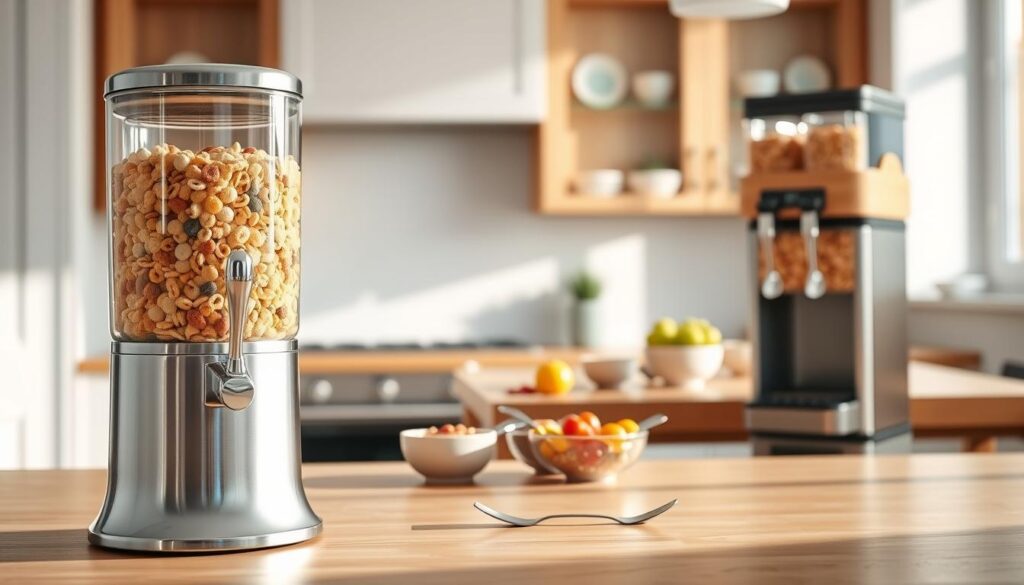
Pour-style containers with spouts and lids
Manual units look like clear containers with a lid and a spout. You grip the container with your hand, open the lid or spout, and pour. This method is simple, fast, and familiar.
Countertop portion-control units with knobs or levers
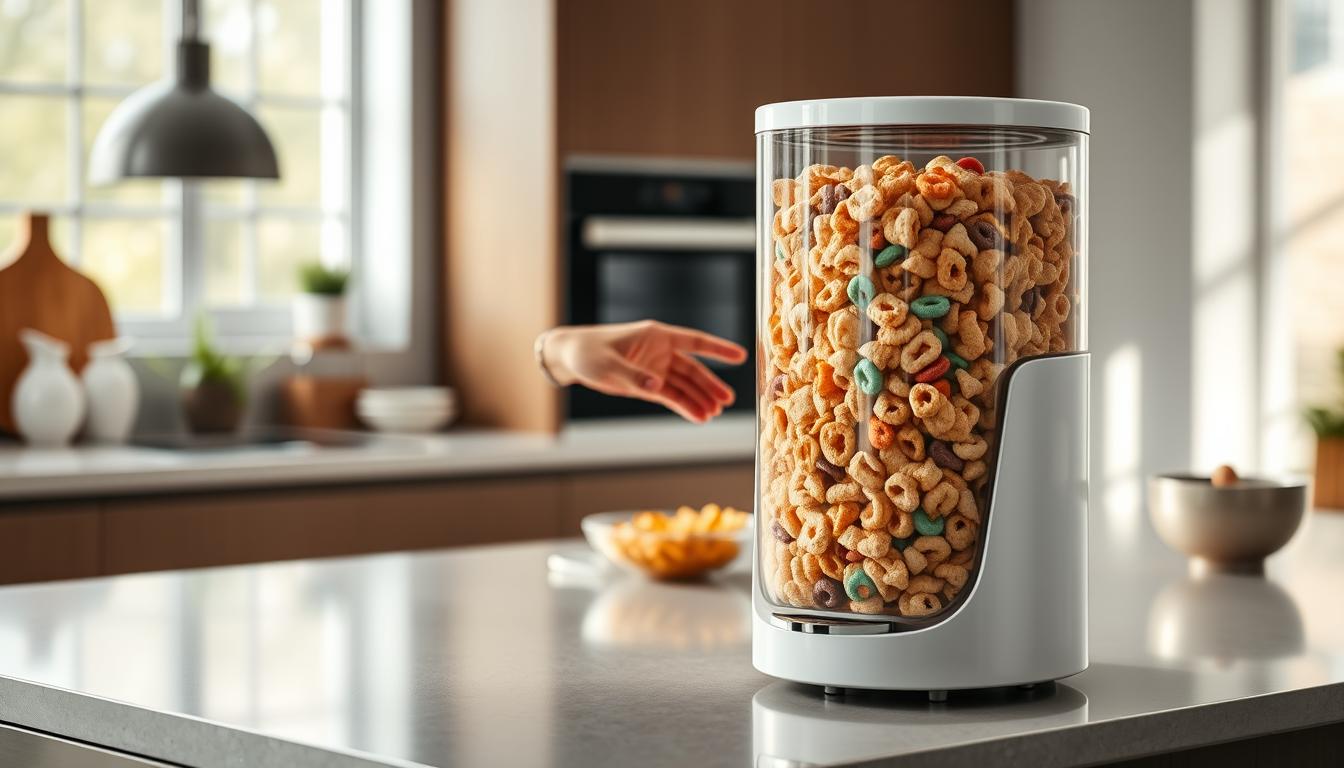
Portion-control models use dials, knobs, or rotating cups. You turn or press to dispense a measured amount. That helps avoid over-pouring and makes serving consistent for kids.
How gravity-fed systems work in everyday use
Gravity-fed designs load from the top; dry contents flow down into a release area and drop into your bowl. Flow depends on shape and fragility—flakes can crush in tight mechanisms, while round bits flow easily.
- Basic difference: lift-and-pour vs. stay-put dispensing.
- Visibility: clear bodies show contents so you know when to refill.
- Trade-offs: portion control gives consistency but can damage fragile pieces.
Which feels easier depends on your space and storage habits. The next section looks at footprint and designs so you can match form to function.
Design and storage space: choosing the right dispenser for your counter, cabinet, or breakfast nook
Begin with a tape measure — space limits will decide which design fits your kitchen. Measure counter depth, cabinet height, and the clearance under wall cabinets before buying. That simple step saves time and keeps the unit from blocking outlets or prep areas.
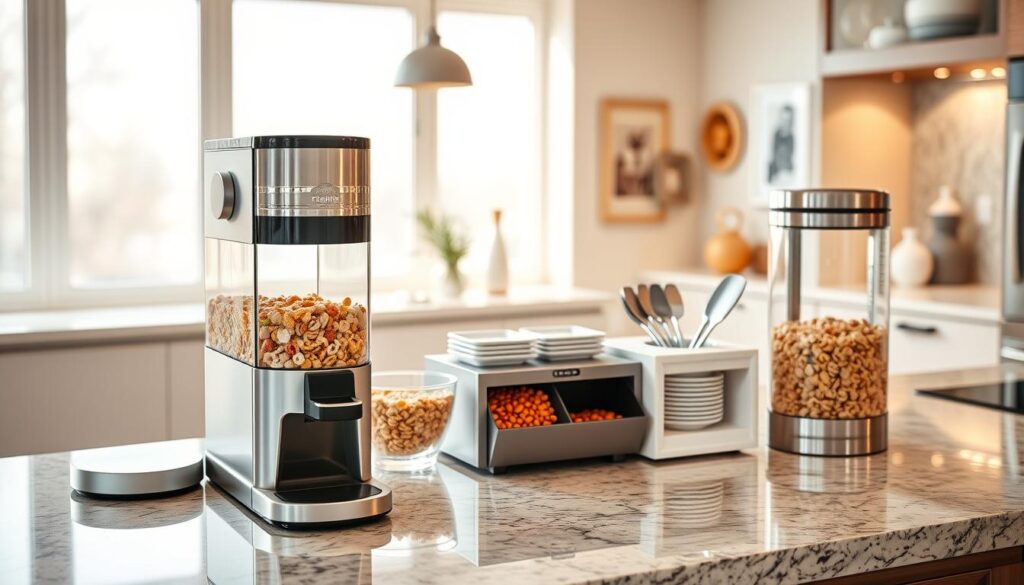
Streamlined, compact designs for limited counter space
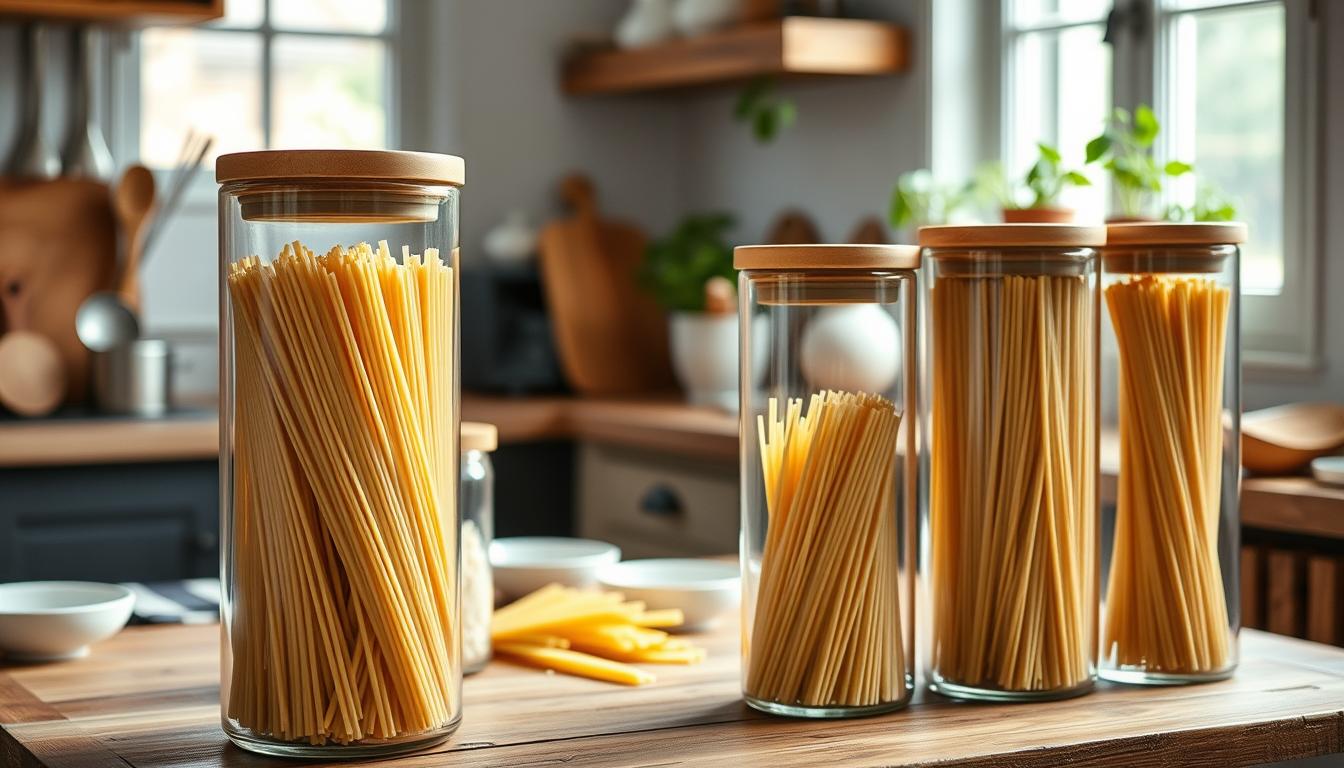
Compact models are narrow and stackable, so you can line several containers side-by-side on a tight counter. They free up surface area and work well in small kitchens or breakfast nooks.
Handled canisters that fit more but take more real estate
Handled canisters usually hold more and pour cleaner, but they need extra horizontal room. Choose a handled option only if you have spare counter space or deep cabinet shelves.
Single, double, and triple setups — fitting variety into one footprint
- Single: smallest footprint for one favorite.
- Double: keeps two kinds handy without many boxes.
- Triple: great for variety but needs more width and vertical clearance.
Consider wall-mounted units when floor or counter space is tight. Placement matters: check bowl clearance under spouts and keep traffic flow clear so the unit doesn’t become a kitchen obstacle.
Freshness and food storage performance: airtight seal, lid quality, and keeping cereal fresh
Keeping breakfast items crisp starts with the right seal and routine. Freshness means staying crisp, staying dry, and avoiding humidity-related staleness that sneaks in even with a folded box.
Why an airtight seal and resealable spout matter
A good airtight seal limits exposure to air and moisture each time you open the container. A resealable spout reduces repeated air exchange, so you can keep cereal fresh longer between refills.
Material and visibility choices
Choose BPA-free plastic for safety and sturdy construction to resist cracks. Clear containers give visibility so you know when to refill without opening the lid.
Everyday habits that protect freshness
Close the lid fully, avoid wet scoops, and keep units away from steam like the stove or kettle. Refill quickly and wipe rims to stop crumbs from breaking the seal.
When seals fall short and cleaning notes
Some models—BestReviews calls out the OXO Good Grips POP—may not be perfectly airtight, which can shorten shelf life in humid kitchens. Many parts need hand washing and thorough drying; leftover moisture can spoil contents.
- Quick checklist: lid lock feel, gasket quality, spout closure, and how the unit stays dry.
- Prefer units you can disassemble for cleaning and air-dry completely.
- Store in a cool, dry spot to truly keep cereal fresh.
Cereal dispenser guide: key buying criteria for families
Start by picturing how your kids will use the unit on school mornings. That helps you prioritize safe locks, simple handling, and a pour that an older child can operate without help.
Ease of use and secure locking
Look for predictable operation: the mechanism should open smoothly, lock between uses, and feel sturdy when a child turns or presses it. Ergonomic handles and wide openings make refills easier for you.
Portion control and reducing waste
Choose models with measured servings to keep portions steady. Portion control saves money and cuts waste when a cereal bowl gets overfilled.
Mess control and bowl clearance
Check bowl clearance under the spout, a stable base, and crumb trays that catch stray bits. These small features stop spills on your counter and keep the kitchen neater.
Cleaning, sanitizing, and versatility
Many products require partial dismantling for cleaning; few parts are fully dishwasher safe. Always dry pieces thoroughly to avoid mold or spoilage.
- Match mechanism to type: flakes, granola, or small pieces may behave differently.
- Use the unit for other dry food like beans, sugar, pasta, rice, or snacks to justify the purchase.
Price, capacity, and product styles you’ll see when shopping in the US
Prices and sizes vary widely — knowing typical ranges helps you shop smarter.
Typical price ranges by type
Basic plastic sets often cost about $10–$15. They save money but can lack capacity and sturdiness.
The mid-range, $20–$35, is the sweet spot for most families. These products usually offer better spouts and more reliable use.
Portion-control or gumball-style countertop units commonly run $40 and up. You pay for measured servings and a kid-friendly setup.
Capacity planning with quarts and ounces
Think in quarts and ounces so you know if the unit fits a full box or needs topping off.
- Many POP canisters hold about 3.4 quarts each — roughly a family-size box in narrow form.
- Some countertop models reach ~5.5 quarts for larger batches.
- Portion models often dispense ~1 ounce per twist, handy for controlled servings.
Real examples shoppers compare
BestReviews highlights the OXO Good Grips 3-piece set (grips 3-piece airtight) at 3.4 quarts each; note the seal may not be fully airtight.
If you want measured servings, look at a ZevrO compact dry option or another compact dry food unit that acts as a dry food dispenser.
Shortlist tip: choose OXO POP if you want compact canisters; pick a countertop dry food dispenser if measured ounces matter. Match that choice to your budget and space.
Conclusion
Your best pick balances freshness, ease, and how your family actually eats. Choose the option that fits your routine: manual containers win for simple storage and flexible use, while countertop units shine when you need portioning and easy serving.
Don’t skip these checks: seal quality, simple cleaning, and how crisply your cereal stays after a wash. Poor closure or damp reassembly causes most freshness problems.
Match the design to your type cereal — flakes may crush in tight mechanisms, while chunkier mixes flow better. Also weigh space and daily habits; the right choice fits your kitchen and gets used every day.
Quick checklist: measure space, check bowl clearance, verify capacity, confirm the seal, and estimate refill and cleaning time. Pick one option to try first, then expand only if it truly improves your mornings.