
You want a pantry and fridge that make sense at a glance. Organizing with clear bins means you can spot what you need fast, return items to their place, and skip frantic searches.
Professionals favor see-through containers because visibility reduces forgetting and lowers stress. Lidded options also protect food from moisture, dust, and pests, keeping items safe and fresh.
This approach is a practical home solution for everyday order, not just a trend. Think pantry decanting, pull-out fridge trays, stackable freezer boxes, toy zones, and seasonal storage that speeds routines and cuts waste.
You’ll learn how visibility changes behavior, how to pick durable, BPA-free options, and where to place containers for lasting results. Expect actionable setups like labeled zones and stack strategies that keep your space calm and uniform.
Why clear storage works in your brain and your home
Visible storage shifts small daily decisions into quick, automatic actions. When you can see what you own, you stop guessing and start using what’s already there. This reduces wasted purchases and keeps pantry staples fresher.
You can’t use what you can’t see: visibility reduces forgotten items and duplicates
Rachel Fahncke, a professional organizer, sums it up: “you can’t use what you can’t see.” When your items are visible, you are less likely to buy duplicates and more likely to use older stock before it expires.
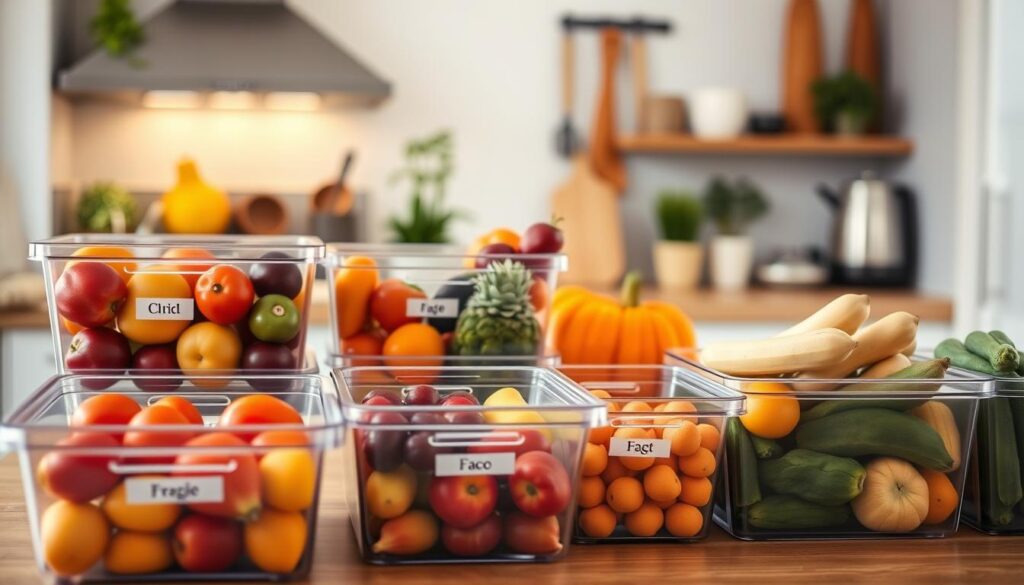
Less rummaging, less decision fatigue: faster daily routines
Karina Toner of Spekless notes that transparent storage saves time because you don’t need to dig. Fewer small searches cut what psychologists call “search cost.”
- Save minutes each day by spotting contents instantly.
- Make repeatable “put it back” habits easier to form.
- Reduce micro-decisions like “is it gone?” or “do I need more?”
- Replenish smarter based on what you actually see.
Visual order on shelves: how uniform containers cut clutter
Even if you own many things, matching boxes create a calmer shelf. Uniform containers reduce visual clutter, which helps your brain process fewer signals and feel less overwhelmed.
Experts agree this method works across rooms. Whether you store pantry staples, office supplies, or toys, visible storage makes it easier to maintain a tidy, usable home.
Organizing with clear bins in your kitchen: pantry, fridge, and freezer wins
A tidy kitchen starts by grouping like items so you can grab what you need in one move. Use visible containers and simple zones to speed prep and cut waste.
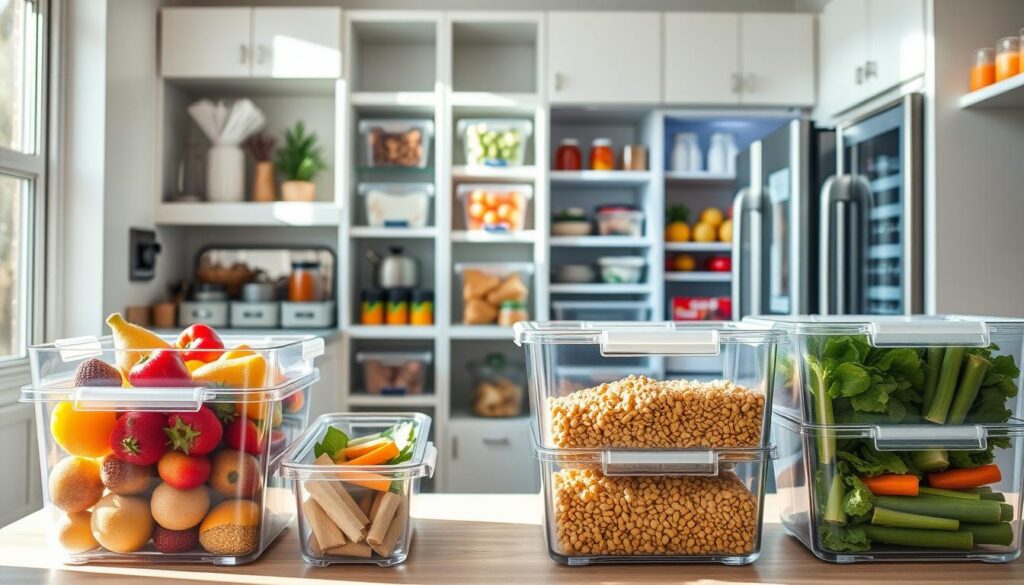
Fridge pull-and-go: group lunch, dairy, condiments, and breakfast
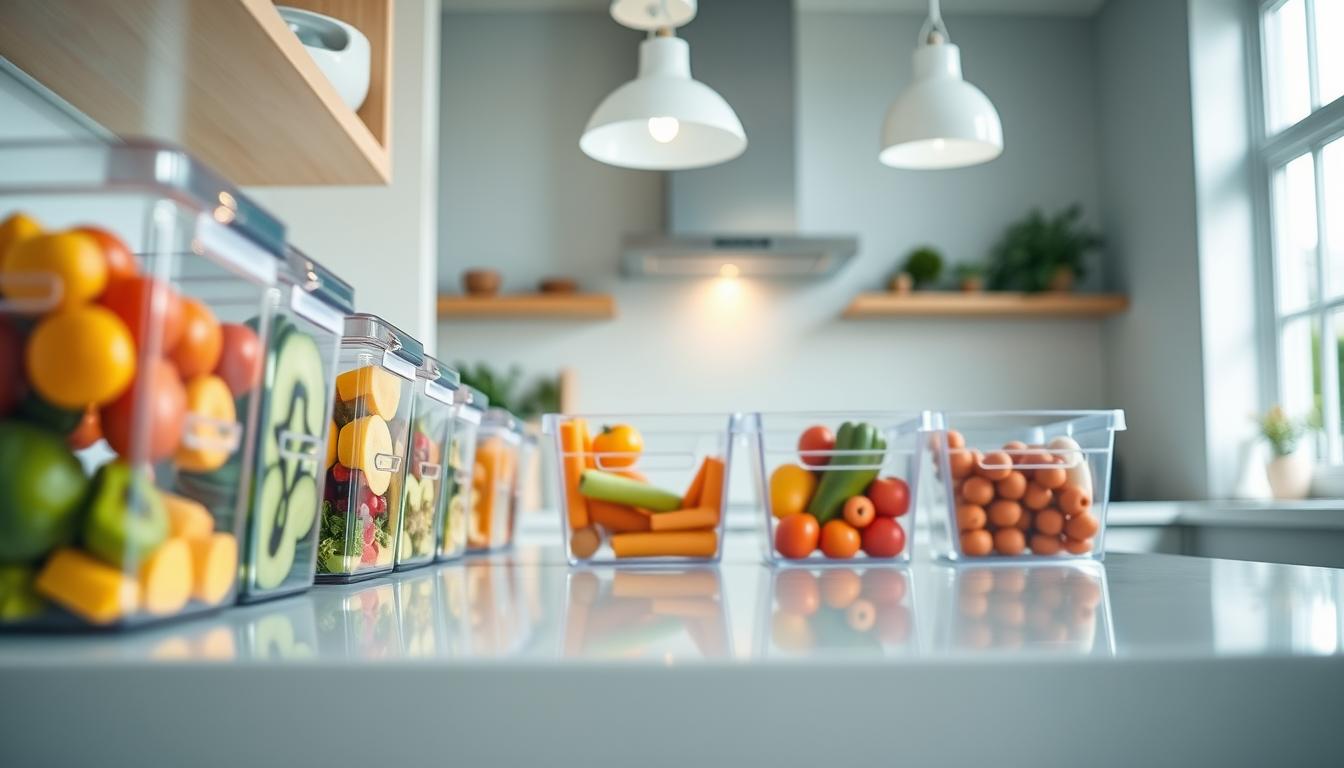
Create labeled long bins for lunch stuff, dairy, condiments, and breakfast. Pull one bin out, prep, and close the door faster so fewer items get lost in back.
Open-top bins in cold zones let air circulate and keep dairy chilled while still holding similar goods together.
Freezer stacking and labels
Use stackable containers and reusable freezer labels to build stable layers and avoid wasted vertical space. Dedicate one container to frozen vegetables or batch meals so you don’t leave the door open while searching.
Pantry decanting, spice categories, and FIFO
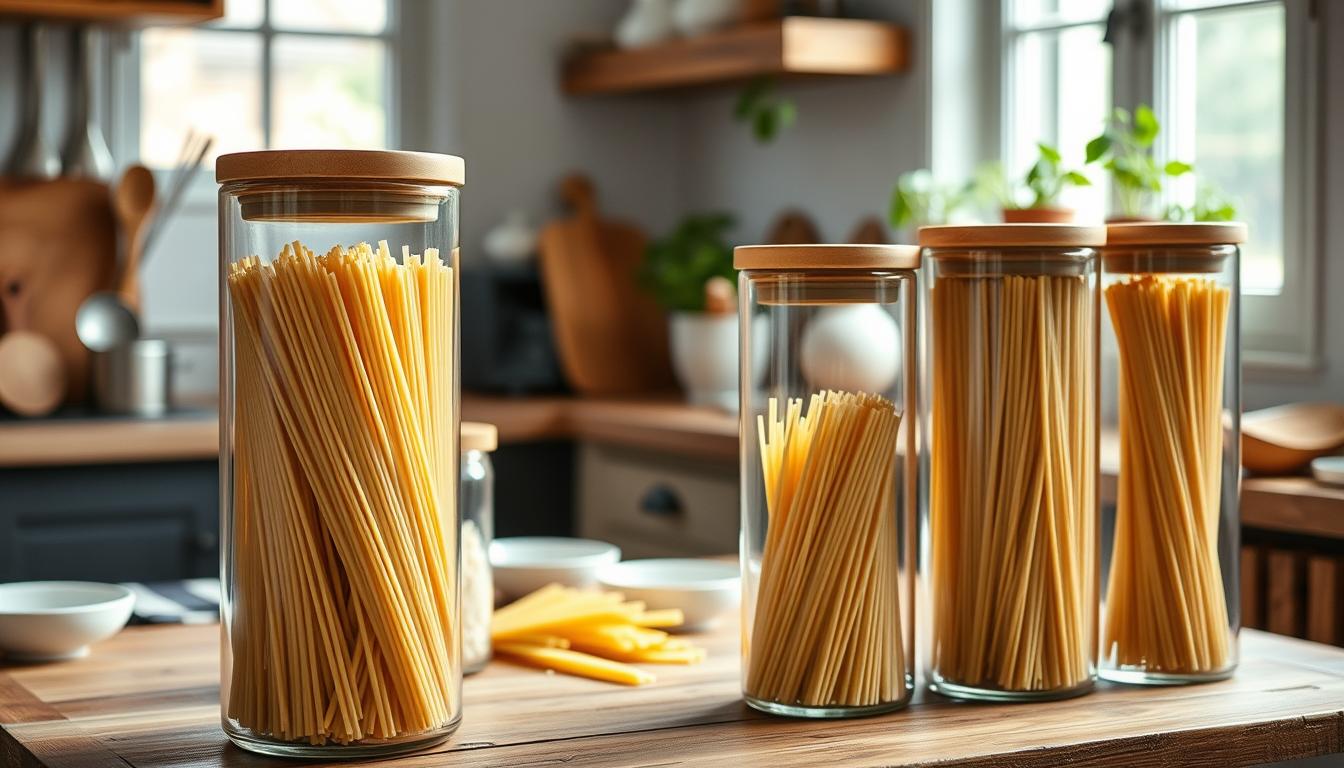
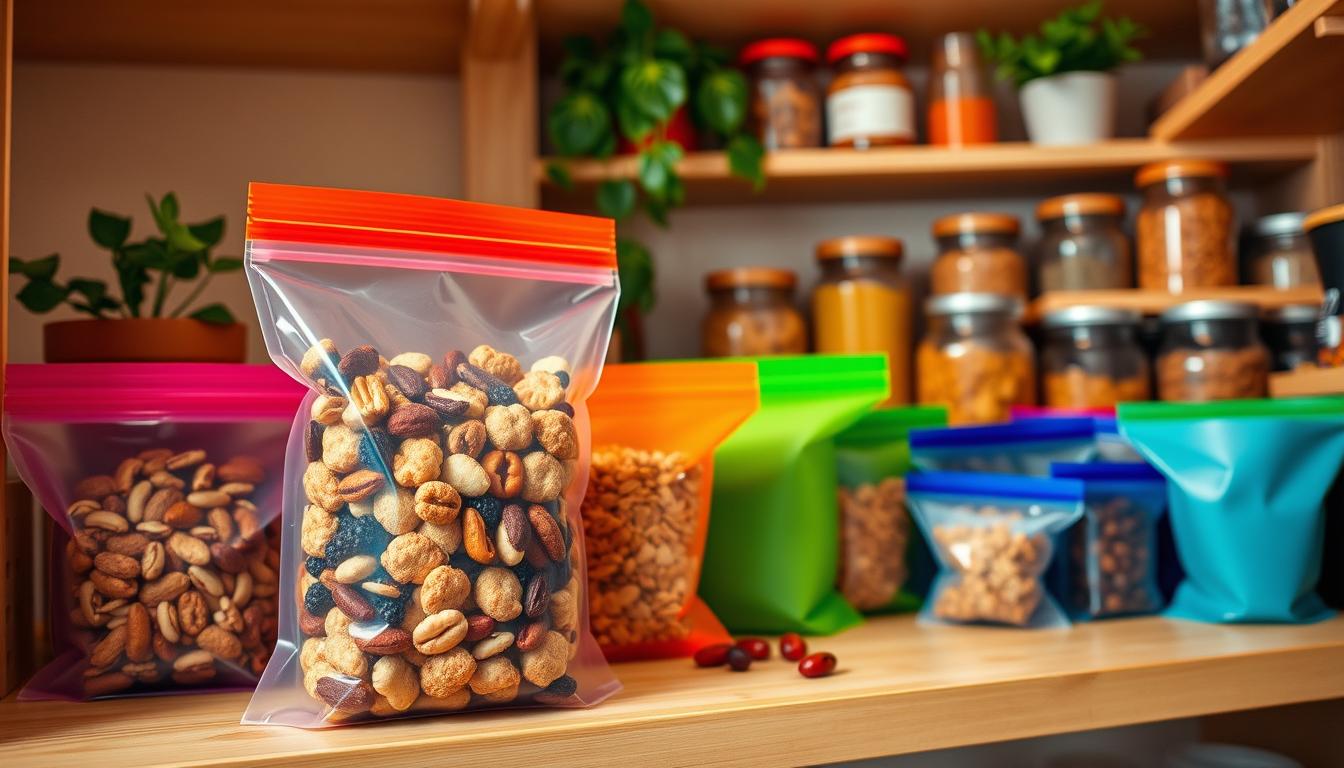
Decant pasta, grains, and snacks into airtight containers so you can see levels at a glance. Keep surplus backstock in a separate clear bin so main shelves stay tidy and you shop your pantry first.
- Group spices by type: singles, blends, packets, and refills.
- Place older items in front and new ones behind (FIFO) to cut spoilage.
- Label fronts so everyone knows where things belong.
Choosing the right clear bins, containers, and lids for each type of item
Pick storage that matches the job—some items need sealed protection, others need fast reach. Choosing the right container reduces waste and keeps things usable.
When lidded containers are non-negotiable
Use lidded containers for attic, garage, under-bed, pet food, and outdoor gear. Lids block moisture, dirt, dust, and pests so contents last longer.
Stackable vs. open-top: airflow, access, stability
Open-top bins speed access and help airflow in fridges or high-traffic kitchen shelves. They are the right solution when you grab items often.
Stackable boxes save vertical space on tall shelves. Pick stable, interlocking designs for heavy stacks to avoid tipping.
Size and shape strategy
Choose shallow drawer organizers for utensils, narrow door bins for bottles, and deep boxes for bulky garage goods. Measure shelf depth, door clearance, and drawer height so your choice fits the space.
Material and lid styles
Look for BPA-free, food-safe plastics for kitchen use and durable plastics for heavy utility storage. For lids, pick hinged or snap-top for frequent access and lift-off for long-term storage.
- When dust and pests matter: lidded bin for attic and pet food.
- When airflow matters: open-top for fridge and prep zones.
- When height matters: stackable containers for vertical saving.
Labels, grouping, and shelf placement that make clear containers even better
A simple labeling system changes storage from guesswork to a repeatable household habit.
Labels turn transparent containers into a shared system so everyone knows the right way to return items.
Place labels front-center on the shelves or closet doors, use a consistent font and size, and stick to short, clear names (baking, snacks, breakfast). This keeps reading fast and decisions simple.
Go vertical and use door space
Reclaim tight space by adding door-mounted organizers and slim racks. These save shelf space and make small items accessible without crowding the main cabinet area.
Category zoning for flow
Group items like baking supplies, toiletries, and cleaning refills together so you can restock quickly. When backup supplies live in one labeled spot, you stop scattering duplicates and save trips to the store.
- Front-center labels on shelves keep visibility uniform.
- Door-mounted racks free up shelf space and reduce clutter.
- Weekly five-minute resets help you keep items in their zones.
Tip: In shared spaces, labels cut friction—everyone follows the same system and the organizer in your home works even when you’re not there.
Bedroom and closet organization with clear bins for everyday essentials
Make your bedroom a grab-and-go space by giving each essential a visible home. A simple setup keeps bedside items easy to find and prevents drawers from turning into catch-alls.
Nightstand relief: small clear containers for meds, earphones, books, and bedside needs
Declutter a nightstand drawer by using small clear containers for meds, earphones, a notepad, and a paperback. Arrange them so you can reach one item with one hand in low light.
Benefit: every item has a defined slot, so the drawer stops collecting random things and your evening routine stays calm.
Closet door organizers: narrow bins for toiletries, skincare, and small daily items
Attach a narrow vertical organizer to the inside of your closet door to hold travel-size lotions, hair ties, and sample vials. This frees counter space and speeds your morning flow.
- Daily essentials list: hair accessories, sample-size products, travel toiletries, fragrance vials.
- Keep labels short so you scan quickly.
Under-bed and ottoman storage: clear boxes for gift wrap, selling supplies, and keepsakes
Use stackable boxes and storage bins under a bed or inside an ottoman to store gift-wrap rolls, bubble mailers, tape, and photo albums. Group selling supplies so listing and shipping start without extra searching.
Safety note: keep sentimental belongings like albums in a protected, visible box so you actually use them instead of forgetting they exist.
Clear bins for kids’ toys and clothes that support independence
When kids can spot playthings at a glance, cleanup becomes a simple habit. Certified professional organizer Lisa Hettinger notes that children ages 18 months to 5 years learn faster when they can see where things belong.
Why transparent toy bins help young children find and tidy items
Visibility encourages matching, not guessing. A toddler can match a toy to the right container by sight, so you don’t rely on reading alone.
Try toy zones for LEGO bricks, action figures, dolls, and puzzles. When each type has a predictable home, cleanup becomes repeatable instead of a daily battle.
Seasonal kids’ clothing by size range: lidded rolling bins under the bed
Sort clothes by age and size range, then seal them in lidded rolling bins under the bed. This makes seasonal swaps quick and keeps overflow out of the closet.
- Use simple labels that pair words with pictures for younger children.
- Pick bins with lightweight lids and easy-rolling wheels so kids can help.
- Rotate toys: keep fewer items accessible and store the rest to boost focus.
- Clear storage helps you spot what still fits and what to donate.
For safety, avoid heavy containers that little hands can’t move. Choose lids where needed, but ensure adults can open them safely. This setup helps you keep items tidy and supports your child’s early independence.
Seasonal and holiday storage you can actually find next year
Seasonal décor often disappears into the attic only to be forgotten until next year. That happens because infrequently used items get stacked and lost, not because the pieces are messy.
Make visibility and labels your storage solution. Use holiday-by-holiday clear storage bins so you don’t open multiple boxes to find one set. If a holiday doesn’t fill a bin, combine nearby season events—Halloween and Thanksgiving, for example—and mark the container clearly.
Attic and shelving tips
Install sturdy shelves and a safe floor surface so stacked boxes stay stable and accessible. Keep one shelf per season and add a quick inventory photo or short list on each shelf to find items fast.
Packing fragile and wrapping supplies
Wrap ornaments in paper or bubble wrap and store them in compartment containers or ornament organizers to prevent breakage. Keep a separate box for wrapping: paper, ribbons, tape, scissors, and tags so gift prep becomes easy instead of a hunt.
Garage, utility, and “messy zone” organization with clear storage bins
Your garage often becomes a catch-all; a few visible caddies can change that fast. Start by carving out one shelf or stack for daily maintenance and another for seasonal gear.
Cleaning supplies made portable
Create a grab-and-go cleaning caddy using a clear container for sprays, sponges, and microfiber cloths. Carrying one caddy room to room saves time and makes restocking obvious.
Tools and yard supplies
Corrall seed packets, gloves, twine, and small hand tools into individual containers so tools don’t vanish. Label each box so you spot what you need at a glance and skip duplicate purchases.
Outdoor toys and sports gear
Store toys and balls only when they are fully dry to prevent mildew. Use lidded containers in the garage to keep dust and pests out and gear ready for play.
Build a mini “utility shelf”
Replace the junk drawer with a small shelf of labeled bins for batteries, flashlights, command hooks, and furniture pads. This simple solution helps everyone return items to the right place.
- Quick tip: keep one spare bin for overflow so items never end up on the floor.
Clear container ideas for craft supplies, medicine, toiletries, and pet food
Small systems make a big difference for craft corners, medicine cupboards, bathroom stock, and pet zones. Use modest-scale containers so you can see inventory and stop accidental duplicate buys.
Craft supply visibility: preventing the “craft supply avalanche”
Store tiny parts in shallow storage containers. Keep beads, buttons, and thread in small stackable boxes and label the front of each box.
- Project boxes: one container per hobby so active work stays tidy.
- Creativity boost: seeing your craft supplies encourages using what you own instead of rebuying.
Medicine categories that stay tidy
Create labeled bins for “sick day” items and a separate section for vitamins and supplements. Keep medicine out of kids’ reach and away from heat or humidity to avoid loss of potency.
Toiletry backstock and pet food
Under-sink clear bins hold soap, razors, toothbrush heads, and travel minis so you spot what needs restocking fast.
Store pet food in airtight clear containers to keep kibble fresh and pest-resistant. Group grooming tools, meds, and backup toys into labeled bins so you can grab pet supplies in one move.
Conclusion
A simple visible system lets you spot needs fast and keeps small chores from piling up. Using clear storage helps you see levels and act before you run out, so daily tasks take less time in your home.
Core takeaway: when you can see what you own you use it more, waste less, and keep order with less effort. Visible storage bins and clear bins reduce rummaging, cut duplicate buys, and speed routines.
Start small: pick one high-impact zone like the fridge or a utility shelf. Match the bin to the job—open-top for airflow and quick reach, lidded storage for protection and stacking stability.
Keep a weekly five-minute reset: return things to their bin, check visible levels, and restock. Choose a few clear storage containers, assign categories, label if needed, and store clear so your most-used items stay visible and easy to reach.