
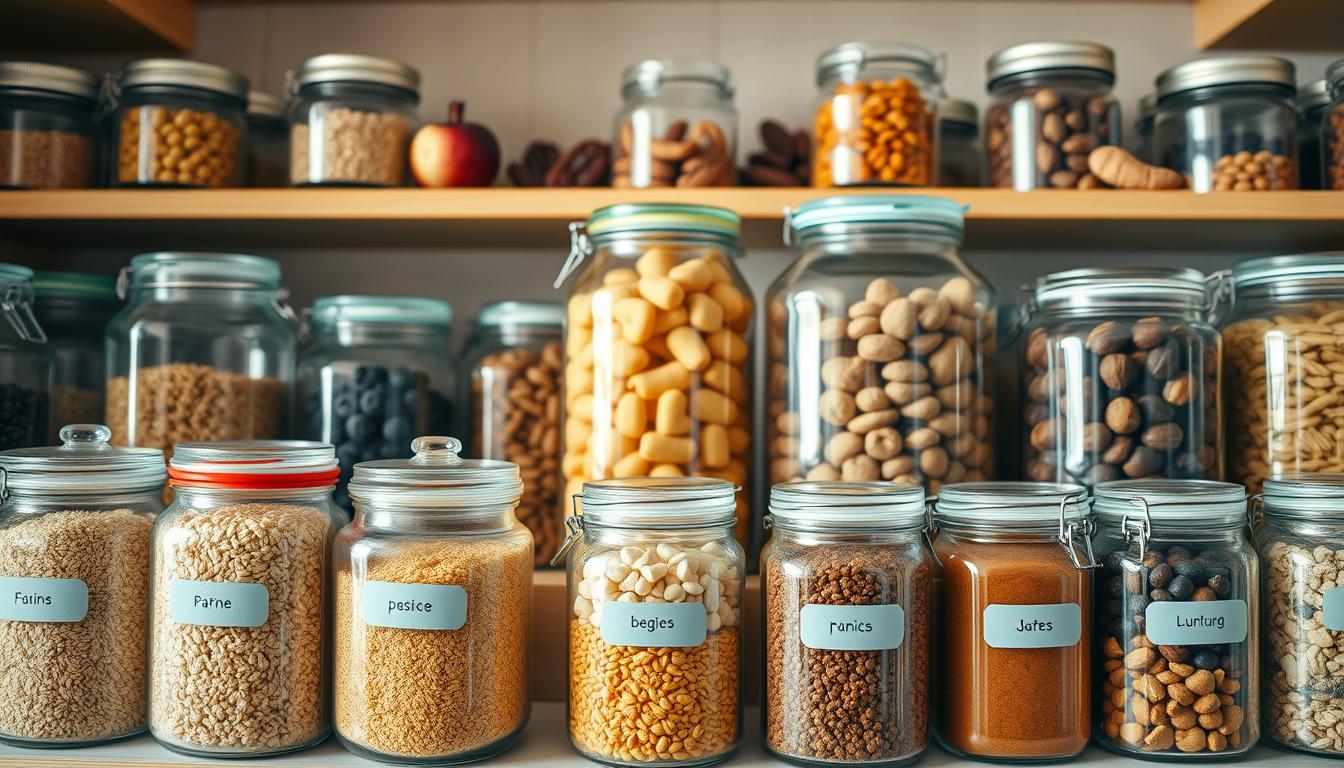
Keeping your food fresh, visible, and easy to reach can feel like a daily puzzle. You want clean lines, quick inventory checks, and a system that stops spills and smells.
Both clear containers and reusable plastic options can work. Your best pick depends on how you use your pantry, your budget, and whether items sit on a countertop or inside a cabinet.
Expect this guide to set a simple checklist: visibility, airtight performance, odor control, and smart space planning. We’ll look at materials, lid types, stackability, and what you pay at different price tiers.
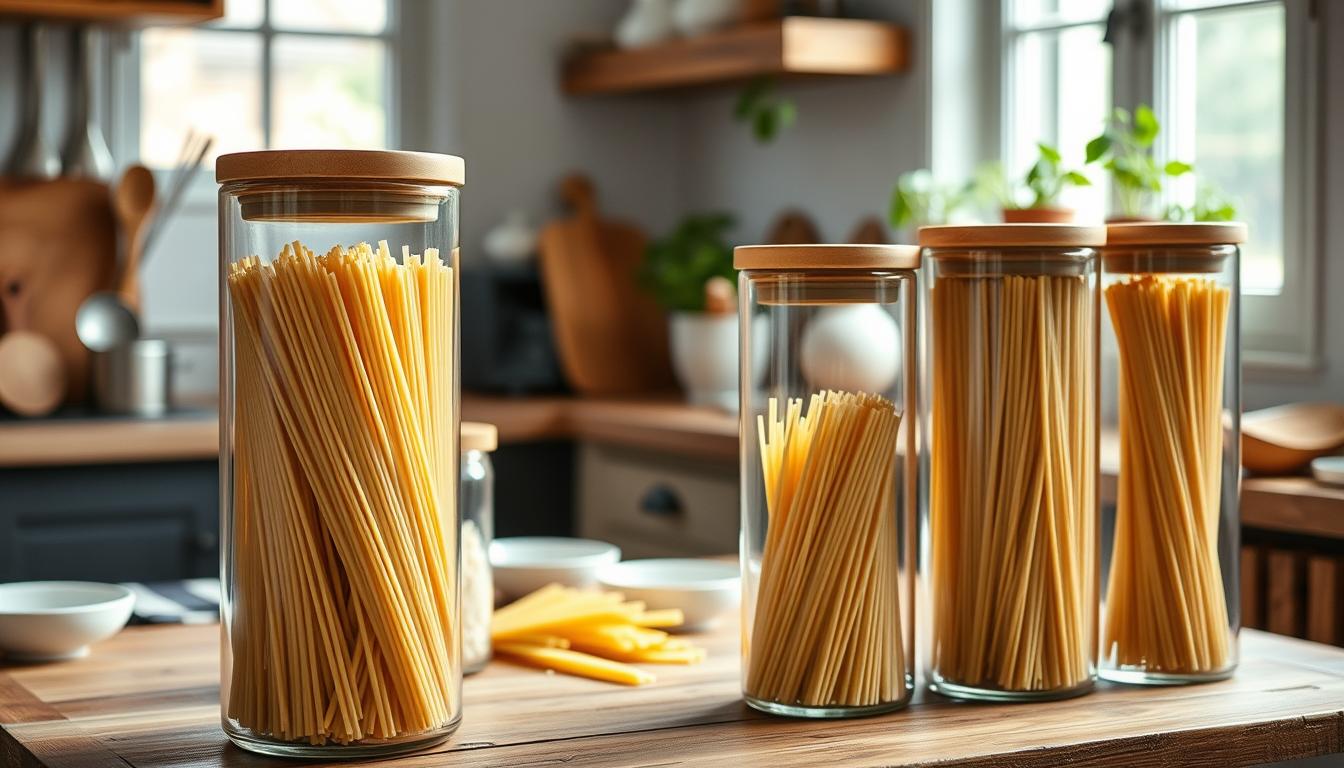
Many shoppers favor glass pantry jars because they show contents at a glance and create a display-worthy look. Still, plastic wins for low weight, child-friendly use, and a lower upfront cost.
The goal here is practical: help you choose the right containers for your kitchen and storage needs, not push one option as the only solution.
What you should compare before you buy pantry storage jars
Before you buy, line up the features that matter most so your storage system actually saves time and money.
Visibility and quick inventory checks
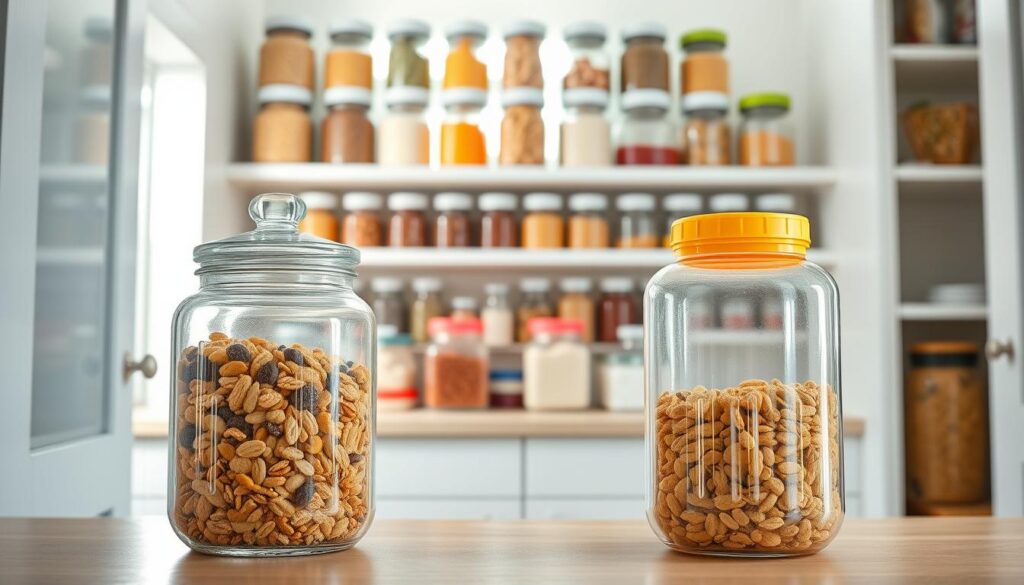
Clear containers make quick inventory checks simple. You can spot rice, pasta, sugar, or a forgotten cookie at a glance and avoid duplicate purchases.
Note that some plastics cloud or scratch over time, which lowers visibility. A well-marked storage container set reduces waste and speeds meal prep.
Freshness: lids, seals, and odor control
Freshness depends on airtight lids and a reliable seal. For coffee and tea, choose systems with silicone gaskets or clamp closures to stop aromas from escaping.
Not all lids perform the same. If you open containers daily, pick a closure type that stays tight after repeated use.
Space planning: shapes, stackability, and placement
Round canisters look nice but can waste shelf width compared with square footprints. Stackable designs cut dead space and fit deeper shelves better.
Think sizes: height clearance, shelf depth, and how often you restock. Countertop sets should balance looks with sealing; cabinet storage favors stackability.
- See it: can you identify ingredients quickly?
- Seal it: are lids proven airtight for coffee and tea?
- Fit it: do sizes and shapes match your shelves and habits?
Why Glass pantry jars are a smart upgrade for pantry organization
Swap mismatched tubs for clear, consistent containers and you’ll save time each week. A cohesive system speeds meal planning and stops surprise empty containers before you shop.
Airtight performance and instant visibility
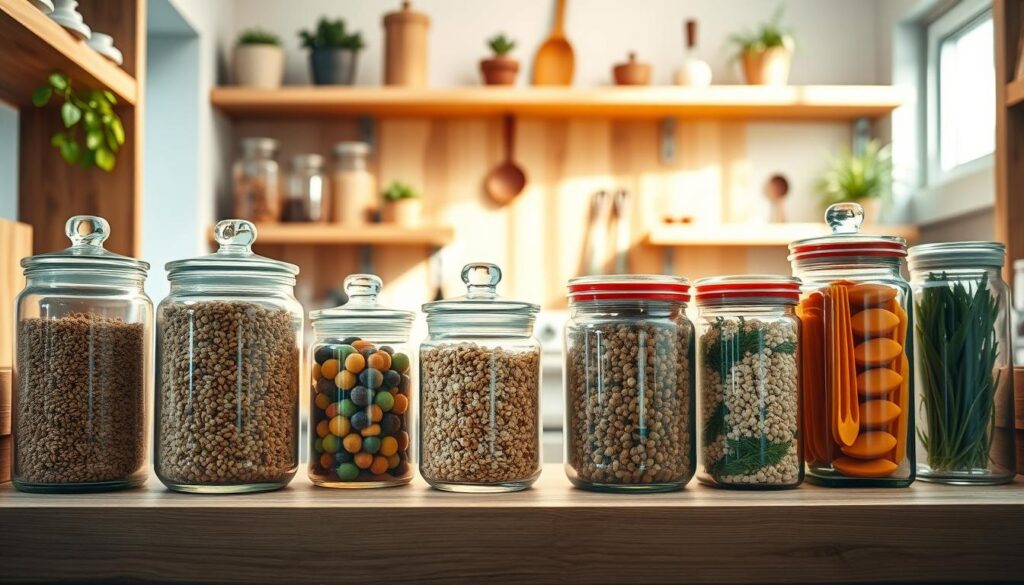
Airtight lids keep dry goods fresher by blocking humidity and odors. That matters most for coffee and tea where scent equals flavor.
Clear glass storage shows levels at a glance. You’ll know when to restock without opening every container.
Countertop looks that work in the kitchen
Matching canister styles, like clear bodies with bamboo lids, create a neat, display-worthy shelf. That uniform look makes your home feel intentional.
Durability, versatility, and handling tips
Many pieces are dishwasher-safe and some move from freezer to oven. They fit meal prep and long-term food storage needs.
Glass is sturdy but breakable. Put heavier items low and avoid high-traffic drop zones to reduce accidents.
Health-conscious materials and buying advice
Chemical-free glass is a solid choice if you want fewer plastics near food. Buy a mixed-size set so small snacks and bulk staples share the same clean look.
- See levels fast
- Protect flavor with tight seals
- Choose dishwasher-safe pieces for easy care
Where plastic storage containers still make sense in your kitchen
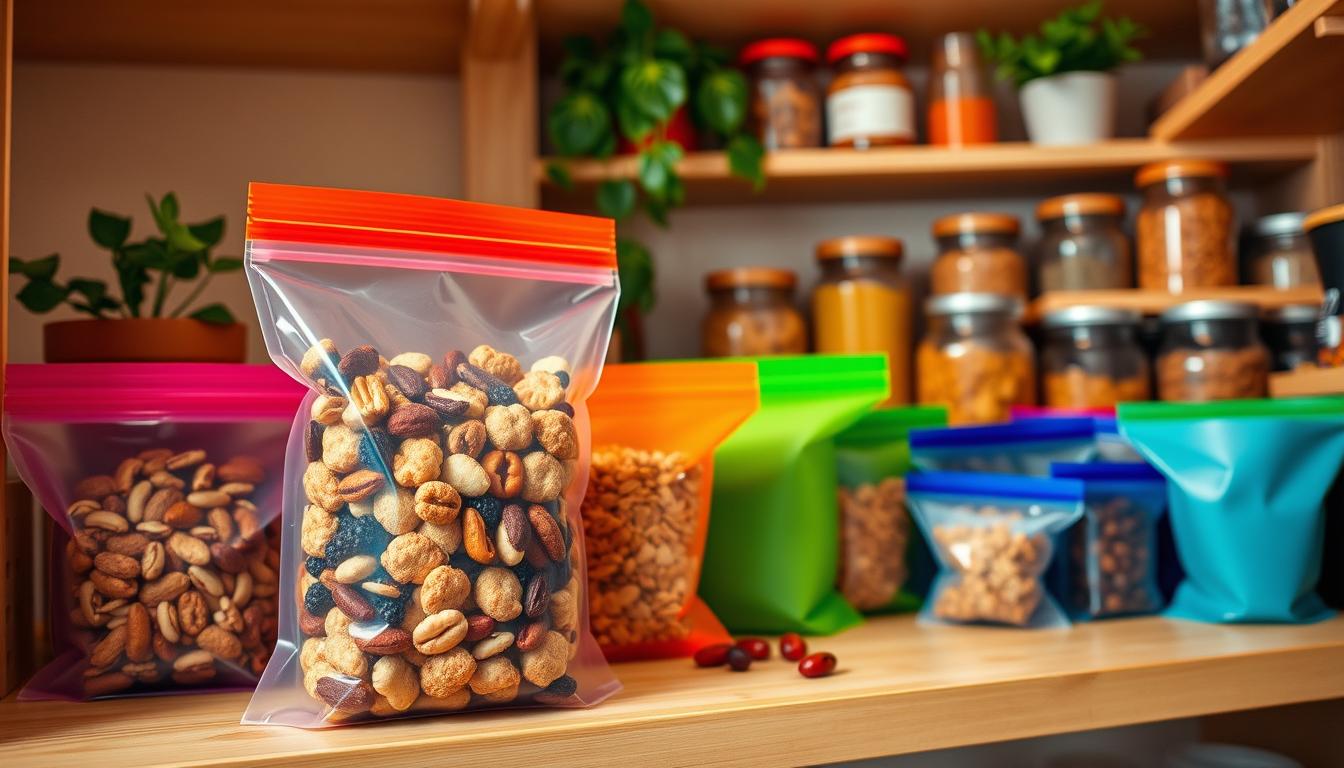
If you juggle snacks, school lunches, and frequent shelf swaps, durable plastic makes sense.
Budget-friendly options let you buy many pieces fast when price matters. Reusable plastic choices often cost less per unit, so you can outfit a full shelf without a big spend.
Everyday durability means these containers tolerate bumps and drops better than breakable alternatives. That resilience is handy in high-traffic areas and for families who move things often.
- Lightweight handling: easier to lift from high shelves and for kids packing lunches.
- Transport-ready: ideal when you carry food to work, school, or picnics.
- Backstock and overflow: use plastic for less-visible storage where looks matter less.
Set realistic expectations: plastic can scratch or hold odors over time. Use it strategically for non-aromatic staples and heavy-use bins, and keep clear glass for coffee, tea, and countertop display.
Mix materials to match your organization goals. That way you get the best of low price, light weight, and reliable food storage for daily life in your kitchen.
Product roundup: glass jar types, sizes, and lid styles to fit your pantry
Match container styles to your goals—tight shelves, bulk backstock, daily-access staples, or a countertop display—so you buy with purpose.
Stackable square options for tight shelves
Square profiles save shelf width and create cleaner lines. Consider Acopa stackable square sizes: 28 oz ($5.49), 40 oz ($6.39), 56 oz ($7.79), and 72 oz ($8.99) for efficient food storage.
Gallon and penny-candy styles for bulk
Use Choice gallon sizes (0.5–2 gal: $7.89–$14.49) for flour and rice. Penny-candy silhouettes with chrome lids (Choice 1 gal $11.99; Anchor Hocking options around $12–$13) make bulk staples highly visible.
Hinge-top and swing-top for frequent access
Hinge-top pieces (Choice 76 oz $9.89; 105 oz $12.99) and Fido-style swing tops speed daily use and feel secure when opened often.
- Lid materials: brushed aluminum, chrome, bamboo, acacia—pick by humidity and look.
- Specialty: Planetary Design Airscape glass/bamboo coffee canisters (10 oz $39; 17 oz $44) for aroma protection.
- Price guide: value picks $5–$12; premium airtight systems $39+.
Build-your-kit: choose a consistent lid finish, pick 2–3 core sizes, then add a coffee canister and a decorative canister for countertop display.
How to set up your pantry with glass storage jars for a consistent look
Choose a consistent style first, then fill in sizes to match your routines. Start with a matching set of containers in three core sizes: small for snacks, medium for daily staples, and large for bulk buys.
Build a matching set across sizes
Pick a core collection—think a set of 4–6 pieces—that covers rice, pasta, sugar, and flour. Add a taller jar for bulk grains and a shallow jar for cookies or snacks.
Mix and match sizes if you need stackable options and easy-to-clean, dishwasher-safe pieces.
Labeling that lasts
Use sticker labels made for front, back, and top placement. Front labels help quick ID; top labels work when containers are stacked.
Choose removable sticker sets so you can update seasonally without residue.
Portion planning that fits real life
Match jar capacity to your shopping habits: club-store bulk favors larger containers; weekly grocery bags fit medium sizes. Some large glass pantry jars hold roughly 7 lbs of most grains or about 6 lbs of flour when tapped—use that as a guide.
- Layout tip: keep most-used containers at eye level and heavy bulk lower.
- Group by use: breakfast, baking, and dinner ingredients together.
- Maintenance: wipe rims, clean lids regularly, and use dishwasher-safe food storage pieces when possible.
Conclusion
A small upgrade in storage can change how your kitchen works for you each week. For most people, clear glass pieces are the best all-around upgrade for visibility, a cohesive look, and a premium feel. Lightweight plastic still wins when you need budget-friendly, drop-resistant options.
Prioritize a tight lid and proven airtight performance first. Think about how often you open containers and what you store most—coffee and other aroma-sensitive items need the best seals.
Next steps: pick a matching style, choose two to three essential sizes, and commit to consistent labels. Start with a few value pieces and expand, or invest in premium options where freshness matters most.
Expect better organization, less waste, and faster meal prep when your food storage is chosen on purpose.