
Measuring scoops for jars means a tool that slips through the mouth, fits the bowl, and feels natural in your hand.
You will learn what matters when you evaluate a scoop: jar mouth size, bowl shape, handle length, capacity, markings, material, and storage style.
This guide explains why jar-friendly measuring tools boost pantry order, speed up prep, and cut spills when you scoop directly from containers.
We will compare stainless steel and plastic options and name best picks by use case: coffee, sugar, flour, and protein powder. Expect practical buying notes on shipping, delivery timing, and returns that affect your purchase in the United States.
This article is written for home cooks, bakers, coffee drinkers, and anyone who stores ingredients in regular-mouth or wide-mouth jars. Use these tips to pick the right kitchen scoop item and a design that lasts.
What “fits inside your jar” actually means for a scoop
“Fits” means the widest point on the scoop and the jar opening must glide past each other without scraping. A bowl that looks small can still catch the rim if the handle or neck is bulky. Check both parts before you buy.
Jar mouth width vs. scoop bowl width
Use a ruler or tape to measure the inner diameter of the jar mouth. Compare that number to the widest part of the bowl. For regular-mouth jars, allow a few millimeters of clearance so the bowl won’t rub the rim when you insert it.
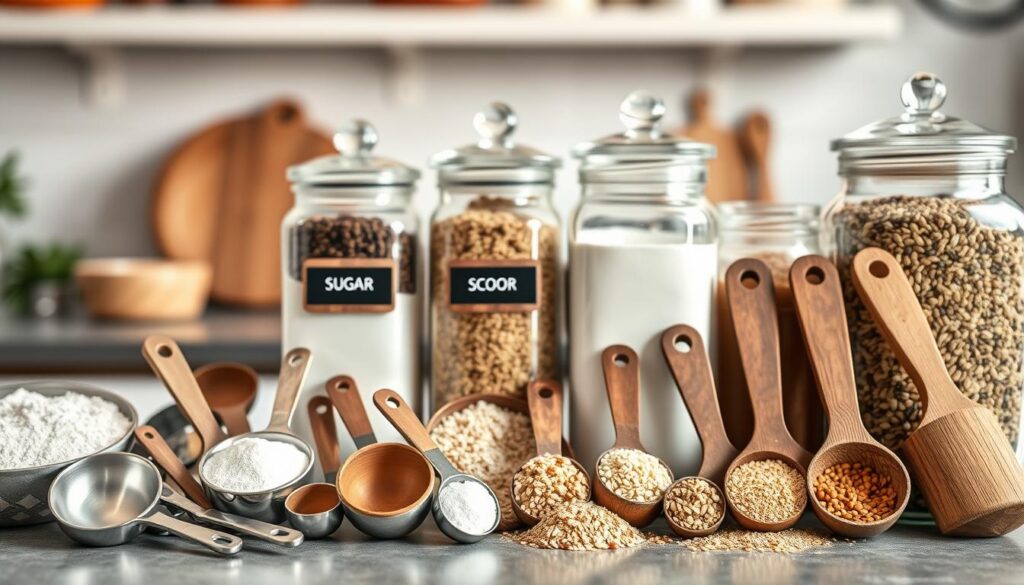
Handle length, angle, and knuckle clearance
The length and bend of the handle change how your hand sits. A short handle pushes your knuckles into the rim. A long straight handle can hit the lid or bulk out of shallow jars.
Think about grip comfort and the tool’s design when you scoop repeatedly during prep.
Depth of the jar and how it affects daily use
Tall pantry containers need a scoop that reaches the bottom without tipping ingredients out on the way up.
- Fit check: measure mouth diameter and bowl width.
- Fit check: see that the handle clears the rim by at least ½ inch.
- Fit check: test reach — does the bowl reach the base without tilting?
Measuring scoops for jars: the key buying criteria
Start by thinking about which volumes you actually use most in recipes and daily prep. That one choice will narrow options quickly and keep your drawer tidy.
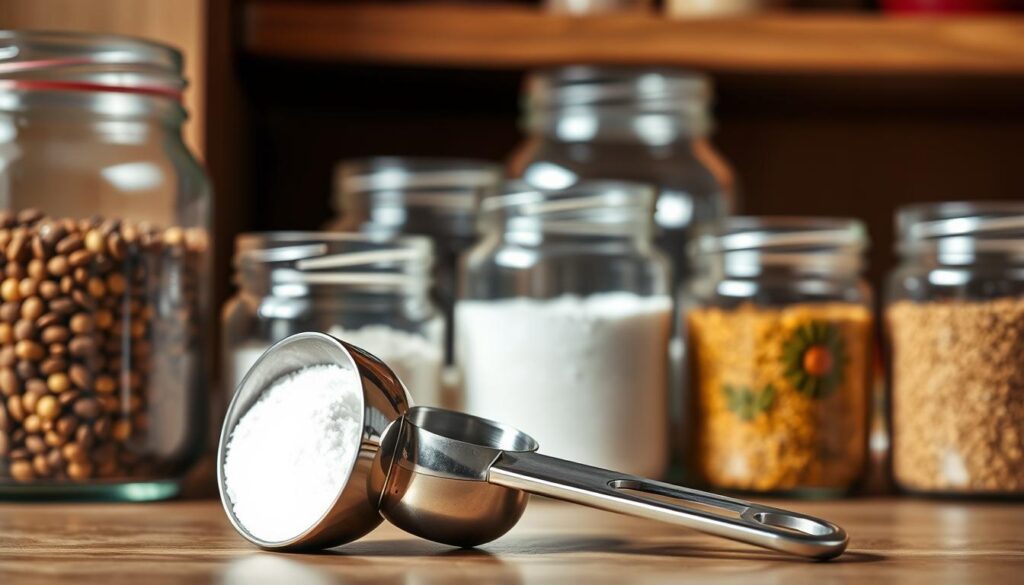
Capacity you’ll use most (tablespoon, cup, coffee scoop)
Pick capacities that match your routine. A tablespoon is ideal for spices and leaveners. A cup or cup set handles flour, sugar, and bulk staples.
Keep a single coffee scoop handy if you brew daily. Choose the few sizes you reach for often rather than a bulky collection.
Markings you can read and trust (engraved vs. printed)
Engraved marks stay readable through years of use. Printed labels can fade after repeated washing.
Prioritize durability: clear, etched numbers reduce guesswork when you can’t test the tool in person.
Storage style that keeps the set together in your kitchen
- Rings: keep pieces linked and easy to hang.
- Nesting: saves drawer space and often fits inside cups or containers.
- Stackable: tidy and quick to grab when you cook.
When buying online, focus on capacity, durable markings, and a storage style that matches your shelf or drawer. Those priorities cut return risk and help you pick the right set the first time.
Best overall stainless steel pick for most kitchens: ForJars Measuring Cups & Spoons Set
A single coordinated set that handles both small and large measures saves time and drawer space in most kitchens. This pick pairs durability with everyday convenience so you can reach into pantry containers and grab the right tool fast.
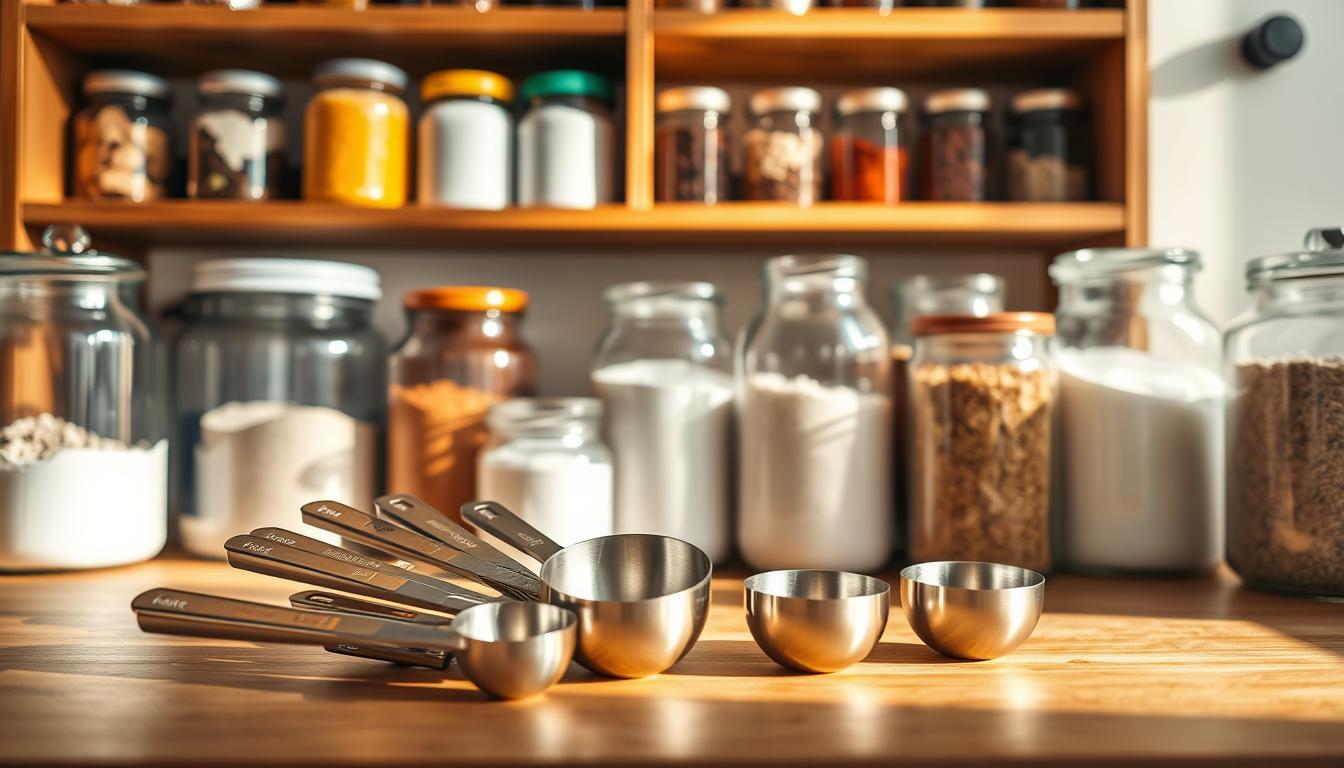
What the set includes: the set includes 5 stainless steel measuring cups and 5 metal measuring spoons. You get full coverage for cups and teaspoons, so both bulk ingredients and small-volume items are handled.
Why it works with jars: Nesting design and compact storage cut clutter. The cups nest into each other and the spoons clip together, so you can pull one piece without untangling a loose stack.
- Build: food-grade extra-thick stainless steel with an anti-rust finish.
- Use: non-slip handle and clear engraved marking for quick, reliable reads.
- Care: rinse or dishwasher-safe; designed for dry and liquid ingredients.
Buy with confidence: ForJars offers a 90-day guarantee. Check current availability—listed price was $24.95 but the product page may show sold out.
Best stainless steel measuring cups and spoons for long-term durability
Durable metal tools hold up under frequent use and keep your portions consistent. Choose sets that resist corrosion and keep their shape after years of daily handling.
Why stainless steel works with daily food routines
Stainless steel and heavy steel alloys resist rust and won’t warp when you scoop coffee, sugar, or flour each morning. Rigid bowls hold volume, so your portions stay steady time after time.
Cleaning and upkeep: rinse vs. dishwasher-friendly habits
Stainless steel measuring sets often survive the dishwasher, but quick rinses after use cut residue build-up and protect engraved markings. Hand washing reduces wear and keeps finishes readable longer.
- Build matters: thicker metal and smooth finishing reduce dents and sticking.
- Routine fit: pick steel measuring tools that balance comfort and easy cleaning.
- Longevity tip: store dry to prevent spotting and preserve readability.
When you buy, prioritize a set that combines solid construction with a comfortable handle. That choice saves replacement time and keeps your kitchen workflow simple.
Best plastic option for bulk pantry and utility use: PP Plastic Measuring Scoops
When you need a lightweight tool for heavy use, plastic can be the practical answer. This PP plastic measuring option works well in busy pantries and utility areas where speed and low weight matter.
Material and compliance
The item is molded from durable PP plastic and made using FDA compliant resin. It is also listed as USDA compliant, so you can use it with most food items without concern.
Where plastic shines
Plastic measuring pieces are best when you want one tool per container and fast service. They work especially well with:
- powders like protein and drink mixes
- beverage mixes and dry food staples
- non-food items in separate storage (keep those tools apart)
Availability and buying logistics
Note the real constraint: the listing shows this product as currently unavailable with no restock date. If you build a pantry system, plan backups or buy multiple items when stock returns.
Also watch checkout notes: partial shipments may trigger extra charges and free shipping may not apply to split orders. Factor those fees into your total cost when ordering.
Choosing between stainless steel vs. plastic scoops for your jars
Material matters. Your pick affects taste neutrality, durability, and how quickly you work at the counter. Think about the ingredients you use most and how often you grab a tool.
Flavor and odor considerations
Some materials hold odors. Coffee and strong spices can cling and alter later ingredients like sugar. If you switch between coffee scoops and sugar, metal usually keeps flavors cleaner.
Wear-and-tear over time
Plastic can stain or scratch after repeated use. Thicker stainless steel resists stains and keeps shape, though dents can appear if thin. Pick a build that matches how often you use the tool.
Weight and ergonomics
Heavier metal offers balance and steady scooping. Lightweight plastic feels faster and may be handy when you assign one tool per container. Check the handle shape and overall design to speed routine prep.
- Simple rule: choose by ingredient type, daily frequency, and whether you want one piece per jar.
- Quick tip: if you measure several times a day, prefer stainless steel; if you want dedicated, light-use tools, pick plastic.
Jar types and openings that affect scoop compatibility
Jar mouths come in a few common sizes, and each size limits which scoop shapes slide in cleanly.
Regular-mouth vs. wide-mouth choices
Regular-mouth containers need narrower bowls and slimmer necks so the tool passes without scraping. Wide-mouth jars allow rounder, deeper bowls and a shorter rise when you lift ingredients.
Specialty containers and reach
Powder jars, straight-sided food containers, and tall pantry canisters differ in depth and shoulder shape. Deep containers often need a longer handle to reach the base. Shallow or straight-sided tubs work better with short-handled, narrow spoon profiles.
When shorter handles or narrow spoons win
If the opening is tight, choose a narrow bowl even if you prefer a larger measure. A slim spoon reduces spill risk when you pull it out. Aim for tools with slim necks and a balanced handle so you can scoop cleanly across multiple jars.
- Fit tip: match bowl width to the inner neck diameter.
- Spill control: thinner rims slide past shoulders with less drag.
- One-tool rule: pick a versatile design that suits both tall and shallow containers to avoid a separate tool per jar.
How to pick the right scoop size for dry ingredients, baking, and cooking
Pick a scoop size that matches the job and you’ll cut errors and prep time. Match capacity to use so your routine stays smooth whether you are baking a cake or cooking dinner.
Dry ingredient technique that gives repeatable results
When you work with dry ingredients, fill the bowl and then level across the top with a straight edge. This simple step gives consistent weight and volume, especially with flour and sugar.
Pro tip: tap the container gently before scooping to settle the powder, then level for repeatable measures.
Why cups beat scoop tools for liquids
A proper measuring cup has a spout and clear lines, which reduce spills. Use a measuring cup for liquids when a recipe needs precision. Cups keep pours steady and recipes predictable.
Small-volume needs: use the right spoons
For spices, baking powder, and baking soda, measuring spoons are more accurate than guessing. Choose a spoon set with engraved marks and narrow bowls so you can reach into containers without mess.
- Match size to task: pick a larger cup for bulk dry staples and a small spoon for spices.
- Save space: one versatile cup and a set of spoons covers most baking and cooking needs.
- Fit matters: ensure the chosen size clears the opening and lets you scoop without spills.
Goal: fewer errors, fewer spills, and faster prep when you use the right cups and spoons for each ingredient type.
Best choices by use case: coffee scoops, sugar scoops, and everyday pantry scoops
Match the tool to the task: different pantry jobs need different bowl shapes and reach. Below are practical picks so you buy only what helps your routine.
Ground coffee: reach and repeatability
Choose a coffee scoop that reaches the bottom of the container without forcing your hand against the rim. A long-neck, narrow bowl keeps you from tipping grounds as you lift.
Tip: use the same coffee scoop each time to keep strength consistent. Small volume changes add up when you brew daily.
Sugar and sweeteners: bowl shape that cuts clumps
Pick a rounded bowl with a thin edge to slide under packed sugar. A clean rim reduces clinging and prevents spills when you pull the scoop out.
Flour, rice, and grains: capacity that speeds prep
For bulk staples, a slightly larger scoop or cup saves trips during prep. Make sure the wider bowl still clears the opening so you don’t jam the tool while filling pans.
Protein powder and supplements: why plastic works
A dedicated plastic scoop stays light and belongs with one container. It’s easy to keep inside the tub and prevents cross-flavor transfer when you reserve it for that product.
- Separate tools: keep a devoted scoop for coffee to avoid odor transfer to sugar or spices.
- One-tool rule: match bowl width and handle reach to the container depth before you buy.
Handle, design, and comfort features that matter when scooping from jars
A well-shaped handle can change how steady your hand feels when you reach into a narrow container.
Comfort matters because your wrist angle and grip shift when you work through a tight opening. A slim neck and balanced weight keep your wrist neutral and reduce spills.
Non-slip grips help when your hands are wet after washing produce or working near the sink. Textured surfaces and soft-touch grips stop slips and let you lift a full bowl with confidence.
Compare one-piece vs. multi-piece construction. A single molded piece has no seams where dry goods can lodge. Multi-piece items may offer better balance, but seams can trap powder and need more care.
Hygiene and cleaning: smooth transitions, rounded joins, and simple shapes make cleanup quick. Pay attention to edges that hold residue so you don’t store damp flour or sugar in hidden crevices.
- Photo checklist: look for a clear view of the handle profile and neck width.
- Material cues: check close-ups of joins to see if they are sealed.
- Comfort test: seek images showing grip size against a hand so you judge reach and comfort.
Keeping your measuring set organized next to your jars
How you store your tools changes how often you reach for them. A single tidy set is easier to find and keeps pieces together. Good storage keeps counters clear and speeds daily prep.
Nesting sets vs. loose tools in drawers
Nesting sets save space and cut clutter. They stack neatly and are quick to return to their spot. A nested set also makes it less likely you lose a piece.
Loose tools work when you assign one tool per container. That approach is faster during routine use but needs a plan so pieces do not wander.
Storing inside the jar vs. outside for cleanliness
Keeping a tool inside the container is handy, but it can raise hygiene questions. If you store inside, wipe the handle and keep the container dry.
Storing tools outside keeps them cleaner. Use these ideas in a small US kitchen:
- hooks or magnets near the pantry shelf
- drawer dividers and rings or clips to keep a set together
- a small bin on the main shelf so the set is always visible
Some people keep items in the original packaging while they set a system. That’s fine short-term, but long-term prioritize accessibility and hygiene. The best set is the one you can find and use quickly.
Shipping, delivery, and returns: what to check before you order
Before you click buy, confirm how shipping times and return windows work so the order won’t create extra hassle. Look up estimated arrival windows in days and whether carrier tracking is included.
What to verify before checkout:
- Minimum thresholds for free shipping and any extra fees on split shipment.
- Estimated delivery in days and the ability to track the package online.
- Seller policies with full details on returns, exchanges, and restocking.
Guarantees and return windows
Check the product page for guarantees. ForJars lists a 90-day guarantee, which gives you time to test the item and request a return if needed. Always confirm the exact return window before you buy.
Shipment tracking and delivery timing in the United States
Expect sellers to show delivery ranges in days and a tracking number once the order ships. Use that number to watch progress and to plan pickup or signature needs.
Backorders and partial shipments
If an item is unavailable, you may be offered partial shipments or a wait-until-all option. Note that some sellers exclude free shipping on split orders and may add extra charges for the second shipment.
Tip: read the full details on returns and split orders for multi-item carts so you avoid surprise fees and keep delivery timing within the expected days.
Conclusion
A short checklist—fit, capacity, markings, handle—lets you choose with confidence.
Confirm the mouth fit, pick the cups and sizes you use most, and choose a set with clear, engraved numbers and a comfortable grip. Prioritize stainless steel when you want durability and neutral taste. Use lightweight plastic pieces when you keep a dedicated tool inside a powder tub.
Remember regular-mouth versus wide-mouth openings change which tools work in daily use. The right choice gives faster measuring, fewer spills, and steadier results in cooking and baking.
Next step: audit your pantry, list most-used ingredients, and pick one compact set or a few dedicated pieces that match your routine.