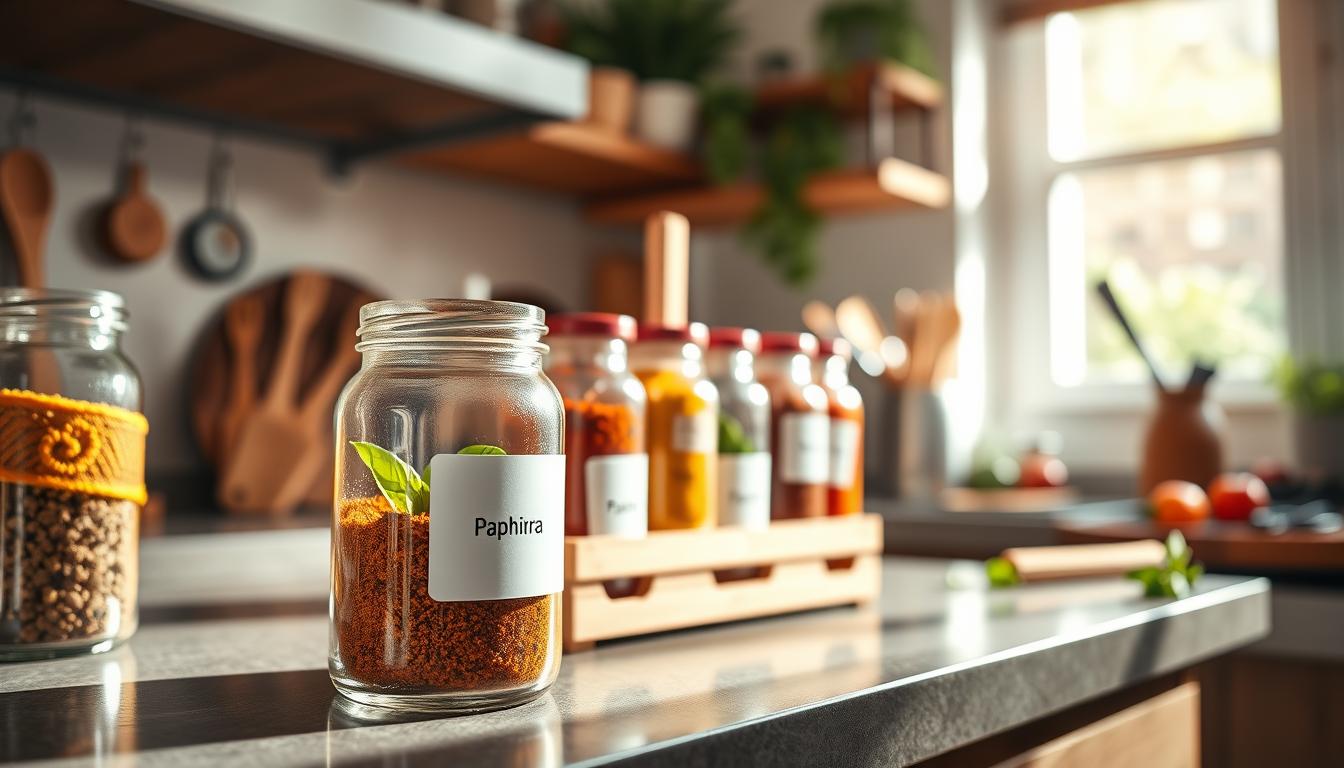

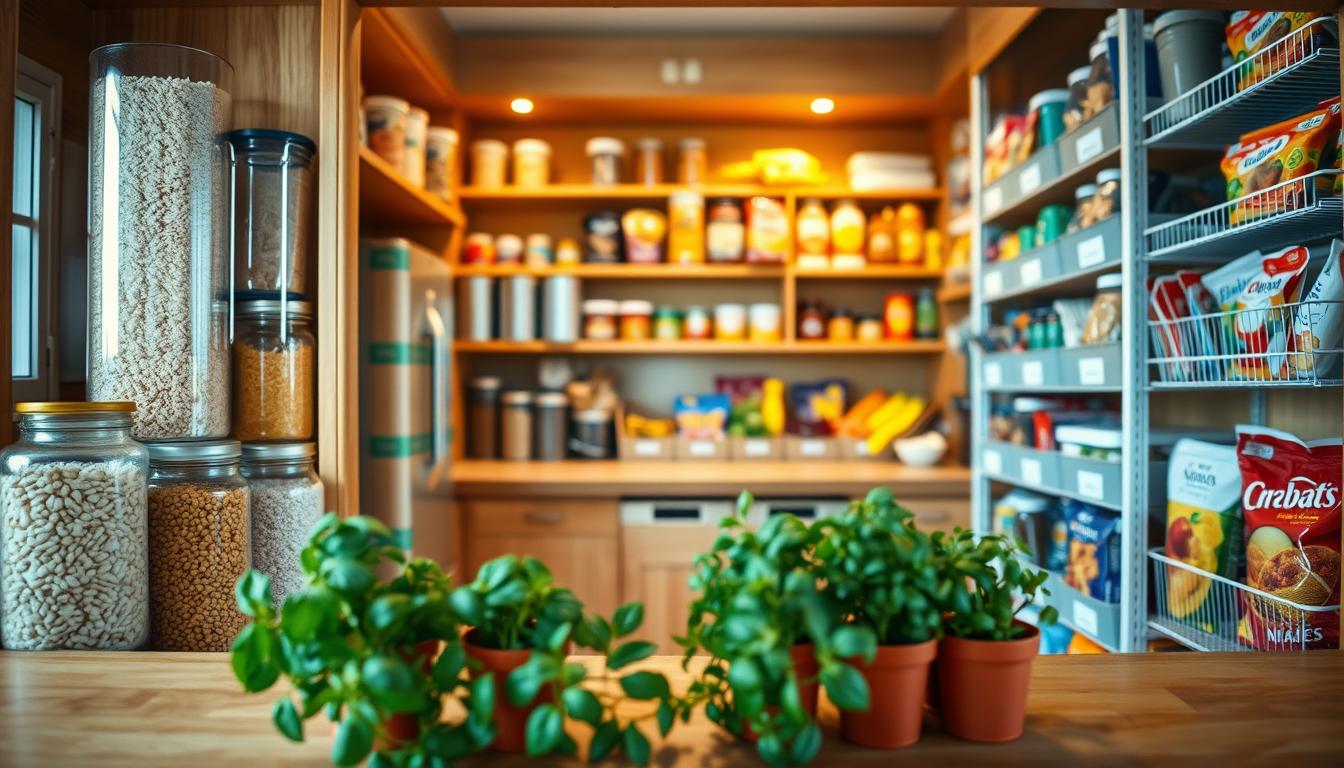
Your pantry can do more than look tidy. When your shelf labels mirror how you actually eat across the main US food groups, you make better choices without thinking too hard.
This guide shows you how to label shelves and bins with clear category names and then fine-tune them using serving guidance from sources like NIH/NIA. Recommended amounts change by age, sex, and activity level, so your labels will help you match portion advice to daily life.
You will see the master pantry map up next: vegetables, fruits, grains, protein foods, dairy products or alternatives, and a separate limit zone for oils, solid fats, added sugars, and certain beverages.
When you can spot a wide variety across categories, you naturally rotate options and cover more nutrients. This system scales to any household and turns healthy-eating guidance into practical shelf labels that support habits over time.
Why pantry categories work when they match US food groups
Matching pantry zones to common meal components turns abstract advice into action. You can see complementary options and reach for whole grains, vegetables, protein, and fruit in one sweep. That makes healthier choices faster on a busy day.
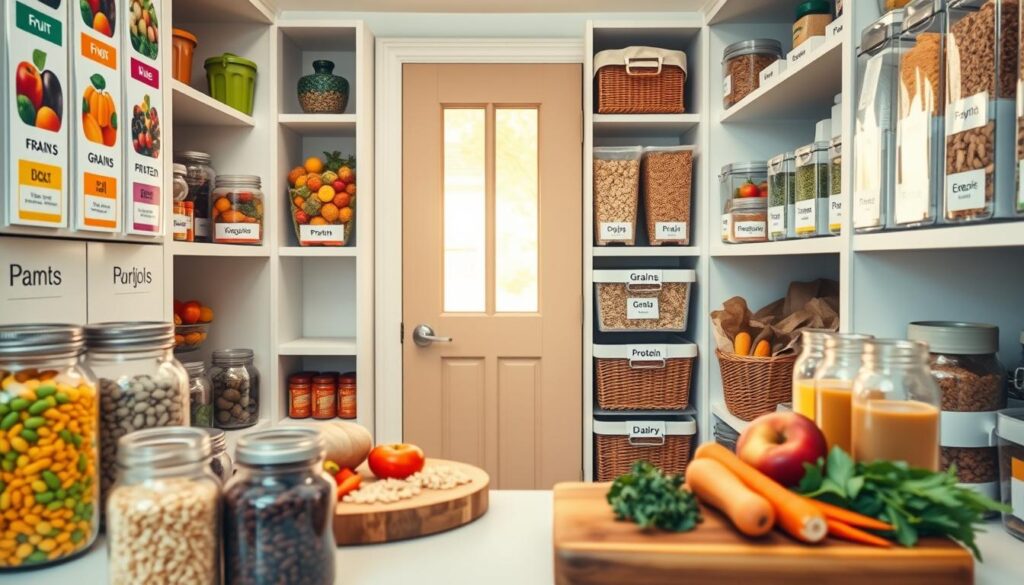
How this layout supports lasting change
Simple defaults reduce decision fatigue and shape habits over weeks and months. A consistent “whole grains + vegetables + protein + fruit” path nudges you to assemble balanced meals without thinking long.
- It highlights variety so you rotate nutrients and avoid repeats.
- It makes plant-forward options and varied proteins easy to mix.
- It keeps portion-friendly staples visible for quick meals.
How age, activity, and calories change what you stock
Your age and activity level alter needs; older adults may favor nutrient-dense, fiber-forward staples and easy proteins. Adjust the number of each type of product on shelves to match household calories.
Use NIH/NIA and AHA as practical sources when planning amounts so your pantry fits your body and daily energy needs.
Set up your shelves with cup- and ounce-equivalents in mind
When your bins speak in cups and ounces, portioning becomes second nature. Use simple labels that translate guidelines into shelf habits so you can grab the right amount without guessing.

What “cup-equivalent” and “ounce-equivalent” mean
Cup-equivalents match how fruits, vegetables, and some dairy count for serving targets. A measuring cup can be literal (1 cup) or represent density differences (1 cup raw spinach = 1 cup-equivalent, while 1/2 cup cooked spinach = 1 cup-equivalent).
Portion distortion vs serving size
Serving size on the Nutrition Facts label is a reference, not a rule. The AHA warns that people often pour larger portions. Use the label to compare items, then pick a consistent scoop that fits your routine.
Quick reference examples for labels
- Grains: 1 slice bread = 1 oz-eq
- Cereal: 1 cup flakes/puffs = 1 oz-eq
- Rice/pasta: 1/2 cup cooked = 1 oz-eq
- Popcorn: 3 cups popped = 1 oz-eq
- Protein: 1 tablespoon peanut butter = 1 oz-eq; 1 egg = 1 oz-eq
Pick a 1-cup scoop for cereal and a marked container for rice. Group items that count the same so you can swap ingredients without changing your plan.
Categorizing food groups: the master list of pantry category names
A single master list of shelf labels removes guesswork at every shopping trip. Use one map that mirrors US guidance so you label shelves once and stop rethinking the system.
Vegetable subgroups
Break vegetables into four clear bins: dark green vegetables, red and orange, starchy, and beans/peas. This keeps color and fiber visible and helps you rotate choices.
Fruits and juice
Make whole fruits the default shelf. Place 100% fruit juice and low-added-sugar options in a nearby spot so juice counts but doesn’t push out whole fruit.
Grains: whole and refined
Create separate shelves for whole grains and refined/enriched grains. Label homes for bread, cereal, rice, pasta, tortillas, and popcorn so every grain has an obvious place.
Protein, dairy, and limit zone
- Protein foods zone: meat, poultry, seafood (including salmon), eggs, beans, nuts, and seeds for easy mix-and-match planning.
- Dairy products: milk, yogurt, cheese and fortified soy alternatives grouped together for calcium-forward choices.
- Limit zone: oils, solid fats, added sugars, and calorie-heavy beverages kept in one spot to add friction and serve sparingly.
Vegetable categories that keep color, fiber, and variety visible
A color-coded vegetable map on your shelf makes balanced meals faster to build. Use clear names so you can shop your pantry by color and texture without a meal plan. Visible options nudge you toward variety and steady fiber intake.
Dark green vegetables bin
Keep spinach, kale, collard greens, and broccoli together. Store leafy greens toward eye level, rotate older bags to the front, and separate delicate leaves from heavier items to avoid crushing.
Red and orange vegetables bin
Group carrots, pumpkin, tomato products, and sweet potato here. Include fresh, frozen, and shelf-stable examples so you always have a colorful option on hand.
Starchy vegetables shelf
Reserve a shelf for corn, peas, and potatoes. When you use canned items, pick low-sodium or no-salt-added options to keep meals heart-friendly.
Legumes: when they count as vegetables vs protein
Beans and peas can act as a vegetable in mixed dishes or as a protein when you limit meat. Add quick cup-equivalent stickers like “1 cup raw spinach counts” or “1/2 cup cooked beans counts” to make portions simple.
- Quick benefit: Mixing colors supports nutrient variety and fiber helps digestive regularity over time.
Fruit categories that make “whole fruit” your default
Make whole fruit the easiest choice in your kitchen so healthy snacking happens by habit. Put a fresh fruit bowl on the counter or a front-of-fridge bin and restock it first after shopping. NIH/NIA advises that at least half the fruits you eat should be whole fruits.
Fresh bowl and grab-and-go snacks you’ll actually eat
Keep apples, oranges, bananas, and grapes visible and within reach. Pre-portion cut fruit or small containers of berries for quick grabs so convenience beats decision fatigue.
Frozen, canned, and dried: choose lowest added sugars
Create a separate shelf for frozen, canned, and dried options. Pick fruit packed in water or its own juice and avoid heavy syrup to limit added sugars.
100% fruit juice: where it fits and how to keep it from crowding out whole fruit
100 fruit juice counts, but it is less filling than whole fruit because it lacks fiber. Use the smaller, labeled juice spot so juice stays an option, not the default.
- Cup-based cheat notes: 1 medium whole fruit = 1 cup; 1 cup cut-up = 1 cup; 1/2 cup dried = 1/2 cup; 1/2 cup 100% fruit juice = 1/2 cup.
- Rotate colors and types across the week to add variety and cover nutrients.
- Read labels: look for “no added sugars” and check the ingredient list first.
Grains and whole grains: label-reading category names that reduce guesswork
Label items by what the ingredient list says so you can spot whole grains quickly. Look for the word “whole” before the grain name on packages to confirm whole wheat, whole oats, bulgur, or whole cornmeal.
Whole grains shelf
Create a shelf for oats, brown rice, barley, bulgur, and whole cornmeal. These products supply more fiber and nutrients, and NIH/NIA recommends that at least half of your grain choices be whole grains.
Refined/enriched grains shelf
Set a neutral spot for white rice, white flour, and degermed cornmeal. Refined items are often enriched but have less fiber, so keep them visible yet separate from whole-grain staples.
Breakfast cereal zone
Store cereals by consistent containers and a marked scoop so servings link to a cup measure. Read the Nutrition Facts and ingredient list; a fiber-forward cereal will list whole grains near the top.
- Ounce-equivalent anchors: 1 slice bread = 1 oz-eq; 1 cup ready-to-eat cereal ≈ 1 oz-eq; 1/2 cup cooked rice = 1 oz-eq.
- Label names like “Whole Oats” and “White Rice” to make unpacking groceries faster and mealtime choices intentional.
Protein foods: create a “mix-and-match” section for the week
Design a protein zone that lets you build balanced plates in under a minute. Keep meats, poultry, fish, and plant sources in adjacent bins so you can pair a protein with vegetables and grains without hunting through the pantry.
Seafood targets for the week
Reserve a seafood lane and label a weekly target: 8–10 ounces per week, per NIH/NIA. Rotate omega-3-rich, lower-mercury choices like salmon, anchovies, and trout so you meet targets safely.
Lean meats and poultry
Organize by cut and cook time: quick-cook (thin cuts, ground meat) vs slow-cook (roasts, thighs). Add ounce labels on packages so portioning and meal prep match ounce-equivalents.
Plant proteins and snacks
Create a plant-protein subzone for beans, tofu, hummus, nuts, and seeds. Add a quick sticker: 1 tablespoon peanut butter = 1 ounce-equivalent. Include ready examples like canned beans and packaged tofu for swaps.
Eggs and shelf-stable proteins
Keep eggs and canned or jarred proteins (sardines, tuna, packaged tofu) visible. Use small bin labels with ounce-equivalent notes (1 egg; 1/4 cup tofu; 2 tbsp hummus; 1/2 oz nuts) so you can swap sources without recalculating.
- Quick benefit: A visible mix of proteins helps your body’s repair needs and reduces reliance on the same meats all week.
- Favor minimally processed products to manage sodium and saturated fat.
- Make variety the default by keeping multiple sources visible for easy mix-and-match meals.
Dairy products and fortified alternatives: keep calcium-forward staples easy to find
Place calcium-forward staples where you reach first so strong bones and simple meals go hand in hand. Make a clear lane for milk, yogurt, and cheese. Front-and-center visibility increases use at breakfast and snacks.
Label sub-shelves with cup-equivalents so you compare formats quickly. Use tags like Milk: 1 cup, Yogurt: 1 cup, and Cheese: 1.5 oz hard. NIH/NIA lists these equivalents and highlights calcium, potassium, and vitamin D as key nutrients.
Fortified soy and dairy alternatives
File fortified soy beverage and soy yogurt with dairy when they provide calcium and vitamin D. Note that other plant milks vary in fortification; check the Nutrition Facts and ingredient list.
Quick added-sugar check
Use a simple workflow: scan the sugar line on Nutrition Facts, then read ingredients for syrups or sugars. Keep flavored yogurt and dairy desserts in a separate bin so added sugars don’t sneak into your day.
- Practical examples: Grab yogurt plus fruit for breakfast, or milk plus whole-grain cereal with no searching.
- Choose low-fat or fat-free options for heart-healthy choices when recommended by your sources.
- Rotate products so nutrient-rich choices stay visible and easy to pick.
Conclusion
An organized pantry maps healthy choices to your routine so good meals happen faster.
Keep the system repeatable by categorizing your shelves into vegetables, fruits, grains, protein, and dairy so defaults match your goals. Add a clear cup and ounce note on each label to make cereal, rice, or proteins simple to portion using quick equivalents.
Rotate items for variety: shift vegetables by color, mix beans, nuts, meat, poultry, and fish, and favor whole grains. Read the Nutrition Facts to spot added sugars and saturated fats in snacks and drinks.
Create a separate limit zone for oils, solid fats, and sweets so they stay intentional. Do a weekly reset, remove expired items, adjust for age and activity, and then run one grocery trip through the system to confirm every item has a home.