
Choose stability over style. When you shop for storage, focus on a firm base, interlocking edges, and easy access so your containers stay put. By “won’t topple over” we mean stacks that resist shifting, hold weight without leaning, and let you reach items safely.
Common failure points include overstacking, mixing sizes, and placing heavy jars on top. Learn where each type works best: open trays for quick grabs, lidded containers for long-term storage, wire baskets for airflow, and turntables for corners.
Match the container footprint to your shelf depth and cabinet height so stacks remain square and safe. We’ll compare products in clear “best for” categories to help you pick the right solution for your kitchen goals.
Visibility matters: choose clear or open-grid designs to track supplies and avoid duplicate purchases. This section sets expectations so your storage and organization plan saves time and money.
What makes pantry bins topple in real-life kitchen storage
Tipping starts small: a warped bottom, a tall box, and someone in a hurry—then the stack goes. You can prevent many falls by spotting the weak links: shallow shelf depth, mismatched footprints, and heavy loads placed too high.
Overstacking tall items on shallow shelves
When tall cereal or snack boxes sit on a narrow base, the center of gravity shifts forward. That makes a simple pull or tug enough to tip a stack on a shallow shelf.
Mixing mismatched sizes and uneven bases
Smaller storage bins supporting larger tops create “teeter points.” Warped plastic, bent wire, or soft woven bottoms add wobble that worsens each time you reach in.
Overloading with cans, bottles, and dense food storage
Heavy cans and glass bottles concentrate weight and raise tipping risk when stored high. Canned goods can dent or leak if a collapse occurs, so choose sturdy materials and low placement.
- Look for wide bases to prevent teetering.
- Prefer interlock or anti-slip rims for safe stacking.
- Match footprints so one item doesn’t overhang another.
- Keep heavy jars or cans low in a cabinet to reduce risk.
- Choose clear options to avoid overbuying and clutter.
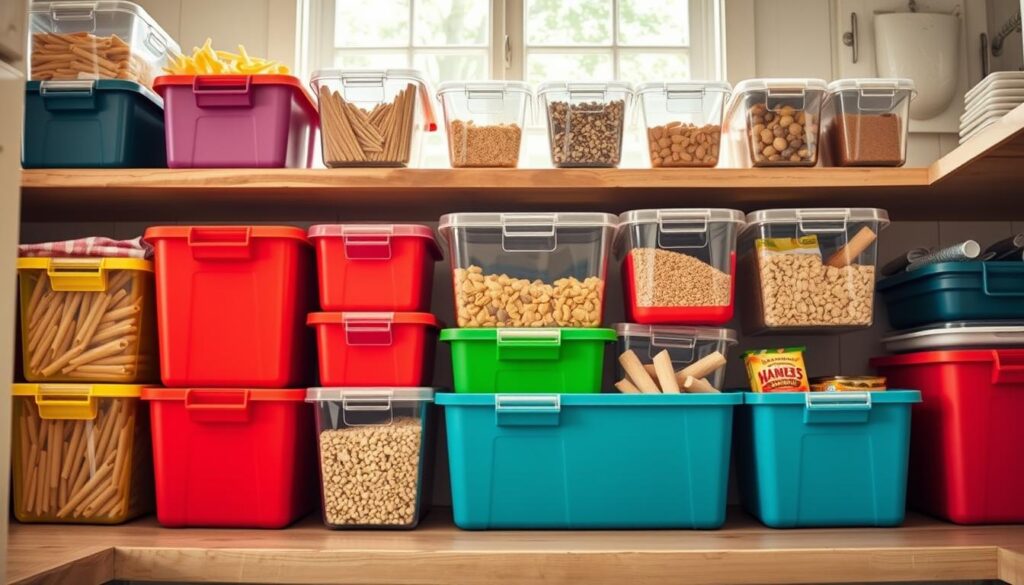
Stacking pantry bins: stability features to prioritize before you buy
Start by checking product specs and simple in-store tests. Look for a wide footprint, a rigid bottom, and a rim that seats cleanly. These details separate a reliable organizer from one that tips when you reach in.
Wide base and flat, non-warping bottoms
A broad base keeps the center of gravity low. Press the base to check for flex; it should feel firm under weight. Rubbermaid Brilliance models are a good example of rigid bottoms that hold shape.
Interlocking rims and anti-slip features
Rims that nest or interlock stop sideways slides when shelves shift. Test how the edges seat and how snugly each unit stacks to avoid sliding during door motions.
Front-access vs lift-off access
Front-access organizers let you reach lower items without unstacking. Lift-off styles offer cleaner lines but require more effort if you use the bottom unit often. Pick based on how you grab items daily.
Handles and high sides
Choose recessed or flush handles that don’t protrude. Side handles that stick out can pull the stack forward. High sides keep packets and bottles contained, which matters on high shelves.
- In-store checks: press the base, test rim seating, and pull an item from the bottom unit.
- Look for a wide base, rigid bottom, and minimal bowing when loaded.
- Brands to note: mDesign for open-front access; Tiblue for high-sided turntables.
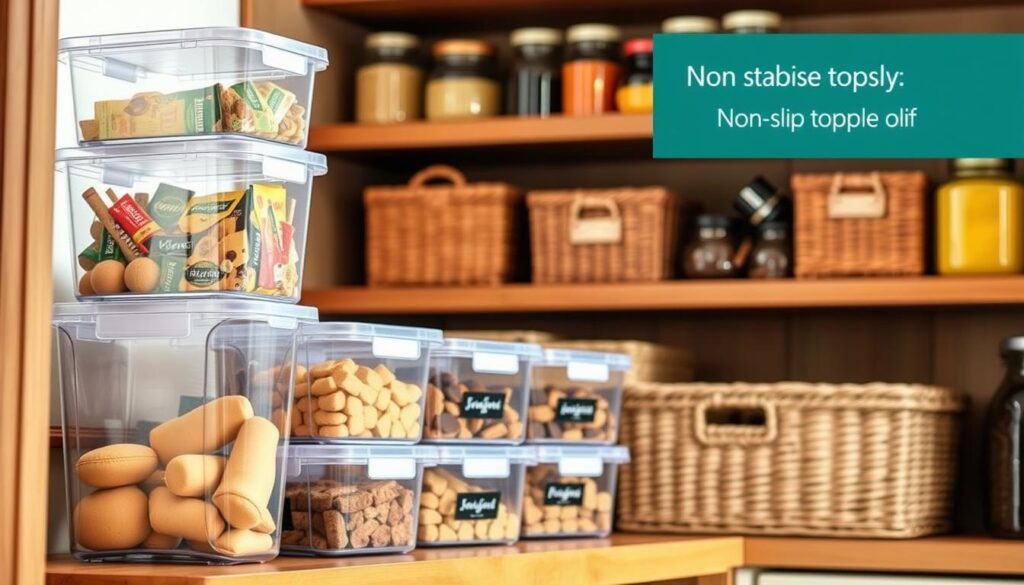
These quick checks will help you pick organizers that stay put and improve your kitchen storage safely.
Measure your pantry shelves, cabinet depth, and clearance for stackable storage
Before you buy, measure shelf depth and height so every container fits without forcing you to rearrange when you need something fast. Use a tape measure and note usable height from shelf surface to the shelf above. Record shelf depth and the distance to any door trim or mullion.
Shelf height planning for multi-tier tier
Measure the interior height and allow 1 to 2 inches for lid clearance. That prevents you from scraping knuckles when you reach in.
Decide if you want two tiers or three. Leave visible space so labels show and you can pull items without unstacking.
Depth checks for standard shelf and cabinet spaces
Check how far back the shelf goes. Choose containers that use depth without hanging over the front edge.
If your cabinet has deep shelves, a standard footprint bin size for dry goods keeps stacks consistent across shelves and reduces wasted space.
Door clearance and pull-out access on crowded shelves
Open the door and test for catches. Thick rims, handles, or tall lids can hit the door or door frame.
For tight or narrow spaces, consider a rolling rack or tiered rack from VEVOR. A small rack can add vertical tiers in homes with limited built-in shelving and make access easier.
- Measure once: note height, depth, and door swing for each shelf.
- Pick a standard footprint: use the same size for most categories to keep stacks square.
- Do a traffic test: simulate grabbing snacks quickly to confirm you can reach items without pulling the whole stack out.
These simple checks help with everyday organizing and make your kitchen pantry safer and more usable.
Choose the right material for your kitchen pantry and pantry storage goals
Your storage material should solve a problem: visibility, airflow, or durability, not just look good. Pick a main material for most shelves, then add a second where it fixes a specific need, like ventilating produce.
Clear plastic storage for fast inventory and visibility
Clear plastic makes quick runs easier. You can spot snacks and packaged food at a glance, which cuts down on duplicate buys.
Best for: dry goods and high-turn items you restock often. Plastic storage cleans easily and resists leaks from cans or bottles.
Coated metal and wire for airflow and durability
Wire or coated metal holds up to heavier supplies and lets air circulate. That helps onions, potatoes, and fruit stay fresh longer.
Best for: produce and heavy jars. Metal lasts through spills and frequent handling better than woven materials.
Wicker and natural baskets for looks (and limits)
Wicker looks warm and decorative, but it soaks up spills and doesn’t stack well. Use these for light backstock or linens you don’t need to see every day.
Tip: keep wicker off the main shelf area where leaks or damp items could cause damage.
- Decision shortcut: choose one workhorse material (plastic or metal) and add baskets only where airflow or style matters.
- Cleaning: wipe plastic, rinse coated metal, and avoid wet spills on woven baskets to prolong life.
- Brands: Aozita wire baskets for produce; Granny Says wicker for decorative storage.
Best overall airtight containers for dry goods that stack neatly
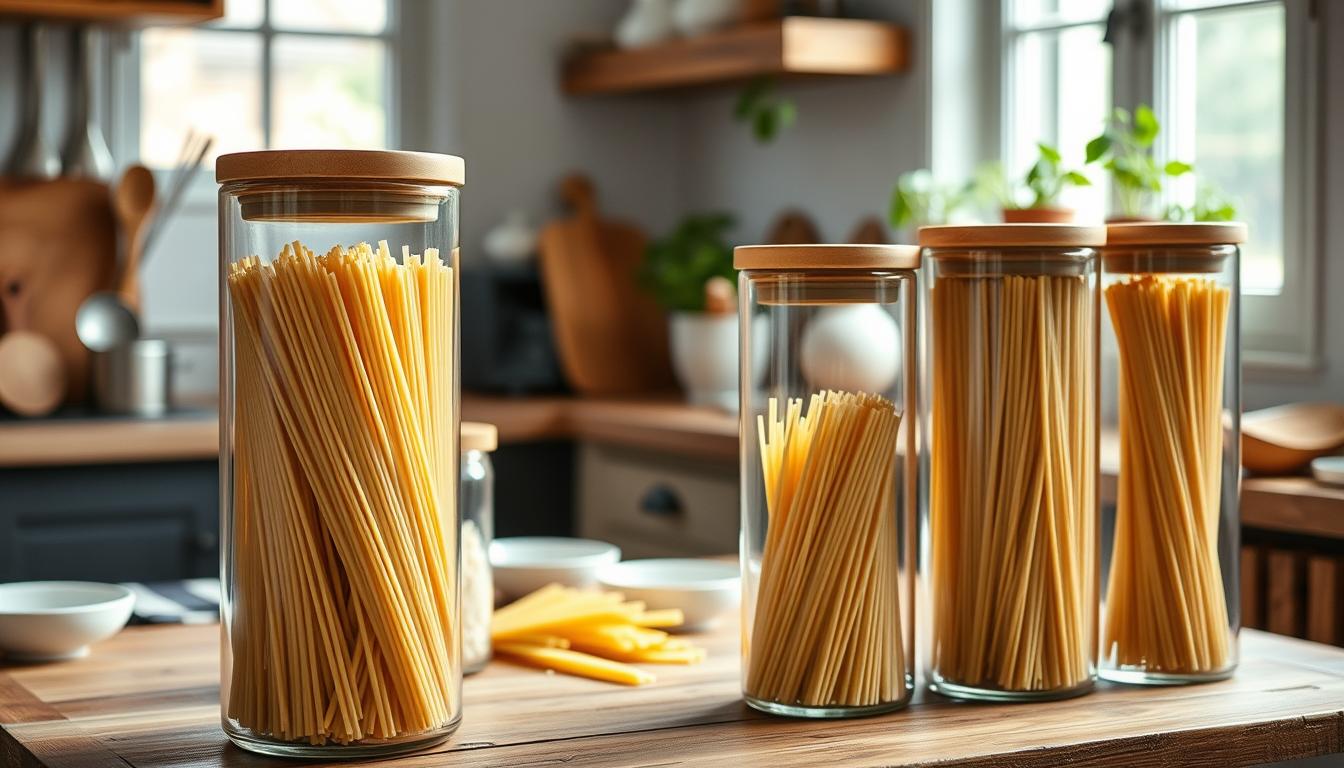
Choosing the right airtight set makes it easy to store rice, flour, nuts, and seeds without losing space or freshness.
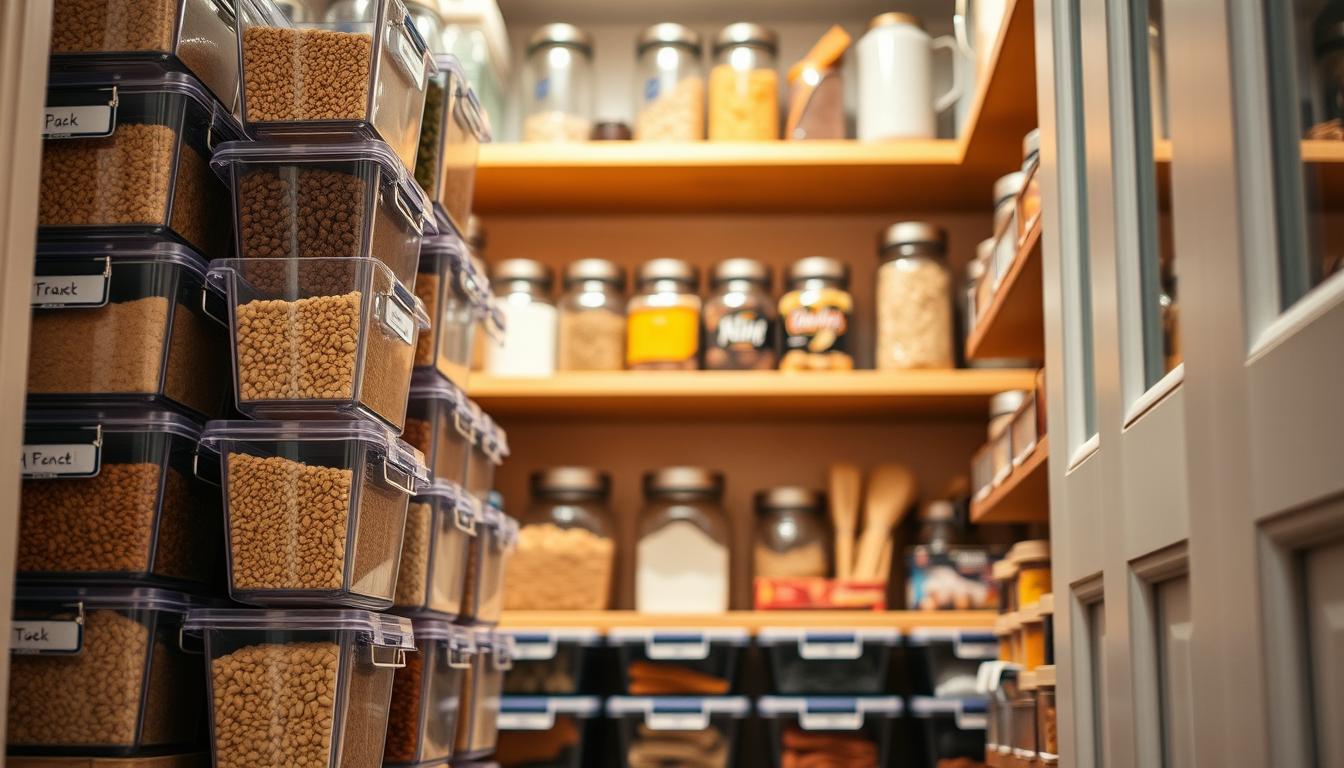
Why Rubbermaid Brilliance is the top pick: this set offers an airtight seal and a dishwasher-safe design that keeps dry ingredients safe in humid kitchens or when you buy in bulk.
The four-piece set includes one large, two medium, and one small container so you can assign flour or sugar to the large, rice to a medium, and nuts or seeds to smaller units. The clear construction gives a 360-degree clear view so you can see levels from the front and side.
- Freshness: the secure lid reduces moisture and pest risk.
- Visibility: clear walls cut down on duplicate buys.
- Stacking tip: place heavier ingredients low and avoid mixing footprints to prevent wobble.
Limitations: these containers are less convenient for bulky pre-packaged snacks that are easier to drop into open organizers. For long-term dry food storage of loose items, though, this set balances protection and neat organization.
Best budget storage bins and organizer sets for packaged snacks and boxes
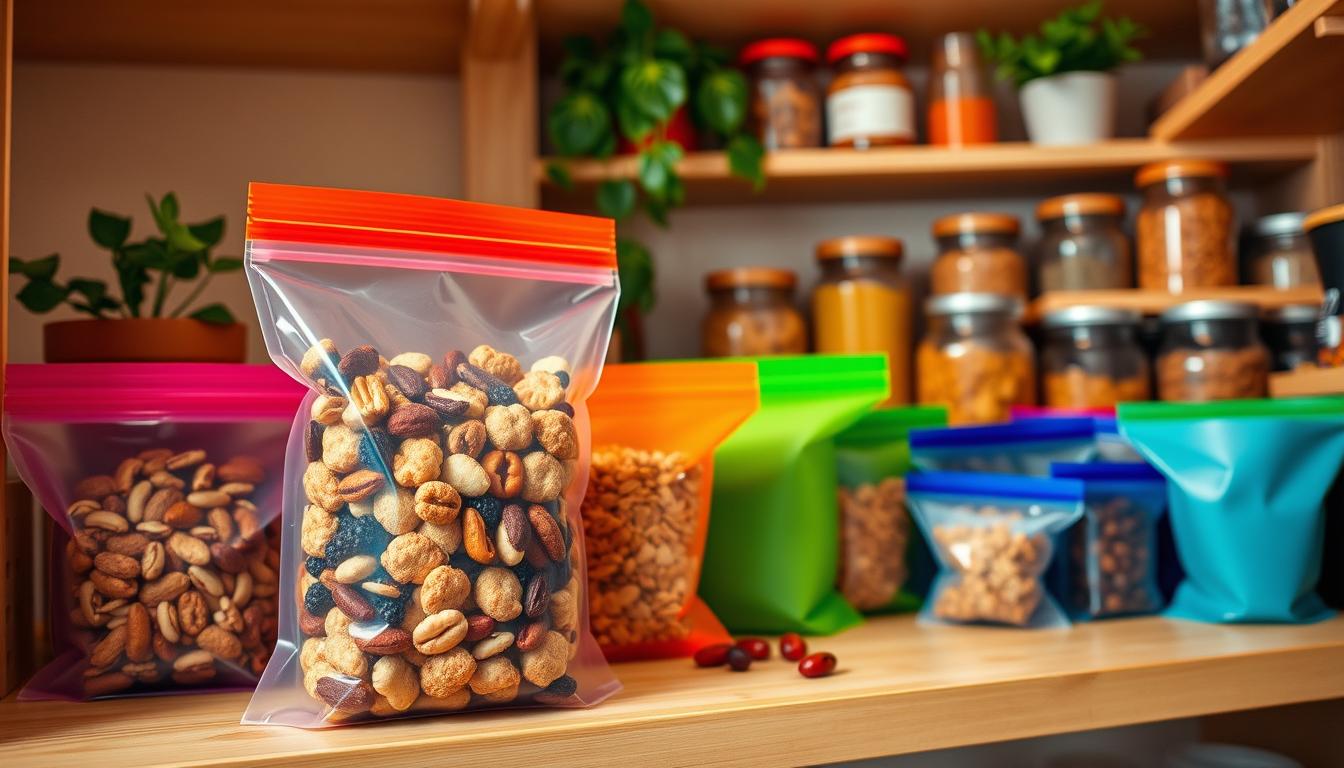
A multi-piece set lets you create clear zones fast, so snacks and boxed goods stop becoming a jumbled mess. A coordinated purchase saves time and usually lowers the total price compared with buying single pieces one by one.
The Utopia Home set of eight organizers is a good value. It includes eight matching units that work well for cans and packaged goods. Each unit has practical handles so you can pull an organizer from a high shelf or hand one to a child.
How to assign each container for faster organizing
Use a strict “like items” rule: chips with chips, granola bars with bars, and cereal boxes grouped together. That prevents oddly shaped boxes from leaning and causing collapse.
- Why a set helps: matching footprints stop mismatches that make stacks tilt.
- Value: eight organizers cover snacks, breakfast, baking add-ins, and lunchbox items without extra cost.
- Handles: built-in grips make daily access and restocking easier.
What not to store: avoid loose flour, sugar, or grains in these units to prevent spills. Instead, keep bulk dry ingredients in airtight containers designed for powders.
Restock rule: give each category two zones — one daily-use bin at eye level and one backstock bin below. This simple system cuts overflow and keeps your shelves orderly.
Best open-front stackable bins for grab-and-go access on shelves
An open-front design keeps your most-used snacks and quick meals visible and easy to reach. These units cut the time you spend hunting for things and help kids access their own snacks.
The mDesign stackable food bin is a good pick for deep shelves. It uses BPA-free, shatter-resistant plastic and comes in several sizes. The open front makes grabbing one item fast without unstacking the whole set.
mDesign: deep design and real drawbacks
Its deep shape stores bulky goods at the back of a shelf so nothing gets lost. But the lower unit can be hard to reach when you stack more than two high or leave little headroom above the opening.
How to avoid lower-bin reach problems
- Limit stacks to two high in daily-use zones to keep the lower opening accessible.
- Leave headroom above the front so you can slide items out easily.
- Use uniform footprints to prevent forward stair-stepping and overhangs.
- Reserve top stacks for light or infrequent items to reduce strain.
For busy kitchens, these stackable units make reliable pantry organizers for kids’ snacks, breakfast bars, and quick sides. Follow the safe stacking tips and you’ll get fast access without tipping or spills.
Best wire and metal storage baskets for produce ventilation and counter storage
Wire and metal organizers keep air moving around produce so fruit and roots stay fresher longer. Open construction reduces trapped moisture, which slows rot and soft spots. That makes these options a smart swap for items you buy in loose form.
Aozita wire baskets with bamboo top: a practical model
The Aozita set pairs a sturdy wire body with a bamboo top that acts as a flat, stackable surface. You get three sizes and chalkboard labels to mark “onions,” “potatoes,” or “fruit” so you rotate stock easily.
What wire design solves for common produce
Potatoes and onions need dark, cool airflow to avoid sprouting and mold. Apples benefit from air circulation that keeps moisture off skins. Bananas still ripen, but a ventilated cradle prevents them from sitting in condensation.
Where these baskets work best: counter vs shelf
On the counter, metal baskets give you quick access for daily grabbing and look like part of the kitchen decor.
On a shelf, they keep produce off the countertop while staying visible and ventilated. Expect to pay more than cheap plastic, but you’re buying durability, airflow, and a bamboo top that behaves like furniture rather than a flimsy crate.
- Why choose wire/metal: better airflow and long-term durability.
- Best for: potatoes, onions, apples, and loose fruit.
- Extras: included labels help you mark and rotate stock.
Best stylish grid baskets for a modern pantry organizer look
A modern grid basket blends utility with a curated look so your open shelves feel intentional. You get easy access, visible contents, and a piece that complements your home decor.
Neat Method grid basket with coated metal and acacia wood insert
Neat Method uses a coated metal frame for strength and a removable acacia wood insert for a warm finish. The wood lifts out for quick cleaning, and the metal grid resists bending under daily use.
The set comes in multiple sizes and six colors so you can keep a consistent look across your kitchen shelves. The finish and materials are the premium part of the cost.
When design-forward bins are worth the higher price
Pay the higher price if these will sit on open shelving or in a visible cabinet where design matters. They work best for packaged snacks, linens, or light kitchen items that benefit from airflow and display.
- Style-first: pick Neat Method when appearance matters as much as function.
- Durability: coated metal keeps shape; wood insert cleans easily.
- Use: ideal for snacks, small linens, or everyday organizer needs.
- Tip: choose one size as your standard to avoid visual clutter and mismatched footprints.
Best non-stackable baskets when you want quick visibility and easy carry
Non-stackable baskets work well when you put speed and access first. If you want to grab supplies and move them to the counter, a single-layer solution with open-front access is ideal. You trade vertical density for instant visibility and easy carry.
Granny Says wicker baskets are a great example. Their open-front design plus built-in handles lets you slide a basket out like a drawer. The woven look adds warmth while the tones match multiple kitchen styles.
Use these baskets for lightweight pantry categories: baking supplies like sprinkles and liners, seasoning packets, and small snacks that get messy in deep containers. The open front reduces “out of sight, out of mind” so you restock smarter.
- Visibility: open fronts show contents at a glance.
- Carry: handles make moving a basket simple.
- Limit: these baskets are not stackable, so place them where stability beats vertical density.
- Tip: label each basket and group similar items to avoid visual clutter.
Best turntable organizers to prevent tipping bottles and maximize small spaces
Turntables solve the problem of buried bottles and crowded corners by giving every jar a clear, rotating spot. They cut reach time and reduce the chance of a topple when you grab a frequently used item.
Tiblue rotating turntable for oils, vinegar, and nut butters
Tiblue’s clear rotating turntable comes as a pack of two with a 9-inch diameter. The tray spins smoothly and has high sides to keep bottles and jars secure while you rotate for access.
Where spinning organizers work best
Use one on a kitchen shelf for daily cooking oils and sauces. Place another inside a cabinet to keep condiments tidy and easy to reach.
They also fit well in the refrigerator for jars and small containers you want to grab without shifting everything else.
- Best for: olive oil, vinegar, hot sauces, and nut butters.
- Sizing note: the 9-inch diameter is compact—ideal for tight spaces and curated categories.
- Stability tip: place heavier bottles opposite lighter jars to balance the turntable and prevent wobble.
Best heavy-duty plastic stacking containers in value packs
Bulk packs of tough plastic storage deliver repeatable organization for kitchen, closet, or office zones. VEVOR offers heavy-duty options in multi-packs so you can outfit whole shelves with matching pieces that hold up to daily use.
VEVOR hanging organizer multi-packs
The hanging style clips or hooks to rails for vertical use. These work well in a closet, office shelf, or high kitchen shelf where you need to save depth.
VEVOR plastic stackable options (6-pack, 12-pack)
For flat-shelf use, VEVOR’s 6-pack and 12-pack tote-style models (about 14.8 x 8.5 x 7.1 inches) give a sturdy, repeatable footprint that stacks cleanly and resists flex under load.
How to pick a pack size without creating clutter
- Measure first: map zones (snacks, baking, pasta, breakfast) and buy to that plan.
- Buy a larger pack only if you already have clear zones to fill.
- Use extras in the office or closet after your main plan is complete.
Transparent vs black: visibility and aesthetics
Transparent units help you track inventory and avoid duplicates. Black looks tidy and hides clutter but can make it harder to see what you have, increasing overbuying risk.
Best lidded, collapsible, and large-capacity containers for bulk pantry supplies
When you buy in bulk, a foldable lidded crate gives you room for overflow without committing shelf space permanently. For large runs or seasonal stock, choose containers that hold a lot but collapse when empty.
VEVOR Collapsible Storage Bins with Lids (65L, 3-pack) are a practical example. Each unit folds flat, has sturdy handles, and snaps closed with a secure lid so messy bags stay contained. Use a three-pack to group like supplies and avoid mixed loads that cause tipping.
When to pick lidded designs
Pick a sealed lid when you store flour, rice, pet-food-style grain, or oversized snack refills. A lid reduces spills, blocks pests, and shields paper packaging from humidity.
- Decision rule: if you move containers often or keep messy items, prioritize a secure lid.
- Space-saver tip: keep one collapsible container folded flat as overflow control instead of buying permanent storage you rarely use.
- Use cases: bulk ingredients, seasonal supplies, and shop-haul storage for your kitchen.
How to match bin shape to pantry items so stacks stay balanced
Pick shapes that match what you store so weight sits low and every stack feels stable. Choose container profiles that fit the item shape and keep the center of gravity close to the shelf surface.
Short, wide for cans and jars
Use short, wide units for cans and jars. A broad base lowers the center of gravity and makes it easier to slide a can forward without tipping the whole column.
Tall for bags and boxes
Tall organizers work for bags and boxes if the base is wide. Avoid tall, narrow pieces that let soft bags lean and shift weight to one side.
Deep versus divided for small items
Deep containers are great for snacks and pouches, but small packets can sink. Divided trays keep packets upright so weight stays even and items stay reachable.
- Tip: keep bottles in high-sided areas or on a turntable; open shallow holders let bottles roll or tip.
- Uniform footprint: match footprints so stacks stay square and look neat.
- Stability rule: use stackable units two high in daily zones; reserve taller stacks for light, infrequent items.
- Group items by shape and weight first.
- Pick short, wide or tall, deep, or divided containers based on that group.
- Set final stacking height and test by pulling one item out.
Placement strategy that keeps stacks from falling in a busy household
A simple placement plan reduces falls: keep heavy items low, daily items within reach, and overflow out of the way. This approach makes your kitchen storage safer and faster in everyday use.
Heavier items low, lighter items high
Put cans, jars, and bulk containers on the lowest shelf so the whole stack is harder to tip. A low center of gravity limits motion when someone reaches in fast.
Kids’ snack bins at eye level to reduce yanking and tipping
Place kids’ snack carriers at child eye level so kids can grab without stretching or yanking from above shoulder height. This simple move reduces accidents and keeps your shelf organized.
Backstock zones vs daily-use zones for kitchen storage
Designate a daily-use zone at mid-shelf height for things you reach every day. Put backstock on top or bottom shelves where access is less frequent.
Labeling and visibility rules that prevent overbuying
Use clear, waterproof labels and open-front or grid designs to improve visibility. When you can see inventory, you buy less and keep duplicates away.
- Weekly habit: pull one daily-use container forward, straighten, and rotate older items to the front.
- Visibility tip: clear storage, open-front styles, and grid baskets help you track stock quickly.
- Category rule: group like items together and label each spot to keep organizing simple.
Cleaning and upkeep for plastic bins, wire baskets, and storage containers
Small spills and crumbs may seem minor but they erode stability and attract pests over time. Regular care keeps your storage containers stable and prevents rushed, messy reorganizing.
Warm soapy water for plastic storage and organizers
Wash plastic storage and organizers with warm soapy water. Rinse fully and pat dry or air-dry until completely moisture-free.
Dry bases help prevent slick surfaces that let a storage bin slide. Clean lids and rims too so edges seat firmly when you restack.
Shake-out and wipe-down for wire, metal, and wicker
For wire and metal, shake out crumbs, wipe with a microfiber cloth, and dry to avoid grime and corrosion in humid kitchens.
With wicker, shake and spot-wipe gently. Never soak woven pieces; excess water can warp the base and make a basket uneven.
- Routine habit: clean as you reset — wipe shelf surfaces and the bottoms of storage bins before you restack.
- Spill plan: remove everything, deep-clean the shelf and your storage containers, then only restack after all surfaces are dry.
- Stability tip: sticky residue or crumbs reduce grip and raise the chance of a fall; regular cleaning keeps stacks secure.
Conclusion
Close the loop on your kitchen organization by verifying fit, function, and reach before you check out.
Decision framework: measure shelf depth and height, pick stable features (wide base, rigid bottom, secure rim), match material to the job, then choose the right container type for each pantry zone.
Top stability takeaways: use uniform footprints, keep heavy items low, and favor access styles that don’t force you to unstack daily. Choose units that seat flat when loaded.
Use product ratings as a quick filter—look for 4+ stars—but always confirm measurements, materials, and access design in the listing before buying.
Final cart checklist: consistent sizes, enough labels, a backstock plan, and a cleaning routine to keep shelf surfaces non‑slippery. The same stability rules apply if you repurpose storage for a bathroom or other room.