
You want a clear, simple way to keep everyone safe and save time in your kitchen. A consistent color system creates visual shortcuts so you find food faster and return items to the right spot. This reduces questions from family and guests and cuts down on mix-ups when diets differ.
Start with a goal: make shopping your shelves easier, speed up meal planning, and protect people with allergies or special diets. Assign a single color to each category so every item has a clear home. The initial setup takes a little time but pays off in daily routines.
With one simple color approach you get better organization, less stress, and more time for cooking and family. Later sections will show how color fits with grouping, labels, containers, and placement so the system feels cohesive rather than random.
Plan Your Color System Around Your Household’s Dietary Needs
Start by matching your household’s food needs to simple zones so everyone can find the right products fast. List any “no-go” ingredients and group items into grocery-style sections: baking, breakfast, dinner staples, snacks, beverages, and non-food essentials.
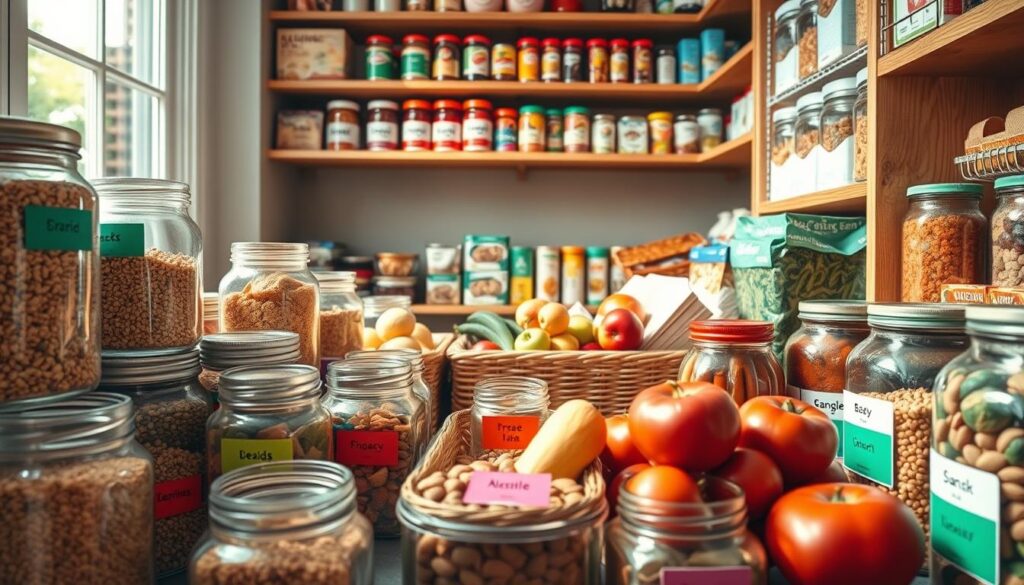
Decide how you want to apply color. You can assign one color per section for speed, or use a rainbow-order within a shelf for extra visual order. Pick the approach that fits how you cook and shop.
Create a plain-language color key and post it where it’s obvious—on the inside of the door or a nearby wall. Make each rule short: what the color means, what belongs there, and what to avoid.
- Translate dietary needs into zones (e.g., gluten-free baking, nut-free snacks, school-safe foods).
- Keep critical categories very distinct so allergen-containing items are easy to spot from across the shelf.
- Sanity-check the layout: place daily-use items near the front and occasional items higher up.
When new products arrive, apply your rules immediately. That way your system stays useful, not just pretty, and guests can follow it without asking.
Set Up Color-coded pantry labels That Make Meal Planning Faster
Make meal planning faster by giving every container a clear visual and written cue. Start small so the system fits your routine and stays practical.
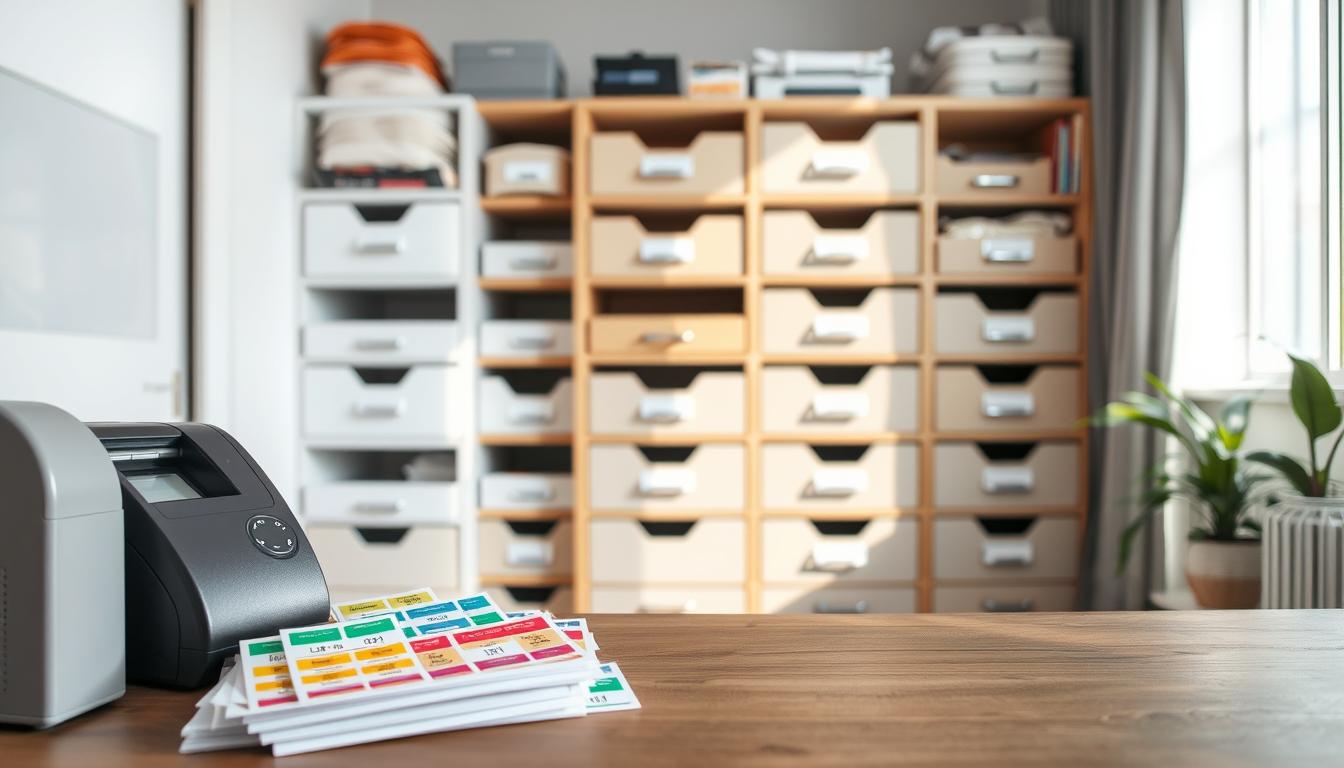
Pick a labeling way that matches daily life: use printable clear stickers for a consistent look, colored tape bands for quick changes, or label-maker tags for durable updates. Let ink dry on printed sticker sheets and trim with a straight edge or X-Acto for neat results.
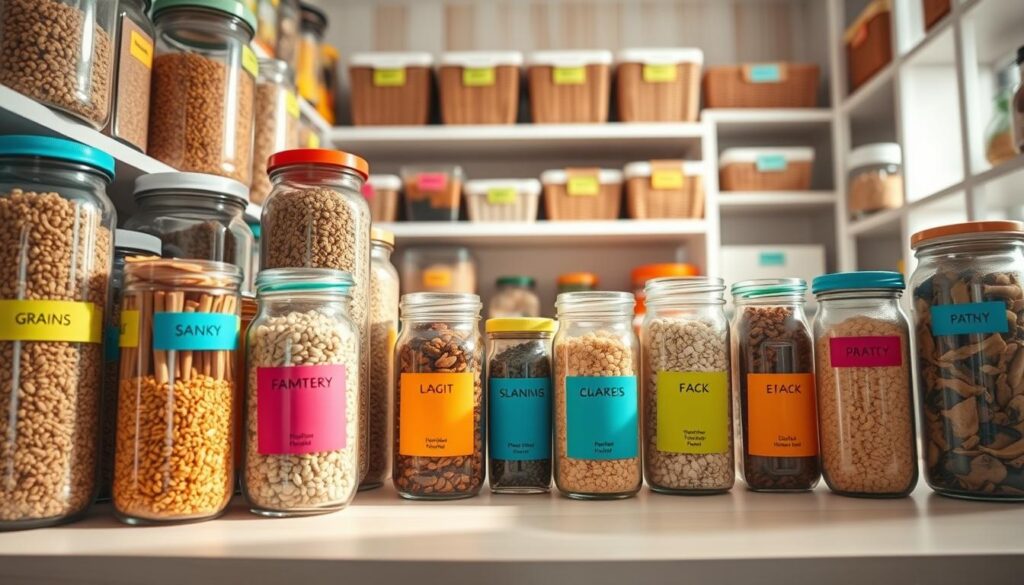
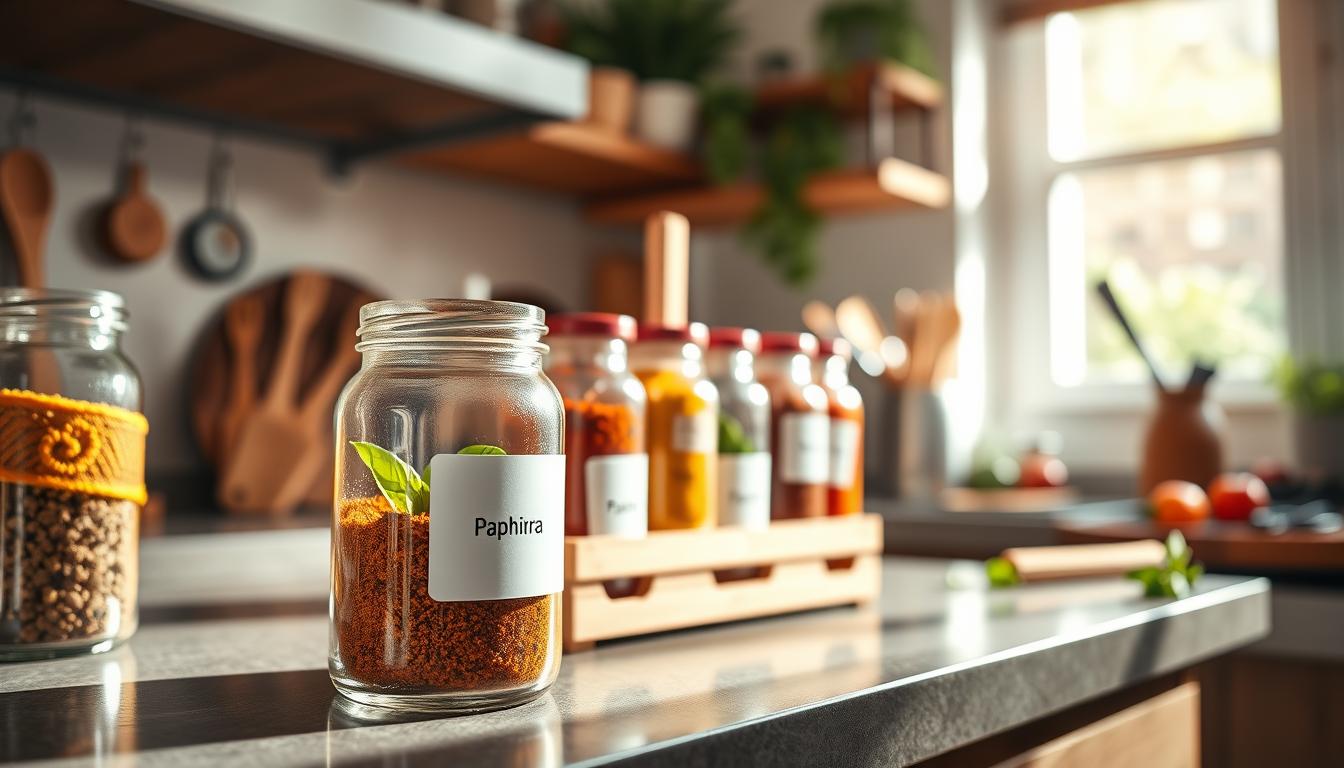
Label canisters, baskets, sealed bins, and glass jars so every product has a home. OXO Good Grips POP canisters work well for decanted dry goods and keep food fresh.
- Include dietary cues like “gluten-free” or “contains nuts” alongside color marks to cut prep errors.
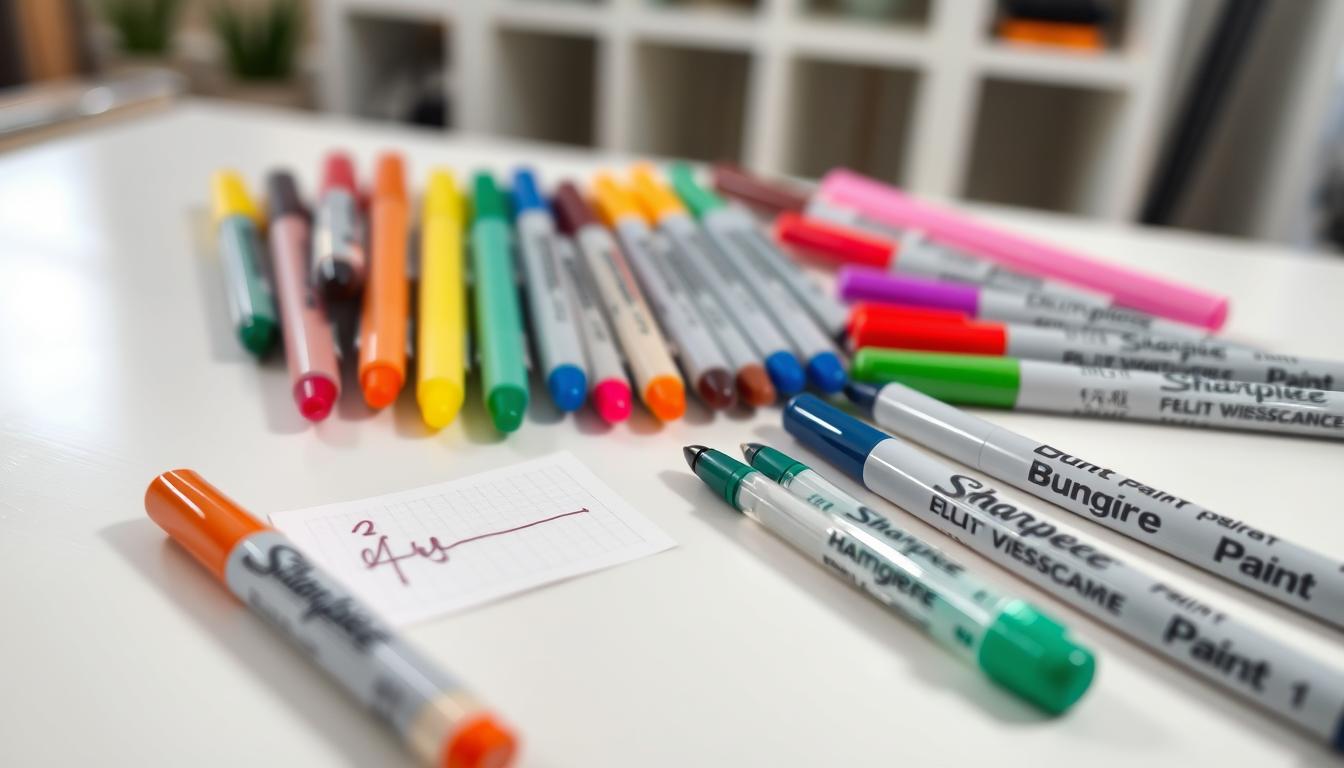
- Track freshness: write a fill or expiration date with a dry erase marker on the back or lid.
- Add quick notes—ratios, portions, or prep tips—so recipes stay consistent without hunting for instructions.
This small setup saves time, reduces waste, and makes snacks and staples easy to find during busy days.
Organize Pantry Storage for Daily Use, Visibility, and Less Mess
Design your shelving around how you move in the kitchen to cut down on wasted steps. Place the everyday items where you naturally reach so preparation and cleanup take less time.
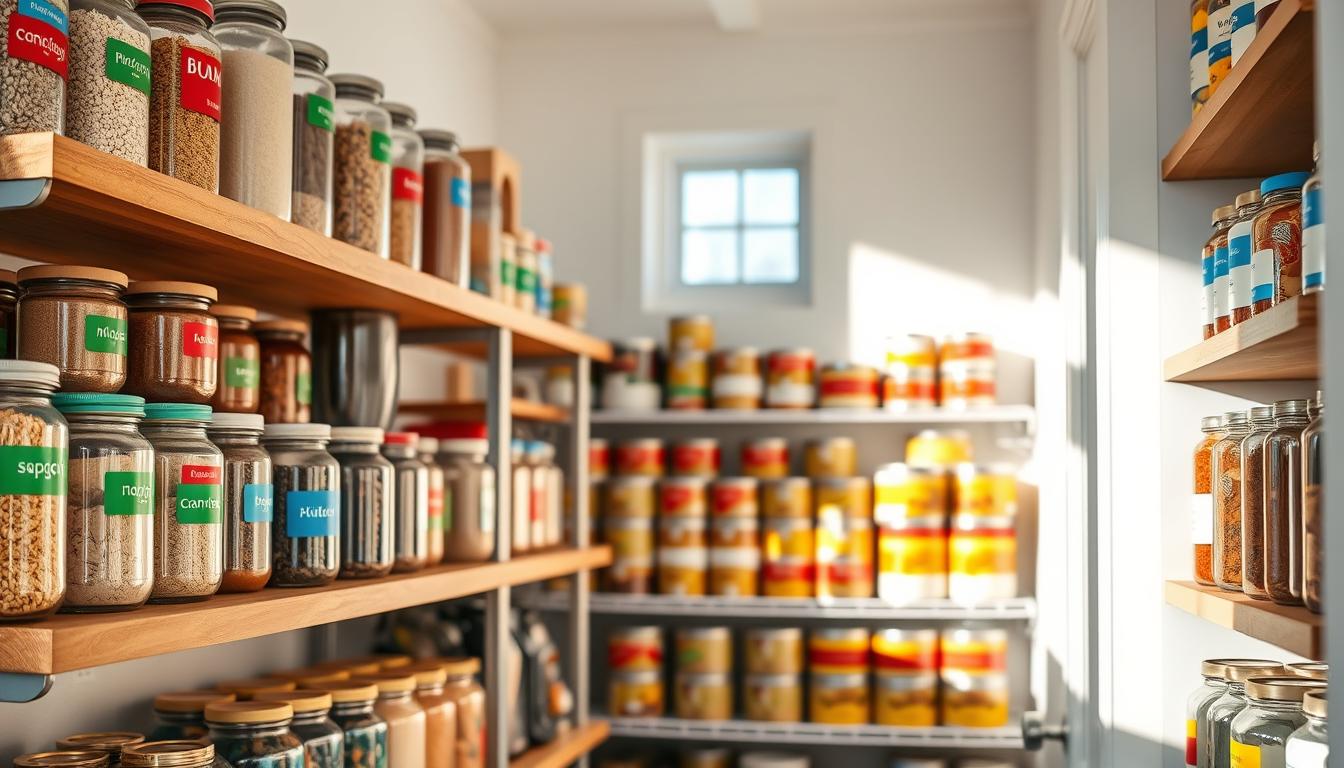
Use product placement to reduce clutter: keep frequently used items at eye level, heavy products low, and occasional items up high. This arrangement makes the space safer and more efficient on busy days.
Practical rules for day-to-day use
- Map shelves to your routine—breakfast staples and weeknight essentials go at eye level to save time.
- Store heavy items like bulk flour and large cans on lower shelves to prevent spills and strain.
- Keep small items readable—spices and packets at eye height in clear canisters or narrow bins so you don’t rummage.
- Assign a contained snack zone in a basket or bin so kids and guests can grab treats without disturbing other items.
- Separate allergen-containing products into a distinct area or bin to reduce mix-ups and protect dietary needs.
Choose function over perfect art: prioritize placements you will maintain during a busy week. A practical system that you use every day beats a picture-perfect setup that becomes cluttered.
Conclusion
Close your setup by aligning colors to daily food needs and making upkeep easy. Plan categories around real dietary rules, then give each container a clear home so your kitchen organization stays reliable.
Clear colors and readable labels cut decision fatigue and lower ingredient mistakes. That makes meal planning, lunch packing, and quick prep faster on busy days.
Keep a simple maintenance routine: put new food in the right zone when it arrives, top up containers, and review categories every few months. This small habit prevents clutter and keeps the system useful.
Make the system family-friendly by posting the color key nearby so anyone can return items correctly. The best organization is the one you keep—stay simple, stay consistent, and adjust systems only when your cooking or snacking changes.