
Your pantry faces steam, spills, wet hands, and condensation every day. That moisture can smudge ink and peel ordinary labels, making contents hard to read and dates easy to miss.
Custom waterproof labels printed on BOPP (polypropylene film) hold up to humidity and even brief immersion. You’ll find waterproof options designed for real kitchen use, not just a dry shelf.
This guide helps you choose the right stickers and products for daily cooking. You’ll learn what matters: material, finish, adhesive strength, sizes, shapes, and print options. The goal is simple—clear, at-a-glance legibility while you cook, restock, or check expiration dates.
Trust the reviews: a provider shows a 4.2/5 overall rating with 81% of customers giving 4–5 stars. Verified-buyer notes include “Nice print” (Anthony Dandridge) and “Fast and Reliable. Ability to make edits as needed.” (Terri).
By the end you’ll get actionable selection criteria—what to buy, which format to order, and how to design your product so your pantry stays organized, efficient, and attractive.
Pantry organization that lasts through spills, steam, and refrigeration
Everyday kitchen messes — steam, splashes, and oily hands — quickly undo ordinary paper name tags. Paper curls, ink smears, and edges lift after repeated handling. That creates confusion and extra work when you cook.
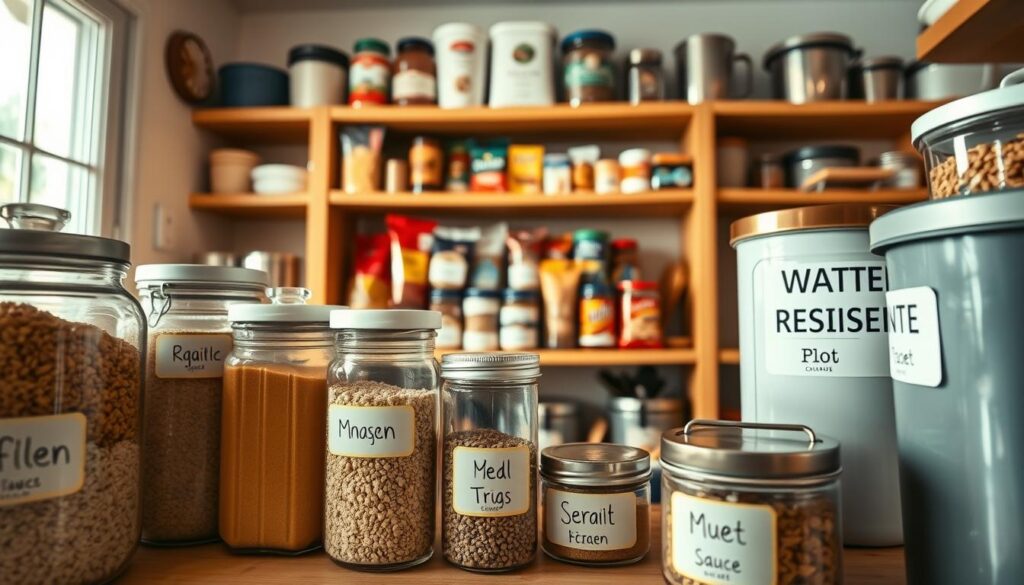
In plain terms, a waterproof finish keeps print readable and the sticker attached when exposed to spills, wet hands, condensation, and fridge moisture. It resists sweat on jars and short contact with liquids so text doesn’t wash away.
Where to use them most
- Dry good containers and bins for quick lookup.
- Bottles and sauce jars that see oil and steam.
- Freezer-safe storage for prepped food that gets rotated often.
- Any frequently handled items you rely on during prep.
Day-to-day benefits include faster meal prep, fewer duplicate purchases, and less waste because dates and contents stay visible.
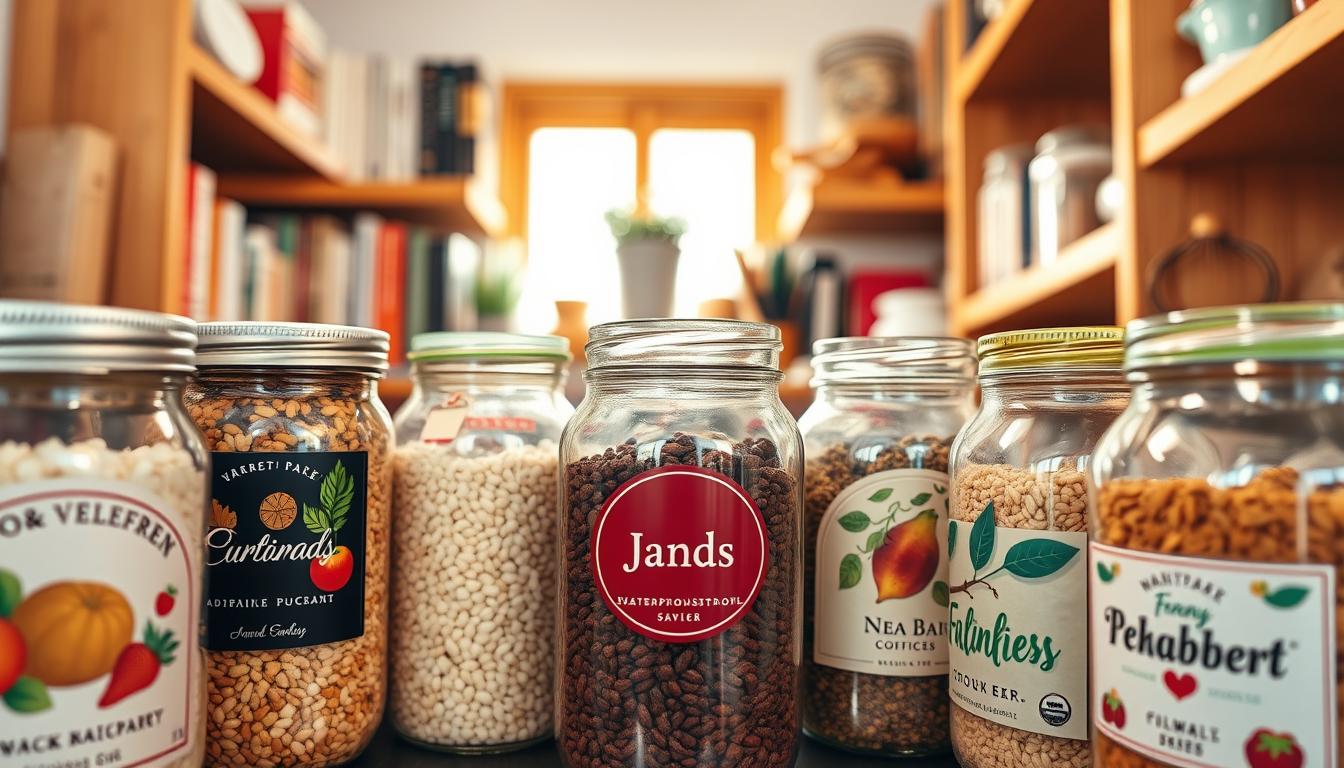
Choose a consistent design and matching shapes across your containers and products. A clear system with durable stickers reduces relabeling and keeps your pantry tidy and brand-clean in appearance.
Water-resistant labels: materials built for moisture, oils, and frequent handling
Pick a material made for kitchens so print stays sharp and adhesive holds under humid conditions.
BOPP (polypropylene film) is the common go-to for food and bath items. It comes in white for bold contrast, clear for a “no-label” look on transparent bottles, and silver metallic for a premium finish. These options suit juice bottles, sauce jars, shampoo, and body wash.
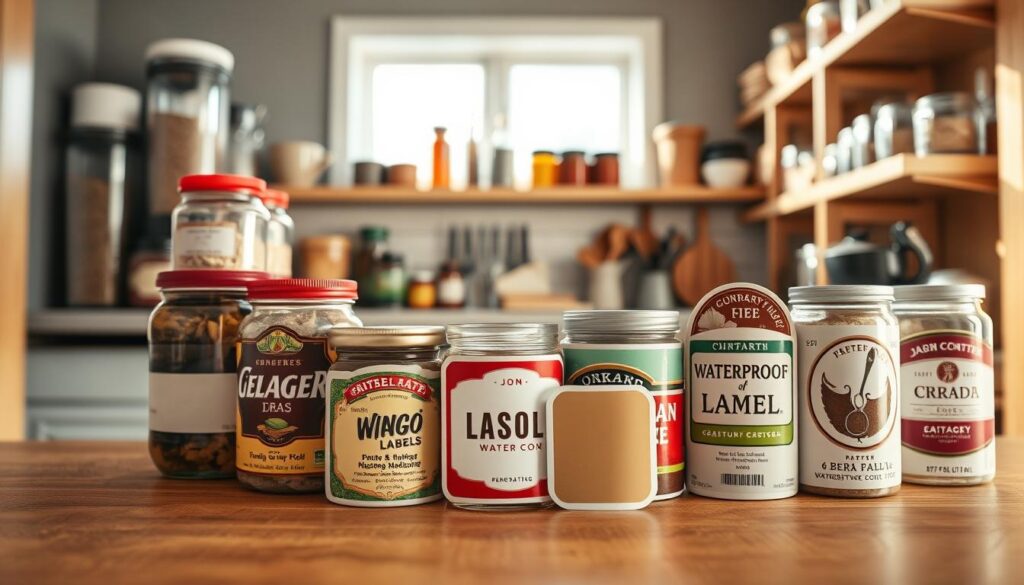
BOPP vs polyester: which fits your pantry?
- BOPP: lightweight, tear-resistant, great color fidelity.
- Polyester: tougher under chemicals and extreme cold with very strong adhesive.
- Choose by use: BOPP for jars and bottles; polyester for long-term freezer storage.
Durability, finish, and adhesive to check
Look for waterproof performance, oil and chemical resistance, and UV protection so text won’t fade near windows. Finish choices affect readability: gloss or high-gloss gives vibrant color; matte reduces glare under bright kitchen lights.
Adhesive strength matters. Strong permanent adhesive prevents lifting on condensation-prone fridge, freezer, and cooler surfaces. Remember: material + finish + adhesive = reliable, long-lasting results for the items you handle every day.
Choose the right sizes, shapes, and formats for your pantry
Choosing the right size and format makes your pantry easier to scan and keeps text readable at a glance. Start by measuring the usable flat area on each container so you don’t force tiny type into a cramped space.
Sheets vs roll labels: pick by how you apply them
If you hand-apply in small batches, go with sheets or single sheet runs. They work well when you order under 250 pieces and want one-off edits.
Rolls and roll labels suit fast application and bulk jobs. Rolls are commonly ordered above 250 pieces and pair with a label gun for quick placement. Typical minimums: 25 single sheet items and 250 pieces for roll orders.
Getting sizing right for containers
Allow enough space for the product name plus optional lines for dates or ingredient notes. If text must include allergens or prep dates, choose a larger size so font stays legible.
- Tall spice jars: narrow, vertical size works best.
- Wide flour canisters: horizontal rectangles that span the front face.
- Freezer tubs: larger areas help text remain readable through frost and condensation.
Shape and design alignment
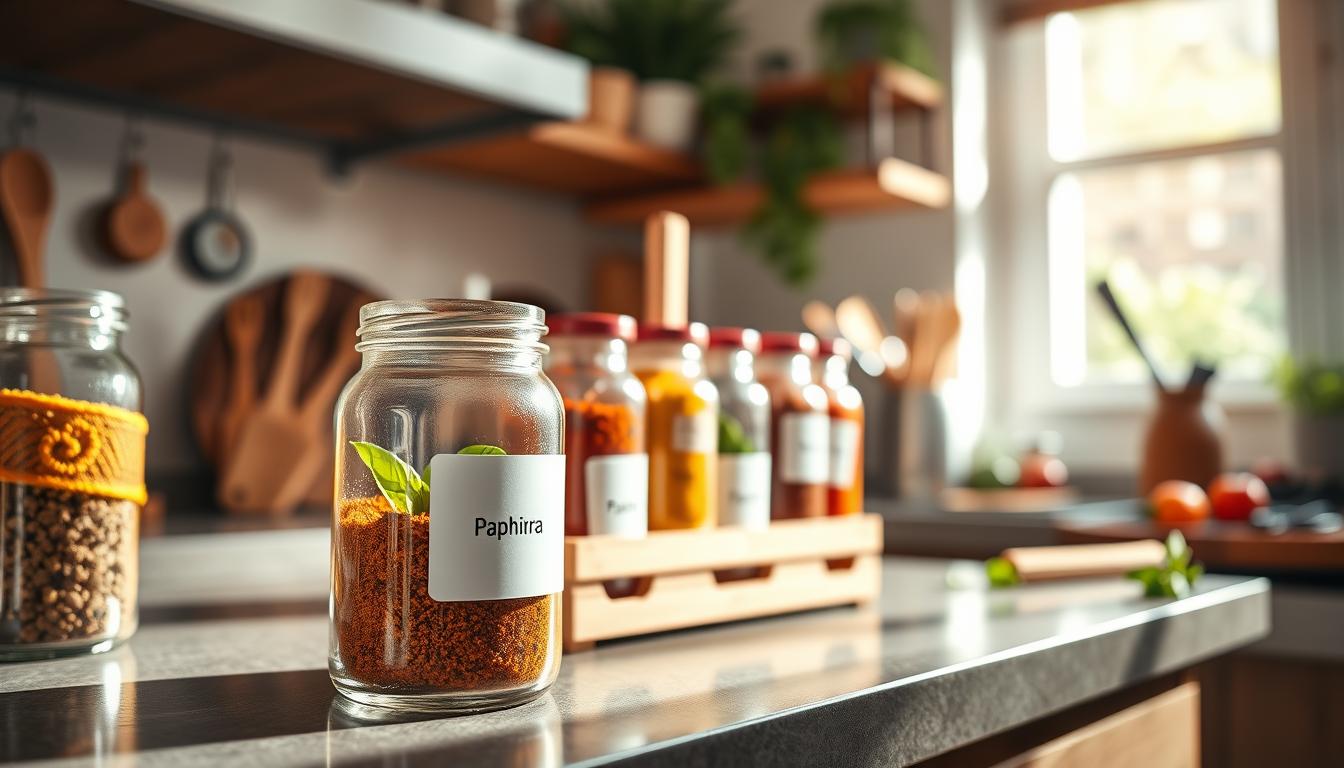
Match shapes to surfaces so stickers lay flat: rectangles for wide fronts, circles or ovals for lids, and slim strips for narrow bottles. Consistent shapes across a shelf create a tidy visual system.
Order and quantity logic: plan for relabeling. Buy rolls for high quantity runs to lower cost per piece, and choose sheets for smaller, more flexible print and faster shipping when you need edits quickly.
Design and printing options that keep your labels crisp and readable
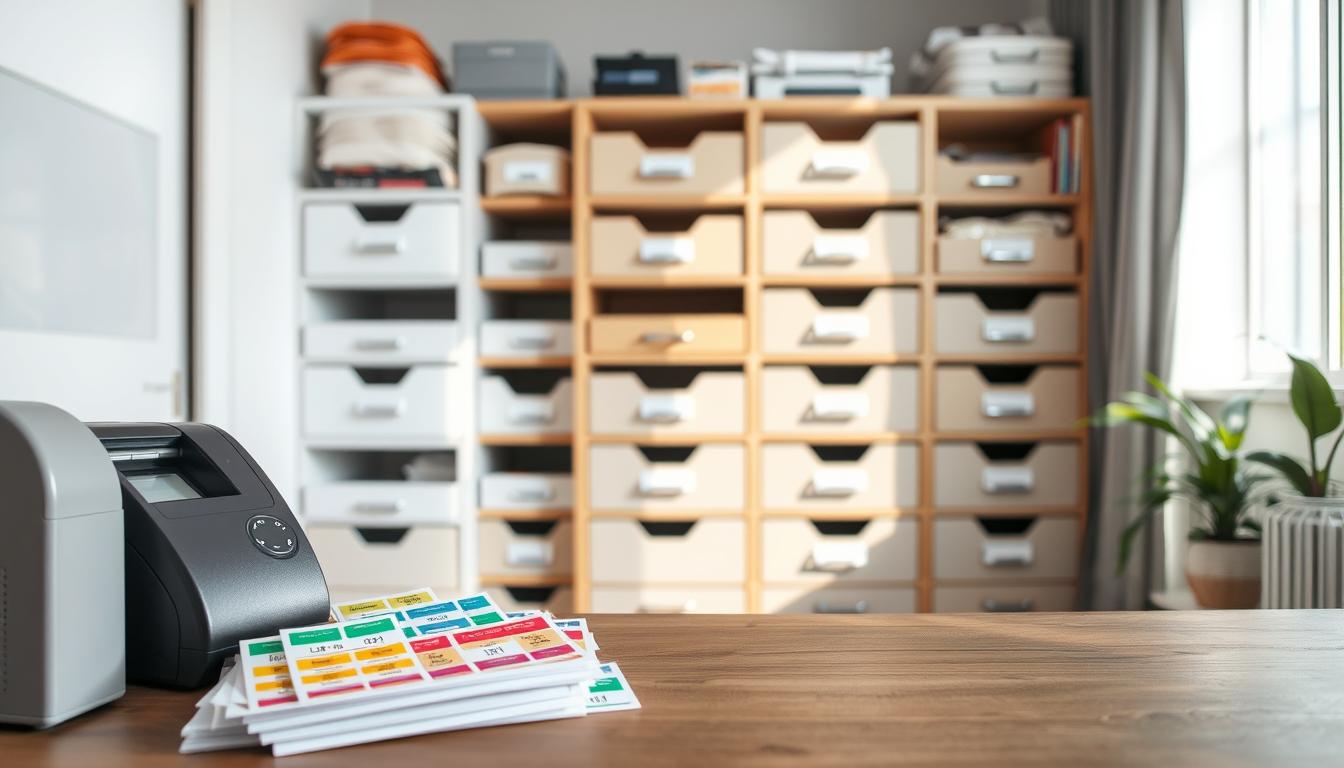
Good print starts with matching your printer to the right stock and format. Choose laser or inkjet for home runs. Pick thermal transfer or direct thermal for heavy-duty roll jobs. Each method affects sharpness, smearing risk, and which finishes you can use.
Printer compatibility and when to use each
Laser printers deliver bold text and resist moisture better on many sticker films. Inkjet works well on coated sheets when color fidelity matters.
Thermal transfer suits high-volume roll printing and durable stickers for shipping or long-term storage. Direct thermal is best for short-lived utility tags where you don’t need ink ribbons.
Templates, proofing, and practical workflow
Download EPS, PDF, or JPG templates so your layout, bleed, and safe area match the product. Or design online using built-in tools. Upload your artwork and select “I need a PDF proof” to get a free proof before printing.
Review spelling, font sizes, and placement. Request edits before finalizing so your orders avoid wasted product and delays.
Design best practices for pantry use
- Contrast: Use high contrast between text and background for quick scanning.
- Typography: Choose simple fonts; use at least 10 pt for ingredient-style text.
- Hierarchy: Large item name, smaller dates/notes, and ample white space keep stickers readable on curved containers.
If time matters, note that some providers print singles in one business day and rolls in two when you approve the proof before the cutoff. That helps with urgent orders and shipping plans.
Conclusion
The right sticker keeps text legible and adhesive strong across fridge, freezer, and countertop use.
Focus on three levers: choose the proper material and adhesive, pick a size and shape that fits your containers, and use clear printing and design for fast scanning.
Durable waterproof labels such as BOPP or polyester, finished in gloss or matte, resist moisture and handling. This system cuts searching time, avoids duplicate buys, and keeps items visible when you move food between pantry and fridge.
Next steps: select material and finish, decide sheets vs. rolls by quantity, choose the right size, then request a PDF proof before printing. Check reviews for customer experience, place your order, and schedule shipping to match your timeline.